🇬🇧This meeting should (and could) have been an email (short version)
How to save money and accidentally make the green transition happen in the right way — and with no extra costs
We have been talking about the “green transition” for years now.
And if you look at the amount of money being mobilised, it would be difficult to argue that governments have simply ignored it.
The European Union’s 2021–2027 long-term budget and NextGenerationEU together amount to around €2 trillion. The EU originally committed to directing at least 30% of this envelope towards climate objectives; current Commission projections put the climate contribution at around €662 billion, or 34% of the total. (European Commission)
The Recovery and Resilience Facility alone has a climate target of 37%, and by 2025 Member States had committed more than €275 billion — over 42% of the total estimated RRF costs — to climate objectives. (European Commission)
So yes: there is European money.
But there is an important distinction.
There is not one enormous European pot of money that simply pays for the green transition everywhere.
EU funding is combined with national public budgets, national co-financing, loans, private investment and other financial instruments. The European Commission itself describes the EU budget as one part of a much larger investment effort. And the Recovery and Resilience Facility is temporary: it is due to end in 2026. (European Commission)
Meanwhile, the scale of what Europe still needs is enormous.
Recent ECB analysis estimates that Europe will need to mobilise an additional 2.7–3.7% of EU GDP every year until 2030 to achieve the green transition. Another ECB analysis estimates an average public green-funding gap of around €20 billion per year between 2025 and 2030, even after taking available EU funds into account. (European Central Bank)
And this is where things become interesting.
Because we have spent years telling a very simple story about the green transition:
Governments need to invest more. Far bad countries are making this impossible to happen.
But perhaps this is only part of the story.
For instance China’s clean-energy investment exceeded $625 billion in 2024, almost doubling since 2015. It also achieved its 2030 target for wind and solar capacity six years ahead of schedule. (IEA)
The IEA estimates that China continues to account for nearly 60% of global renewable-capacity growth, while solar PV has become the single largest area of global energy investment. Global solar investment alone was expected to reach around $450 billion in 2025. (IEA)
So the comfortable idea that the green transition is simply a matter of some countries being “serious” and others being “bad” is becoming increasingly difficult to defend.
The reality is much more complicated.
Countries are investing enormous amounts.
But…
But….Some are moving faster than others.
And above, all….Some have BETTER policies than others.
Some have developed impressive financial mechanisms but still perform poorly on other indicators.
And even Europe, despite its considerable investment, has many a country that fail on a daily basis in simple actions that would cost zero extra funds and would reduce enourmously amounts of public money – but also of private citizens.
This means that something else needs to change — and it needs to change now.
Because perhaps the green transition should not only be a question of:
How much more money can governments put into it?
Perhaps we should also ask:
How much waste can governments eliminate without spending more?
In my subscribers post you will find 10 crucial points of our societies that could be improved with 0 extra costs.
It is a reasoning that comes from evidence I have gathered while working and living in different countries and continents.
It is a story of digitalization, of naming things for what they are — crisis and prevention, for instance — and of bringing responsibility to the right side: the side of institutions and those that should educate and inform citizens.
Because sometimes the problem is not that we lack a green solution…or funds.
Sometimes the problem is that we are still organising our societies in ways that were wrong à century ago and continue to worsen whilst making the solution unnecessarily difficult, expensive and wasteful.
And perhaps this is where a different kind of green transition should begin.
There is much more coming in these subscription versions of my posts, and it is a much more sustainable way to read and “get inspired” by my writings (instead of taking here and there and fuel your debate not even quoting me!)
💁🏻♀️
🇫🇷Cette réunion aurait dû (et aurait pu) être un e-mail (version courte).
Comment économiser de l’argent et faire advenir accidentellement la transition verte de la bonne manière — et sans frais supplémentaires
On parle de la « transition verte » depuis des années maintenant.
Et si l’on regarde le montant des sommes mobilisées, il serait difficile de prétendre que les gouvernements l’ont simplement ignorée.
Le budget à long terme 2021–2027 de l’Union européenne et NextGenerationEU s’élèvent ensemble à environ 2 000 milliards d’euros. L’UE s’était initialement engagée à consacrer au moins 30 % de cette enveloppe à des objectifs climatiques ; les projections actuelles de la Commission situent la contribution climatique à environ 662 milliards d’euros, soit 34 % du total. (Commission européenne)
La Facilité pour la reprise et la résilience comporte à elle seule un objectif climatique de 37 %, et d’ici 2025, les États membres avaient engagé plus de 275 milliards d’euros — soit plus de 42 % des coûts totaux estimés de la FRR — pour des objectifs climatiques. (Commission européenne)
Alors oui : il y a de l’argent européen.
Mais il y a une distinction importante.
Il n’existe pas un énorme pot de vin financier européen unique qui paie simplement la transition verte partout.
Les financements de l’UE sont combinés avec les budgets publics nationaux, le cofinancement national, les prêts, les investissements privés et d’autres instruments financiers. La Commission européenne elle-même décrit le budget de l’UE comme une partie d’un effort d’investissement beaucoup plus vaste. Et la Facilité pour la reprise et la résilience est temporaire : elle doit prendre fin en 2026. (Commission européenne)
Pendant ce temps, l’ampleur de ce dont l’Europe a encore besoin est énorme.
Une analyse récente de la BCE estime que l’Europe devra mobiliser chaque année entre 2,7 % et 3,7 % de PIB européen supplémentaire jusqu’en 2030 pour réaliser la transition verte. Une autre analyse de la BCE estime un déficit moyen de financement vert public d’environ 20 milliards d’euros par an entre 2025 et 2030, même après avoir pris en compte les fonds européens disponibles. (Banque centrale européenne)
Et c’est là que les choses deviennent intéressantes.
Parce que nous avons passé des années à raconter une histoire très simple sur la transition verte :
Les gouvernements doivent investir davantage. De grands méchants pays rendent la chose impossible à réaliser.
Mais c’est peut-être seulement une partie de l’histoire.
Par exemple, les investissements de la Chine dans les énergies propres ont dépassé 625 milliards de dollars en 2024, doublant presque depuis 2015. Elle a également atteint son objectif de capacité éolienne et solaire pour 2030 avec six ans d’avance sur le calendrier. (AIE)
L’AIE estime que la Chine continue d’assurer près de 60 % de la croissance mondiale de la capacité renouvelable, tandis que le solaire photovoltaïque est devenu le premier poste d’investissement énergétique mondial. L’investissement mondial dans le seul domaine solaire devait atteindre environ 450 milliards de dollars en 2025. (AIE)
Ainsi, l’idée confortable selon laquelle la transition verte est simplement une question de pays « sérieux » et d’autres qui seraient « méchants » devient de plus en plus difficile à défendre.
La réalité est beaucoup plus complexe.
Les pays investissent des montants gigantesques.
Mais…
Mais…. Certains avancent plus vite que d’autres.
Et surtout…. Certains ont de MEILLEURES politiques que d’autres.
Certains ont développé des mécanismes financiers impressionnants mais enregistrent encore de de mauvais résultats sur d’autres indicateurs.
Et même l’Europe, malgré ses investissements considérables, compte de nombreux pays qui échouent au quotidien dans des actions simples qui ne coûteraient aucun fonds supplémentaire et réduiraient énormément les montants d’argent public — mais aussi ceux des citoyens privés.
Cela signifie que quelque chose d’autre doit changer — et doit changer maintenant.
Parce que la transition verte ne devrait peut-être pas être seulement une question de :
Combien d’argent en plus les gouvernements peuvent-ils y injecter ?
Nous devrions peut-être aussi demander :
Combien de gaspillage les gouvernements peuvent-ils éliminer sans dépenser plus ?
Dans mon article réservé aux abonnés, vous trouverez 10 points cruciaux de nos sociétés qui pourraient être améliorés avec 0 coût supplémentaire.
C’est un raisonnement issu des preuves que j’ai rassemblées en travaillant et en vivant dans différents pays et continents.
C’est une histoire de digitalisation, de nommer les choses pour ce qu’elles sont — crise et prévention, par exemple — et d’apporter de la responsabilité du bon côté : le côté des institutions et de ceux qui devraient éduquer et informer les citoyens.
Parce que parfois, le problème n’est pas que nous manquions d’une solution verte… ou de fonds.
Parfois, le problème est que nous organisons encore nos sociétés de manières qui étaient fausses il y a un siècle et continuent de s’aggraver tout en rendant la solution inutilement difficile, coûteuse et gâchée.
Et c’est peut-être là qu’un autre type de transition verte devrait commencer.
Il y aura beaucoup d’autres choses à venir dans ces versions sous abonnement de mes articles, et c’est une façon bien plus durable de lire et de « s’inspirer » de mes écrits (au lieu de prendre ici et là et d’alimenter votre débat sans même me citer !)
🇺🇸 When We Ban the Phone Instead of Teaching the Person
There is something increasingly strange happening in the way many societies talk about young people and technology.
A problem appears — distraction, cyberbullying, anxiety, eating disorders, exposure to violence — and the political response is increasingly to remove the object.
Take the phone away.
Ban it at school.
Put it in a pouch. Put it in a locker.
And perhaps, for a few hours, the problem becomes invisible too.
But making something invisible is not the same thing as solving it.
I am not arguing that smartphones should be permanently available in classrooms. Schools need boundaries. Teachers need to be able to teach without thirty students simultaneously checking notifications.
But I am deeply uncomfortable with the idea that restricting young people’s access to technology is somehow equivalent to educating them about technology.
It isn’t.
CENSORSHIP IS NOT EDUCATION.
The phone is not the problem. Societies way to educate youngsters is.
There is evidence that restrictions can reduce distraction in schools. The OECD has found that phone bans can help with classroom concentration, although their effectiveness depends heavily on how they are implemented. Importantly, restrictions during school hours do not necessarily create healthier digital habits outside school.
Other research is much less conclusive. A large Australian study involving more than 1,200 secondary students found no significant short-term difference between schools with and without phone bans in problematic phone use, academic engagement or school belonging.
France has also introduced a more restrictive approach. Its Portable en pause system was extended to public collèges from the 2025–26 school year following an experiment involving more than 32,000 pupils. The French Ministry of Education reports improvements in concentration, school climate and wellbeing.
Those findings should not simply be dismissed.
But neither should they be transformed into the much larger claim that prohibition has solved the underlying problem.
A student who learns that they cannot use a phone between 8:00 and 16:00 has learned a rule.
They have not necessarily learned how algorithms manipulate attention, how to recognise misinformation, how to respond to cyberbullying, how to protect someone’s privacy, how to recognise manipulation, how to use AI critically or how to ask for help.
Those are skills.
And skills have to be taught.
We are giving young people a responsibility that belongs to adults
This is where the discussion becomes more uncomfortable, I think.
Many societies are increasingly placing a weight — almost a border — on the shoulders of a generation that needs quite the opposite: help, support and guide.
Young people are expected to manage their education, their digital behaviour, their relationship with social media, their exposure to misinformation and sometimes even the wellbeing of their peers.
Of course young people have responsibilities.
But education is the responsibility of ADULTS.
That means institutions. It means schools, governments, parents and teachers. It also means universities and professors.
Being an adult does not erase the difference between being an adult student and being an adult educator. A twenty-year-old student and a forty-year-old professor may both be adults, but they do not occupy the same educational position or possess the same institutional power.
Education exists partly to recognise those differences and use them responsibly.
We cannot tell young people:
You are responsible for understanding this world.
while simultaneously telling them:
You are not mature enough to be trusted with the tools through which this world operates.
That is a contradiction which brings inevitably to have the complete chaos we can observe worldwide concerning young generations now clearly failed by contemporary societies and many institutions.
We cannot educate people for a world that no longer exists
There is a strange – almost irritating- nostalgia appearing in discussions about technology.
A fantasy that perhaps we could simply return to the “good old days”: fewer screens, more books, more face-to-face conversations, children playing outside.
There are certainly things from older forms of social life worth preserving.
But let us not romanticise the past.
Bullying existed.
Violence existed.
Social exclusion existed.
Eating disorders existed.
Suicide existed.
Loneliness existed.
The internet did not invent cruelty.
The smartphone did not invent insecurity.
Technology has changed mostly the visibility of some of these experiences.
That distinction matters.
But so does another change:
AWARENESS.
We now have access to extraordinary amounts of information about psychology, sociology, neurodiversity, communication, cultural difference, trauma and human behaviour.
The internet has made knowledge accessible on an unprecedented scale.
AI is now making another layer of information accessible through conversation.
That does not mean everything online is true.
It means we have an unprecedented opportunity to teach people how to determine what is true.
We should not waste it.
The dangers are real. The explanation is complex and much needed.
We should not minimise the risks of digital environments.
WHO/Europe’s research across 44 countries and regions found that approximately one in six adolescents had experienced cyberbullying, while problematic social-media use increased from 7% in 2018 to 11% in 2022.
The U.S. Surgeon General has also warned about the potential mental-health risks associated with social media, particularly at high levels of use.
But this does not make the internet a sufficient explanation for adolescent mental-health problems.
WHO describes adolescent mental health as the result of multiple interacting factors, including family relationships, school environments, social pressures, violence, adversity and access to appropriate support.
That matters.
Because when something tragic happens, we have a tendency to look for one culprit.
The phone. The platform. The teenager.
Sometimes there is an identifiable failure. But many situations are considerably more complicated.
A parent can love their child and still fail to recognise a crisis.
A teacher can care deeply about a student while being responsible for thirty others.
A friend can know that something is wrong without understanding how serious it is.
These are not necessarily stories about bad people.
They are often stories about systems that were never designed to handle the complexity we are asking them to handle.
What we actually need is support
This is why the conversation about phones should ultimately lead somewhere else.
We need better psychological education. We need teachers trained to recognise mental-health and social difficulties. We need parents to have somewhere to turn when they do not understand what is happening to their child.
And we need young people to have access to specialised professionals without having to wonder if they can afford it or reach a point of crisis first.
Because sometimes the most important intervention is surprisingly ordinary:
LISTEN.
Not interrogate. Not minimise. Not immediately correct.
Listen.
And then, when listening is not enough:
GUIDE.
And when guidance is not enough:
PROVIDE A SAFE PLACE TO HEAL.
This is not about blaming families.
Parents can be frightened too. Health, mental health and psychological difficulties are not subjects that every family knows how to deal with.
Sometimes the problem begins within a family. Sometimes it begins at school. Sometimes somewhere else entirely.
That is precisely why the responsibility cannot be placed entirely on one individual. Or a technological device.
We need systems capable of supporting ALL individuals.
Sometimes the phone is the safety device
There is another reason I would never support a complete ban on mobile phones inside schools.
We have to be willing to think about situations that are deeply unpleasant to imagine.
A fire. A violent attack. A medical emergency. A natural disaster. A dangerous intruder.
These situations are rare but REAL.
That is precisely why they are impossible to predict.
The 2022 mass shooting at Robb Elementary School in Uvalde, Texas, is one of the most painful examples. During the attack, children trapped inside the school used their phones to call 911 and contact their families. The official review records students making emergency calls and communicating with parents while the incident was unfolding.
And with November approaching in just a couple of months, this is also something worth remembering as France prepares to commemorate the victims of the 13 November 2015 terrorist attacks in Paris at the Bataclan.
That night is a painful reminder that the situations we most need to prepare for are often the ones we cannot predict. During attacks, travel emergencies, or even the 11th September phones became a way for people inside to reach loved ones and emergency services — a small connection to the outside world when everything else had collapsed.
And let’s remember children need to be educated to properly use these devices, even at young ages, if they are thought not to overuse, because there is how to learn about safety, and they can save adults lives even at home and in unimaginable ways:
In 2020, a five-year-old boy in England saved his mother by calling 112 after she fell unconscious. He recognised the number from the side of his toy ambulance — a small piece of information he had absorbed through play, which became crucial when he suddenly needed it. This is what education can do: it can turn a tool into a lifeline.(Telford, England, July 2020; West Mercia Police, 26 August 2020.)
We cannot build school policy around the assumption that tomorrow will always look like yesterday.
The ordinary school day can be regulated.
The exceptional day cannot be predicted.
And when that day comes, a phone may be the only connection a child has to the outside world.
Sometimes the phone is also the witness
There is another uncomfortable possibility.
A mobile phone can sometimes be the only way a child can document what is happening to them.
An aggression in a corridor. Bullying somewhere. A threat. An assault. A situation in which the child knows that afterwards someone might simply ask:
“Are you sure that is what happened?”
This does not mean that students should be encouraged to film everything.
Recording people can create serious privacy and ethical problems, and filming an unfolding violent situation can put the person recording at greater risk.
But again, the answer should be education.
Teach students when they should seek immediate help. Teach them how to preserve evidence safely when appropriate. Teach them not to circulate images of victims. Teach them how to report an incident.
And, crucially, teach adults to take evidence seriously.
Sometimes, unfortunately, the phone may be the thing that allows the trusted adult to finally see what happened.
And then there is AI
This makes the issue even more urgent.
AI is not going away.
Young people are already using it. And it is part of daily work and study routines in developed counties of Easter Asia as it was the typewriter to Britain since Mill invented it in 1714 (and let’s remember how happy we all were when finally we could use computers to write and avoid that annoying editing that typewriters brought with them!).
A 2025 Pew Research Center survey found that 64% of U.S. teenagers aged 13–17 had used an AI chatbot. And what’s should raise questions that should be considered priority in all governments is that twelve percent said they had used chatbots for emotional support or advice.
We should take that seriously.
But we should interpret it correctly.
AI is not a substitute for psychologists, teachers, parents or friends. Current evidence does not support treating general-purpose chatbots as mental-health professionals for teenagers.
But if a teenager finds it easier to type a difficult question into a chatbot at midnight than to tell an adult at home, perhaps we should also ask:
Why was the chatbot easier to talk to?
Was it because the machine did not interrupt?
Because it did not visibly judge?
Because the teenager was afraid of disappointing a parent?
Because there was no psychologist available?
Because they simply did not know how to begin?
These are educational and social questions.
And they are ours.
Not children’s.
The adults have to build the bridge
Young people did not create the technological world they inherited.
They are growing up in it.
So our responsibility is not to pull them backwards whenever something becomes difficult. It is to give them the education, critical thinking and support they need to navigate it.
Teach them how technology works. Teach them how to recognise danger, manipulation and misinformation. Teach them when a phone belongs in a bag and when it may be essential.
Give them the tools — then teach them how to use them.
Because adults’ world is dangerous.
But it is also theirs.
And eventually, they will grow in these two, apparently distant, but much intertwined worlds.
A generation does not become safer because we remove its tools.
It becomes safer because we teach that generation how to use them, understand people, recognise danger, seek help and live with difference.
That is the responsibility of ADULTS.
And if we fail at that responsibility, taking away the phone will not save us.
🇫🇷 Quand nous bannissons le téléphone au lieu d’éduquer la personne
Il se passe quelque chose de de plus en plus étrange dans la façon dont de nombreuses sociétés parlent des jeunes et de la technologie. Un problème apparaît — distraction, cyberharcèlement, anxiété, troubles de l’alimentation, exposition à la violence — et la réponse politique consiste de plus en plus à retirer l’objet. Enlevez le téléphone. Bannissez-le à l’école. Mettez-le dans une pochette. Mettez-le dans un casier. Et peut-être que, pendant quelques heures, le problème devient lui aussi invisible. Mais rendre quelque chose invisible n’est pas la même chose que le résoudre. Je ne suis pas en train d’affirmer que les smartphones devraient être disponibles en permanence dans les salles de classe. Les écoles ont besoin de limites. Les enseignants doivent pouvoir enseigner sans que trente élèves ne vérifient simultanément leurs notifications. Mais je suis profondément mal à l’aise avec l’idée que restreindre l’accès des jeunes à la technologie équivaudrait d’une manière ou d’une autre à les éduquer à la technologie. Ce n’est pas le cas. LA CENSURE N’EST PAS DE L’ÉDUCATION. Le téléphone n’est pas le problème. La façon dont les sociétés éduquent les jeunes l’est.
Certains éléments prouvent que les restrictions peuvent réduire la distraction à l’école. L’OCDE a constaté que l’interdiction du téléphone peut favoriser la concentration en classe, bien que son efficacité dépende fortement de sa mise en œuvre. Surtout, les restrictions pendant les heures de cours ne créent pas nécessairement des habitudes numériques plus saines en dehors de l’école. D’autres recherches sont beaucoup moins concluantes. Une vaste étude australienne portant sur plus de 1 200 élèves du secondaire n’a révélé aucune différence significative à court terme entre les écoles avec et sans interdiction du téléphone concernant l’utilisation problématique du téléphone, l’engagement scolaire ou le sentiment d’appartenance à l’école. La France a également adopté une approche plus restrictive. Son dispositif « Portable en pause » a été étendu aux collèges publics à partir de l’année scolaire 2025-2026 suite à une expérimentation ayant impliqué plus de 32 000 élèves. Le ministère français de l’Éducation nationale fait état d’améliorations en matière de concentration, de climat scolaire et de bien-être. Ces résultats ne doivent pas être simplement rejetés. Mais ils ne doivent pas non plus être transformés en une affirmation bien plus large selon laquelle la prohibition aurait résolu le problème sous-jacent. Un élève qui apprend qu’il ne peut pas utiliser de téléphone entre 8h00 et 16h00 a appris une règle. Il n’a pas nécessairement appris comment les algorithmes manipulent l’attention, comment reconnaître la désinformation, comment réagir au cyberharcèlement, comment protéger la vie privée de quelqu’un, comment déceler la manipulation, comment utiliser l’IA de manière critique ou comment demander de l’aide. Ce sont des compétences. Et les compétences doivent être enseignées.
Nous faisons porter aux jeunes une responsabilité qui incombe aux adultes
C’est ici que la discussion devient plus inconfortable, je pense. De nombreuses sociétés font peser un poids de plus en plus lourd — presque une frontière — sur les épaules d’une génération qui a besoin de tout le contraire : d’aide, de soutien et de guidage. On attend des jeunes qu’ils gèrent leur éducation, leur comportement numérique, leur relation avec les réseaux sociaux, leur exposition à la désinformation et parfois même le bien-être de leurs pairs. Bien sûr que les jeunes ont des responsabilités. Mais l’éducation est la responsabilité des ADULTES. Cela signifie les institutions. Cela signifie les écoles, les gouvernements, les parents et les enseignants. Cela signifie aussi les universités et les professeurs. Être un adulte n’efface pas la différence entre être un étudiant adulte et être un éducateur adulte. Un étudiant de vingt ans et un professeur de quarante ans peuvent être tous deux des adultes, mais ils n’occupent pas la même position éducative et ne possèdent pas le même pouvoir institutionnel. L’éducation existe en partie pour reconnaître ces différences et les utiliser de manière responsable. Nous ne pouvons pas dire aux jeunes : « Vous êtes responsables de la compréhension de ce monde », tout en leur disant simultanément : « Vous n’êtes pas assez mûrs pour qu’on vous confie les outils à travers lesquels ce monde fonctionne. » C’est une contradiction qui mène inévitablement au chaos complet que l’on peut observer dans le monde entier concernant les jeunes générations, aujourd’hui clairement délaissées par les sociétés contemporaines et de nombreuses institutions.
Nous ne pouvons pas éduquer les gens pour un monde qui n’existe plus
Il y a une nostalgie étrange — presque irritante — qui apparaît dans les discussions sur la technologie. Un fantasme selon lequel nous pourrions simplement revenir au « bon vieux temps » : moins d’écrans, plus de livres, plus de conversations en face à face, des enfants qui jouent dehors. Il y a certainement des éléments des anciennes formes de vie sociale qui méritent d’être préservés. Mais ne romantisons pas le passé. Le harcèlement existait. La violence existait. L’exclusion sociale existait. Les troubles de l’alimentation existaient. Le suicide existait. La solitude existait. Internet n’a pas inventé la cruauté. Le smartphone n’a pas inventé l’insécurité. La technologie a surtout changé la visibilité de certaines de ces expériences. Cette distinction importe. Mais une autre évolution importe tout autant : LA PRISE DE CONSCIENCE. Nous avons désormais accès à une quantité extraordinaire d’informations sur la psychologie, la sociologie, la neurodiversité, la communication, les différences culturelles, les traumatismes et le comportement humain. Internet a rendu le savoir accessible à une échelle sans précédent. L’IA rend aujourd’hui une autre strate d’informations accessible par la conversation. Cela ne veut pas dire que tout ce qui se trouve en ligne est vrai. Cela signifie que nous avons une occasion sans précédent d’apprendre aux gens à déterminer ce qui est vrai. Nous ne devrions pas la gâcher.
Les dangers sont réels. L’explication est complexe et indispensable.
Nous ne devons pas minimiser les risques des environnements numériques. Les recherches de l’OMS/Europe menées dans 44 pays et régions ont révélé qu’environ un adolescent sur six avait été victime de cyberharcèlement, tandis que l’utilisation problématique des réseaux sociaux est passée de 7 % en 2018 à 11 % en 2022. Le Surgeon General des États-Unis a également mis en garde contre les risques potentiels pour la santé mentale associés aux réseaux sociaux, en particulier à des niveaux d’utilisation élevés. Mais cela ne fait pas d’Internet une explication suffisante pour les problèmes de santé mentale des adolescents. L’OMS décrit la santé mentale des adolescents comme le résultat de multiples facteurs en interaction, notamment les relations familiales, l’environnement scolaire, les pressions sociales, la violence, l’adversité et l’accès à un soutien approprié. Cela compte. Parce que lorsque quelque chose de tragique se produit, nous avons tendance à chercher un coupable unique. Le téléphone. La plateforme. L’adolescent. Parfois, il y a une défaillance identifiable. Mais de nombreuses situations sont considérablement plus compliquées. Un parent peut aimer son enfant et ne pas réussir à reconnaître une crise. Un enseignant peut se soucier profondément d’un élève tout en étant responsable de trente autres. Un ami peut savoir que quelque chose ne va pas sans comprendre à quel point c’est grave. Ce ne sont pas nécessairement des histoires de mauvaises personnes. Ce sont souvent des histoires de systèmes qui n’ont jamais été conçus pour gérer la complexité qu’on leur demande de gérer.
Ce dont nous avons réellement besoin, c’est de soutien
C’est pourquoi la conversation sur les téléphones devrait finalement mener ailleurs. Nous avons besoin d’une meilleure éducation psychologique. Nous avons besoin d’enseignants formés pour reconnaître les difficultés sociales et de santé mentale. Nous avons besoin que les parents aient un endroit où s’adresser lorsqu’ils ne comprennent pas ce qui arrive à leur enfant. Et nous avons besoin que les jeunes aient accès à des professionnels spécialisés sans avoir à se demander s’ils peuvent se le permettre ou s’ils doivent d’abord atteindre un point de crise. Parce que parfois, l’intervention la plus importante est étonnamment ordinaire : ÉCOUTER. Pas interroger. Pas minimiser. Pas corriger immédiatement. Écouter. Et puis, quand écouter ne suffit pas : GUIDER. Et quand guider ne suffit pas : OFFRIR UN ESPACE SÛR POUR GUÉRIR. Il ne s’agit pas de blâmer les familles. Les parents peuvent avoir peur eux aussi. La santé, la santé mentale et les difficultés psychologiques ne sont pas des sujets que toutes les familles savent aborder. Parfois, le problème commence au sein d’une famille. Parfois, il commence à l’école. Parfois ailleurs, totalement. C’est précisément pourquoi la responsabilité ne peut être entièrement rejetée sur un seul individu. Ou sur un appareil technologique. Nous avons besoin de systèmes capables de soutenir TOUS les individus.
Parfois, le téléphone est le dispositif de sécurité
Il y a une autre raison pour laquelle je ne soutiendrais jamais une interdiction totale des téléphones portables au sein des écoles. Nous devons être prêts à penser à des situations profondément déplaisantes à imaginer. Un incendie. Une attaque violente. Une urgence médicale. Une catastrophe naturelle. Un intrus dangereux. Ces situations sont rares mais RÉELLES. C’est précisément pour cela qu’elles sont impossibles à prédire. La fusillade de masse de 2022 à l’école élémentaire Robb d’Uvalde, au Texas, en est l’un des exemples les plus douloureux. Pendant l’attaque, des enfants piégés à l’intérieur de l’école ont utilisé leur téléphone pour appeler le 911 et contacter leurs familles. Le rapport officiel mentionne des élèves passant des appels d’urgence et communiquant avec leurs parents pendant le déroulement de l’incident. Et alors que le mois de novembre approche dans à peine deux mois, c’est aussi un élément dont il faut se souvenir alors que la France s’apprête à commémorer les victimes des attaques terroristes du 13 novembre 2015 à Paris, au Bataclan. Cette nuit-là est un rappel douloureux que les situations auxquelles nous avons le plus besoin de nous préparer sont souvent celles que nous ne pouvons pas prédire. Lors d’attaques, d’urgences lors de déplacements, ou même du 11 septembre, les téléphones sont devenus un moyen pour les personnes à l’intérieur de joindre leurs proches et les services d’urgence — un mince lien avec le monde extérieur quand tout le reste s’était effondré. Et rappelons-nous que les enfants ont besoin d’être éduqués à l’utilisation correcte de ces appareils, même dès le plus jeune âge, si l’on veut qu’ils n’en abusent pas, car c’est ainsi qu’on apprend la sécurité, et ils peuvent sauver des vies d’adultes, même à la maison et de façons inimaginables : En 2020, un garçon de cinq ans en Angleterre a sauvé sa mère en appelant le 112 après qu’elle est tombée inconsciente. Il avait reconnu le numéro sur le côté de son ambulance en jouet — une petite information qu’il avait absorbée en jouant, et qui est devenue cruciale lorsqu’il en a eu soudainement besoin. C’est ce que l’éducation peut faire : elle peut transformer un outil en une bouée de sauvetage. (Telford, Angleterre, juillet 2020 ; Police de West Mercia, 26 août 2020.)
Nous ne pouvons pas construire les politiques scolaires sur l’hypothèse que demain ressemblera toujours à hier. Une journée d’école ordinaire peut être réglementée. Une journée exceptionnelle ne peut pas être prédite. Et lorsque cette journée arrive, un téléphone peut être le seul lien d’un enfant avec le monde extérieur.
Parfois, le téléphone est aussi le témoin
Il existe une autre possibilité inconfortable. Un téléphone portable peut parfois être le seul moyen pour un enfant de documenter ce qui lui arrive. Une agression dans un couloir. Du harcèlement quelque part. Une menace. Une attaque. Une situation dans laquelle l’enfant sait qu’après coup, quelqu’un pourrait simplement demander : « Es-tu sûr que c’est ce qui s’est passé ? » Cela ne veut pas dire qu’il faut encourager les élèves à tout filmer. Filmer des gens peut créer de graves problèmes d’éthique et de vie privée, et filmer une situation violente en cours peut exposer la personne qui filme à un risque plus grand. Mais là encore, la réponse devrait être l’éducation. Apprendre aux élèves quand ils doivent chercher une aide immédiate. Leur apprendre à conserver des preuves en toute sécurité lorsque cela est approprié. Leur apprendre à ne pas faire circuler d’images de victimes. Leur apprendre à signaler un incident. Et, surtout, apprendre aux adultes à prendre les preuves au sérieux. Parfois, malheureusement, le téléphone est l’élément qui permet à l’adulte de confiance de voir enfin ce qui s’est passé.
Et puis il y a l’IA
Cela rend la question encore plus urgente. L’IA ne va pas disparaître. Les jeunes l’utilisent déjà. Et elle fait partie des routines quotidiennes de travail et d’étude dans les pays développés d’Asie de l’Est, tout comme la machine à écrire l’était pour la Grande-Bretagne depuis que Mill l’a inventée en 1714 (et rappelons-nous à quel point nous étions tous heureux quand nous avons enfin pu utiliser des ordinateurs pour écrire et éviter cette pénible réécriture que les machines à écrire imposaient avec elles !). Sondage Pew Research Center de 2025 : 64 % des adolescents américains âgés de 13 à 17 ans avaient utilisé un chatbot IA. Et ce qui devrait soulever des questions à considérer comme prioritaires pour tous les gouvernements, c’est que douze pour cent ont déclaré avoir utilisé des chatbots pour obtenir un soutien émotionnel ou des conseils. Nous devrions prendre cela au sérieux. Mais nous devrions l’interpréter correctement. L’IA ne remplace pas les psychologues, les enseignants, les parents ou les amis. Les données actuelles ne permettent pas de considérer les chatbots généraux comme des professionnels de la santé mentale pour adolescents. Mais si un adolescent trouve plus facile de taper une question difficile dans un chatbot à minuit que d’en parler à un adulte à la maison, peut-être devrions-nous aussi nous demander : Pourquoi le chatbot était-il plus facile à aborder ? Était-ce parce que la machine n’interrompait pas ? Parce qu’elle ne jugeait pas visiblement ? Parce que l’adolescent avait peur de décevoir un parent ? Parce qu’il n’y avait pas de psychologue disponible ? Parce qu’il ne savait tout simplement pas par où commencer ? Ce sont des questions éducatives et sociales. Et elles sont les nôtres. Pas celles des enfants.
C’est aux adultes de bâtir le pont
Les jeunes n’ont pas créé le monde technologique dont ils ont hérité. Ils grandissent dedans. Notre responsabilité n’est donc pas de les tirer en arrière dès que quelque chose devient difficile. Elle est de leur donner l’éducation, l’esprit critique et le soutien dont ils ont besoin pour y naviguer. Enseignez-leur le fonctionnement de la technologie. Enseignez-leur à reconnaître le danger, la manipulation et la désinformation. Enseignez-leur quand un téléphone doit être dans un sac et quand il peut être essentiel. Donnez-leur les outils — puis apprenez-leur à s’en servir. Parce que le monde des adultes est dangereux. Mais il est aussi le leur. Et à terme, ils grandiront dans ces deux mondes, en apparence distants, mais extrêmement entremêlés. Une génération ne devient pas plus en sécurité parce que nous lui retirons ses outils. Elle devient plus en sécurité parce que nous lui apprenons à les utiliser, à comprendre les autres, à reconnaître le danger, à demander de l’aide et à vivre avec la différence. C’est la responsabilité des ADULTES. Et si nous échouons à cette responsabilité, retirer le téléphone ne nous sauvera pas.
🇬🇧 When Calling Yourself an Animal Lover Isn’t Enough
A couple of days ago, over the weekend, I went into the garden—as I do every other day—to water the plants and check those struggling under the current heatwave. When I stepped onto the patio, I found my neighbour’s cats comfortably sleeping on my outdoor table.
That, unfortunately, was nothing unusual.
For quite some time now, the cats have spent much of their time in my garden. During previous periods when their owner was away, I rarely saw anyone checking on them. At the beginning, I only noticed somebody coming roughly once a week to leave some food. I never saw fresh water being replaced daily, so I started putting a small bowl of clean water in a shaded corner and occasionally left a little cat food as well, simply because the temperatures had become dangerously high.
This particular weekend, however, the owner was back.
Yet one of the cats barely left my garden at all.
I found myself smiling—not because I take any pleasure in other people’s private lives, but because animals often demonstrate something humans like to believe belongs exclusively to us: awareness. Cats, especially, seem remarkably capable of recognising who consistently treats them with respect, safety and care. Their loyalty is rarely based on words. It is based on actions.
In many ways, they possess a remarkable sense of dignity, self-preservation and judgement. Sometimes, I genuinely believe they show more honour than many people I have met throughout my life.
Sadly, this reflection also brought back memories of previous incidents.
Last summer, one of these cats became seriously ill. He had stopped eating and looked visibly weak. My father eventually took him to the veterinary clinic because his condition had become impossible to ignore. My parents even paid for the consultation themselves.
The diagnosis was heartbreaking.
The poor animal was suffering from multiple serious illnesses, including feline immunodeficiency virus (FIV), severe infections and conditions requiring surgery. Despite treatment, he did not survive for long.
Another cat later developed a large open wound around the base of the tail that clearly required urgent veterinary intervention. This time, rather than attempting to manage the situation ourselves, I contacted the relevant authorities and local animal welfare organisations, as I believed that was the appropriate course of action. A few days later the cat returned with obvious signs of surgery.
Unfortunately, he was allowed back outdoors while he was still recovering. The wound reopened, and shortly afterwards I saw the owner take him away again. After that day, I never saw him return. I sincerely hope he recovered, but I have no way of knowing.
Experiences like these have made me reflect deeply on the difference between publicly presenting oneself as an animal lover and genuinely practising responsible animal ownership. The two are not always the same, and confusing one for the other ultimately harms both animals and the communities around them.
Real animal welfare is not measured by photographs, slogans or declarations.
It is measured by clean water every day.
By veterinary care when needed.
By preventing unnecessary suffering.
By ensuring recovery after surgery.
By providing protection, proper nutrition and regular health care.
By accepting that owning an animal means accepting legal and moral responsibilities for its welfare throughout its life.
I have also developed chronic allergies, including an allergy to animal fur. Because of this, I cannot simply allow cats to remain constantly in my garden or on my outdoor furniture without consequences for my own health. Their presence leaves fur on tables and chairs, can contribute to fleas or other parasites if preventive treatments are not maintained, and causes allergic reactions that require medication and medical treatment.
Walking in my own garden has become increasingly difficult. Some of the cats regularly follow me, rub against my legs or attempt to climb onto outdoor furniture immediately after I have cleaned it. While many people may find this behaviour affectionate, for someone living with allergies and recurring eczema, it has become a genuine health concern rather than a pleasant encounter.
The irony is that I should not be the person expected to solve these problems.
That is precisely why veterinarians, local authorities, animal welfare organisations and public services exist.
Citizens should absolutely report situations that genuinely concern animal welfare. However, neighbours should not become unpaid carers simply because someone else fails to fulfil the responsibilities that accompany animal ownership.
This is where legislation becomes particularly interesting.
Although the United Kingdom, France and Italy all recognise the importance of animal welfare, they approach wandering pets and owner responsibility in very different ways.
In the United Kingdom, owners have a legal duty under the Animal Welfare Act 2006 to ensure that animals receive suitable food, fresh water, appropriate shelter and veterinary treatment whenever necessary. Failure to meet these welfare needs can result in prosecution, fines, imprisonment and disqualification from keeping animals. Cats, however, traditionally enjoy a recognised freedom to roam, meaning that neighbours often have limited legal remedies simply because a cat repeatedly enters private gardens. Nevertheless, owners remain responsible for preventing unnecessary suffering and may still be liable where negligence results in harm.
France adopts a more interventionist approach. French legislation clearly defines when a cat is legally considered wandering. Municipal authorities have greater powers to collect unidentified roaming cats, and compulsory identification of domestic cats is intended to reduce abandonment and improve accountability. Owners may face sanctions where their animals are not properly identified or where legal obligations concerning their welfare are neglected.
Italy presents a rather unique situation. The country has some of Europe’s strongest legal protections for recognised colonies of genuinely stray cats, acknowledging both their welfare and their place within local communities. This system has undoubtedly protected countless animals. However, privately owned cats that spend most of their lives roaming freely often create situations in which responsibilities become blurred between owners, neighbours, volunteers and local authorities. Italian legislation equally places responsibility upon owners to prevent abandonment, ensure veterinary care and safeguard the welfare of their animals.
These differences illustrate an important point.
Protecting animals should never mean overlooking the legitimate rights of other members of the community.
When domestic animals are left to roam without appropriate supervision or care, the consequences extend well beyond one garden. Neighbours may face allergies, property damage, noise, parasites or repeated veterinary emergencies involving animals that are not theirs. On a wider scale, unmanaged populations contribute to road traffic accidents, attacks on wildlife, public hygiene concerns and, in some cases, risks to pedestrians and drivers alike.
No legal system is perfect.
Each reflects different historical and cultural attitudes towards animals.
Yet one principle should be universal.
Responsibility is not optional.
Owning an animal is not about appearances, collecting rescues or cultivating an image of compassion. It is about accepting a lifelong duty of care that continues every single day—even when nobody is watching.
There is a profound difference between caring and merely presenting oneself as an animal lover.
The first is often quiet. It means providing clean water, veterinary care, proper nutrition, protection from disease, recovery after surgery, identification, sterilisation where appropriate and accepting the financial and practical responsibilities that accompany animal ownership.
The second can become a performance, where the appearance of compassion matters more than the daily commitment that real compassion requires. Animals risk becoming symbols of virtue rather than living beings whose welfare depends on consistent care.
That distinction matters because the consequences are real.
A civilised society should never confuse appearance with genuine welfare.
—
And perhaps the lesson can even go beyond pets…
In 2026, animal welfare, public health, biodiversity and urban planning should no longer be treated as separate issues. They are all part of the same conversation: how humans choose to coexist responsibly with the animals that share our environment.
For domestic animals, some responsibilities should be considered self-evident. Identification, vaccination, parasite prevention and appropriate veterinary care are not optional acts of kindness; they are fundamental duties of ownership. Vaccination programmes protect not only individual animals but entire communities by reducing the spread of preventable diseases. Regular health checks and parasite control likewise benefit neighbours, wildlife and other pets.
Responsible ownership has become a matter of public health as much as animal welfare.
A society that protects animals protects also its citizens.
This means recognising that animals left without proper supervision, vaccination or veterinary care can create risks that extend beyond the individual animal itself. The responsibility of ownership does not disappear simply because an animal is allowed to roam freely.
At the same time, we should acknowledge that not every challenge can be solved by asking individuals to behave better. Public policy and urban planning also have an essential role to play.
Our towns and rural landscapes should increasingly be designed with coexistence in mind. Secure fencing where appropriate, wildlife crossings over and under major roads, ecological corridors linking forests and natural habitats, and better waste management can all reduce unnecessary contact between wildlife and densely populated areas.
Expanding protected sanctuaries where human access is limited would allow many species to find food, shelter and breeding grounds without being pushed ever closer to villages and residential neighbourhoods. Wildlife needs spaces where it can exist naturally, so to allow different ecosystems to exist.
Another factor that deserves far greater attention is the increasing impact of bushfires and wildfires on wildlife movement. Every year, thousands of hectares of forests and natural habitats are destroyed, forcing animals to abandon their territories in search of food, water and shelter. When their habitats disappear, encounters with humans become increasingly difficult to avoid.
Animals that would naturally remain distant from towns and villages may have no realistic alternative when their ecosystems are damaged or destroyed.
This is yet another reason why governments should adopt a more forward-looking approach to environmental planning. Preventing and managing wildfires, restoring damaged ecosystems, creating ecological corridors and expanding protected areas are not only conservation measures—they are also investments in public safety.
Healthy ecosystems keep wildlife where it naturally belongs, reducing the pressure that pushes animals towards residential areas …and keeping lands too a bit cleaner.
The increasing presence of wild boar and wolves near Italian towns, as well as the growing number of bear encounters in Japan, should not simply be viewed as isolated incidents. They are warning signs that the balance between human development and natural habitats is becoming increasingly fragile.
In Italy, wild boar populations have become a significant challenge in many regions, entering urban areas in search of food and creating risks for traffic, agriculture and public safety. The return of wolves represents an important conservation achievement, but it also demonstrates the need for careful management, scientific monitoring and responsible strategies to prevent unnecessary conflict between wildlife and communities.
Japan provides another important example. In recent years, bears have increasingly appeared near villages and residential areas, with some encounters resulting in attacks on people. These situations are not simply caused by the animals themselves, but by a complex combination of habitat changes, shrinking rural populations, food availability, climate pressures and increasing overlap between human activity and wildlife territories.
These examples remind us that neither fear nor sentiment alone can guide public policy.
Wild animals should not be treated as enemies.
Nor should domestic animals be left without proper responsibility under the assumption that freedom automatically equals welfare.
The future lies in intelligent coexistence.
That means recognising that good legislation must be matched by effective enforcement, responsible ownership by civic responsibility, and animal welfare by thoughtful environmental planning. It means investing in prevention rather than emergency responses, creating spaces where wildlife can thrive naturally while ensuring that communities remain safe, healthy and able to enjoy their homes and public spaces without unnecessary risks.
The objective should never be to choose between protecting animals and protecting people.
A truly modern society understands that these goals are inseparable.
Clear responsibility for domestic animals, effective management of genuine stray populations, vaccination and veterinary monitoring, protection of natural habitats, prevention of wildfires, ecological corridors and carefully planned urban development can together create a safer balance.
Animals benefit because they receive appropriate care and protection.
Wildlife benefits because it retains the space and resources needed to survive naturally.
Humans benefit because their homes, roads and public spaces become safer.
Ultimately, the greatest improvement does not necessarily come from creating endless new rules, but from ensuring that existing responsibilities are understood, accepted and respected.
If every owner fulfilled the obligations they already have, if authorities managed wildlife and public spaces with greater foresight, and if communities recognised that safety and biodiversity are connected, many of the conflicts we face today could be prevented before they begin.
A truly compassionate society is not one that simply declares its love for animals.
It is one that has the wisdom to protect animals, people and nature together—because none of those goals can be achieved separately.
Réflexions sur la responsabilité des propriétaires, la sécurité publique et la nécessité de l’imputabilité pour une compassion sincère.
Il y a deux jours, durant le week-end, je suis allé dans le jardin — comme je le fais tous les deux jours — pour arroser les plantes et vérifier celles qui souffrent de la vague de chaleur actuelle. Lorsque j’ai posé le pied sur le patio, j’ai trouvé les chats de mon voisin confortablement endormis sur ma table d’extérieur.
Cela n’avait malheureusement rien d’inhabituel.
Depuis un certain temps déjà, ces chats passent une grande partie de leur temps dans mon jardin. Lors de précédentes périodes où leur propriétaire était absent, j’ai rarement vu quelqu’un venir s’occuper d’eux. Au début, je remarquais seulement la venue de quelqu’un environ une fois par semaine pour laisser de la nourriture. N’ayant jamais vu l’eau fraîche renouvelée quotidiennement, j’ai commencé à placer un petit bol d’eau propre dans un coin à l’ombre et j’ai parfois laissé aussi un peu de nourriture pour chat, simplement parce que les températures étaient devenues dangereusement élevées.
Ce week-end particulier, cependant, le propriétaire était de retour.
Pourtant, l’un des chats a à peine quitté mon jardin.
Je me suis surpris à sourire — non pas parce que je tire un quelconque plaisir de la vie privée des autres, mais parce que les animaux font souvent preuve d’une chose que les humains aiment croire leur être exclusivement réservée : la conscience. Les chats, en particulier, semblent remarquablement capables de reconnaître qui les traite constamment avec respect, sécurité et attention. Leur loyauté repose rarement sur des mots. Elle repose sur des actes.
À bien des égards, ils possèdent un sens remarquable de la dignité, de l’auto-préservation et du jugement. Parfois, je crois sincèrement qu’ils font preuve de plus d’honneur que beaucoup de gens que j’ai rencontrés au cours de ma vie.
Tristement, cette réflexion a aussi fait ressurgir des souvenirs d’incidents passés.
L’été dernier, l’un de ces chats est tombé gravement malade. Il avait arrêté de manger et paraissait visiblement affaibli. Mon père a fini par l’emmener dans une clinique vétérinaire parce que son état était devenu impossible à ignorer. Mes parents ont même payé la consultation eux-mêmes.
Le diagnostic a été déchirant.
Le pauvre animal souffrait de multiples maladies graves, dont le virus de l’immunodéficience fline (FIV), de graves infections et des pathologies nécessitant une chirurgie. Malgré le traitement, il n’a pas survécu longtemps.
Un autre chat a développé plus tard une large plaie ouverte à la base de la queue qui nécessitait clairement une intervention vétérinaire urgente. Cette fois, plutôt que de tenter de gérer la situation nous-mêmes, j’ai contacté les autorités compétentes et les organisations locales de protection animale, car j’estimais que c’était la voie à suivre. Quelques jours plus tard, le chat est revenu avec des traces évidentes de chirurgie.
Malheureusement, on l’a laissé retourner à l’extérieur alors qu’il était encore en convalescence. La plaie s’est rouverte, et peu de temps après, j’ai vu le propriétaire l’emmener à nouveau. Après ce jour-là, je ne l’ai plus jamais vu revenir. J’espère sincèrement qu’il s’en est remis, mais je n’ai aucun moyen de le savoir.
Des expériences comme celles-ci m’ont fait réfléchir profondément à la différence entre se présenter publiquement comme un amoureux des animaux et pratiquer véritablement une possession responsable d’animaux de compagnie. Les deux ne sont pas toujours identiques, et confondre l’un avec l’autre finit par nuire tant aux animaux qu’aux communautés qui les entourent.
Le véritable bien-être animal ne se mesure pas aux photographies, aux slogans ou aux déclarations.
Il se mesure à l’eau propre apportée chaque jour.
Aux soins vétérinaires en cas de besoin.
À la prévention des souffrances inutiles.
À la garantie d’un rétablissement après une chirurgie.
À la protection, une nutrition adéquate et des soins de santé réguliers.
À l’acceptation que posséder un animal signifie accepter des responsabilités légales et morales quant à son bien-être tout au long de sa vie.
J’ai également développé des allergies chroniques, notamment une allergie aux poils d’animaux. Pour cette raison, je ne peux pas simplement laisser des chats rester constamment dans mon jardin ou sur mon mobilier d’extérieur sans conséquences pour ma propre santé. Leur présence laisse des poils sur les tables et les chaises, peut contribuer à la propagation de puces ou d’autres parasites si les traitements préventifs ne sont pas maintenus, et provoque des réactions allergiques qui nécessitent des médicaments et un traitement médical.
Se promener dans mon propre jardin est devenu de plus en plus difficile. Certains chats me suivent régulièrement, se frottent contre mes jambes ou tentent de grimper sur le mobilier extérieur immédiatement après que je l’ai nettoyé. Alors que beaucoup de gens peuvent trouver ce comportement affectueux, pour quelqu’un qui vit avec des allergies et de l’eczéma récurrent, cela est devenu un véritable problème de santé plutôt qu’une rencontre agréable.
L’ironie est que je ne devrais pas être la personne censée résoudre ces problèmes.
C’est précisément pour cela que les vétérinaires, les autorités locales, les organisations de protection animale et les services publics existent.
Les citoyens doivent absolument signaler les situations qui préoccupent véritablement le bien-être animal. Cependant, les voisins ne devraient pas devenir des soignants non rémunérés simplement parce que quelqu’un d’autre ne remplit pas les responsabilités qui accompagnent la possession d’un animal.
C’est là que la législation devient particulièrement intéressante.
Bien que le Royaume-Uni, la France et l’Italie reconnaissent tous l’importance du bien-être animal, ils abordent la question des animaux errants et de la responsabilité des propriétaires de manières très différentes.
Au Royaume-Uni, les propriétaires ont le devoir légal, en vertu de l’Animal Welfare Act 2006, de s’assurer que les animaux reçoivent une nourriture appropriée, de l’eau fraîche, un abri adéquat et un traitement vétérinaire chaque fois que cela est nécessaire. Le fait de ne pas répondre à ces besoins de bien-être peut entraîner des poursuites, des amendes, des peines de prison et l’interdiction de détenir des animaux. Les chats, cependant, bénéficient traditionnellement d’une liberté d’errance reconnue, ce qui signifie que les voisins disposent souvent de recours légaux limités du simple fait qu’un chat pénètre de manière répétée dans des jardins privés. Néanmoins, les propriétaires restent responsables de la prévention des souffrances inutiles et peuvent être tenus responsables si une négligence entraîne un préjudice.
La France adopte une approche plus interventionniste. La législation française définit clairement le moment où un chat est légalement considéré comme errant. Les autorités municipales disposent de pouvoirs plus étendus pour recueillir les chats errants non identifiés, et l’identification obligatoire des chats domestiques vise à réduire l’abandon et à améliorer la responsabilité. Les propriétaires risquent des sanctions lorsque leurs animaux ne sont pas correctement identifiés ou lorsque les obligations légales concernant leur bien-être sont négligées.
L’Italie présente une situation assez unique. Le pays possède certaines des protections juridiques les plus fortes d’Europe pour les colonies reconnues de chats véritablement errants, reconnaissant à la fois leur bien-être et leur place au sein des communautés locales. Ce système a sans aucun doute protégé d’innombrables animaux. Cependant, les chats appartenant à des particuliers qui passent la majeure partie de leur vie à errer librement créent souvent des situations dans lesquelles les responsabilités deviennent floues entre propriétaires, voisins, bénévoles et autorités locales. La législation italienne fait également porter au propriétaire la responsabilité de prévenir l’abandon, d’assurer les soins vétérinaires et de garantir le bien-être de ses animaux.
Ces différences illustrent un point important.
Protéger les animaux ne doit jamais signifier fermer les yeux sur les droits légitimes des autres membres de la communauté.
Lorsque des animaux domestiques sont laissés en liberté sans surveillance ni soins appropriés, les conséquences dépassent largement le cadre d’un seul jardin. Les voisins peuvent être confrontés à des allergies, des dommages matériels, du bruit, des parasites ou des urgences vétérinaires répétées impliquant des animaux qui ne leur appartiennent pas. À plus grande échelle, les populations non gérées contribuent aux accidents de la circulation, aux attaques sur la faune sauvage, aux problèmes d’hygiène publique et, dans certains cas, aux risques pour les piétons comme pour les conducteurs.
Aucun système juridique n’est parfait.
Chacun reflète des attitudes historiques et culturelles différentes envers les animaux.
Pourtant, un principe devrait être universel.
La responsabilité n’est pas optionnelle.
Posséder un animal ne consiste pas à faire de l’épate, à accumuler les sauvetages ou à se façonner une image de compassion. Il s’agit d’accepter un devoir de diligence tout au long de sa vie qui se poursuit chaque jour — même quand personne ne regarde.
Il y a une différence profonde entre prendre soin d’un animal et se présenter simplement comme un amoureux des animaux.
La première démarche est souvent silencieuse. Elle consiste à fournir de l’eau propre, des soins vétérinaires, une alimentation adéquate, une protection contre les maladies, un rétablissement après une chirurgie, l’identification, la stérilisation si nécessaire et à assumer les responsabilités financières et pratiques qui accompagnent la détention d’un animal.
La seconde peut devenir une performance, où l’apparence de la compassion compte plus que l’engagement quotidien qu’exige la vraie compassion. Les animaux risquent alors de devenir des symboles de vertu plutôt que des êtres vivants dont le bien-être dépend de soins constants.
Cette distinction importe parce que les conséquences sont réelles.
Une société civilisée ne devrait jamais confondre les apparences avec le véritable bien-être.
—
Et peut-être que la leçon peut même aller au-delà des animaux de compagnie…
En 2026, le bien-être animal, la santé publique, la biodiversité et l’aménagement urbain ne devraient plus être traités comme des sujets distincts. Ils font tous partie de la même réflexion : la manière dont les humains choisissent de coexister de manière responsable avec les animaux qui partagent notre environnement.
Pour les animaux domestiques, certaines responsabilités devraient être considérées comme d’une évidence absolue. L’identification, la vaccination, la prévention contre les parasites et les soins vétérinaires appropriés ne sont pas des actes de bonté optionnels ; ce sont des devoirs fondamentaux liés à la possession d’un animal. Les programmes de vaccination protègent non seulement les animaux pris individuellement, mais aussi des communautés entières en réduisant la propagation de maladies évitables. De même, des bilans de santé réguliers et le contrôle des parasites bénéficient aux voisins, à la faune sauvage et aux autres animaux de compagnie.
La possession responsable est devenue une question de santé publique autant que de bien-être animal.
Une société qui protège les animaux protège également ses citoyens.
Cela signifie qu’il faut reconnaître que les animaux laissés sans surveillance, vaccination ou soins vétérinaires adéquats peuvent créer des risques qui s’étendent au-delà de l’animal lui-même. La responsabilité du propriétaire ne disparaît pas simplement parce qu’un animal est autorisé à errer librement.
Dans le même temps, nous devrions reconnaître que tous les défis ne peuvent pas être résolus en demandant simplement aux individus de mieux se comporter. Les politiques publiques et l’urbanisme ont également un rôle essentiel à jouer.
Nos villes et nos paysages ruraux devraient être de plus en plus conçus dans une optique de coexistence. Des clôtures sécurisées là où c’est approprié, des passages pour la faune au-dessus et en dessous des axes routiers majeurs, des corridors écologiques reliant les forêts et les habitats naturels, ainsi qu’une meilleure gestion des déchets peuvent tous réduire les contacts inutiles entre la faune sauvage et les zones densément peuplées.
L’agrandissement des sanctuaires protégés où l’accès humain est limité permettrait à de nombreuses espèces de trouver de la nourriture, un abri et des zones de reproduction sans être poussées toujours plus près des villages et des quartiers résidentiels. La faune sauvage a besoin d’espaces où elle peut exister naturellement, afin de permettre à différents écosystèmes d’exister.
Un autre facteur qui mérite une attention bien plus grande est l’impact croissant des feux de brousse et des incendies de forêt sur les déplacements de la faune. Chaque année, des milliers d’hectares de forêts et d’habitats naturels sont détruits, forçant les animaux à abandonner leurs territoires à la recherche de nourriture, d’eau et d’un abri. Lorsque leurs habitats disparaissent, les rencontres avec les humains deviennent de plus en plus difficiles à éviter.
Les animaux qui resteraient naturellement à distance des villes et des villages n’ont parfois aucune alternative réaliste lorsque leurs écosystèmes sont endommagés ou détruits.
C’est une raison de plus pour laquelle les gouvernements devraient adopter une approche plus prospective de la planification environnementale. La prévention et la gestion des incendies de forêt, la restauration des écosystèmes endommagés, la création de corridors écologiques et l’extension des zones protégées ne sont pas seulement des mesures de conservation — ce sont aussi des investissements dans la sécurité publique.
Des écosystèmes sains maintiennent la faune sauvage là où elle a naturellement sa place, réduisant la pression qui pousse les animaux vers les zones résidentielles… et gardant ainsi les terres un peu plus propres.
La présence croissante de sangliers et de loups à proximité des villes italiennes, tout comme le nombre croissant de rencontres avec des ours au Japon, ne doivent pas être considérées simplement comme des incidents isolés. Ce sont des signaux d’alarme indiquant que l’équilibre entre le développement humain et les habitats naturels devient de plus en plus fragile.
En Italie, les populations de sangliers sont devenues un défi majeur dans de nombreuses régions, pénétrant dans les zones urbaines à la recherche de nourriture et créant des risques pour la circulation, l’agriculture et la sécurité publique. Le retour des loups représente une réussite importante en matière de conservation, mais il démontre également la nécessité d’une gestion rigoureuse, d’un suivi scientifique et de stratégies responsables pour éviter les conflits inutiles entre la faune et les communautés.
Le Japon offre un autre exemple important. Ces dernières années, des ours sont apparus de plus en plus fréquemment près des villages et des zones résidentielles, certaines rencontres se soldant par des attaques sur des personnes. Ces situations ne sont pas simplement causées par les animaux eux-mêmes, mais par une combinaison complexe de changements d’habitat, du déclin des populations rurales, de la disponibilité de la nourriture, des pressions climatiques et d’un chevauchement croissant entre l’activité humaine et les territoires de la faune sauvage.
Ces exemples nous rappellent que ni la peur ni le seul sentimentalisme ne peuvent guider les politiques publiques.
Les animaux sauvages ne doivent pas être traités comme des ennemis.
Les animaux domestiques ne doivent pas non plus être laissés sans responsabilité appropriée sous prétexte que la liberté équivaudrait automatiquement au bien-être.
L’avenir réside dans une coexistence intelligente.
Cela signifie reconnaître qu’une bonne législation doit s’accompagner d’une application effective, qu’une détention responsable d’animaux s’accompagne d’un civisme actif, et que le bien-être animal va de pair avec une planification environnementale réfléchie. Cela implique d’investir dans la prévention plutôt que dans la réponse d’urgence, de créer des espaces où la faune peut s’épanouir naturellement tout en veillant à ce que les communautés restent sûres, en bonne santé et en mesure de profiter de leurs logements et espaces publics sans risques inutiles.
L’objectif ne devrait jamais être de choisir entre la protection des animaux et la protection des personnes.
Une société véritablement moderne comprend que ces objectifs sont indissociables.
Une responsabilité claire pour les animaux domestiques, une gestion efficace des populations véritablement errantes, la vaccination et le suivi vétérinaire, la protection des habitats naturels, la prévention des incendies de forêt, les corridors écologiques et un développement urbain soigneusement planifié peuvent, ensemble, créer un équilibre plus sûr.
Les animaux en bénéficient parce qu’ils reçoivent les soins et la protection appropriés.
La faune sauvage en bénéficie parce qu’elle conserve l’espace et les ressources nécessaires pour survivre naturellement.
Les humains en bénéficient parce que leurs foyers, leurs routes et leurs espaces publics deviennent plus sûrs.
En fin de compte, la plus grande amélioration ne provient pas nécessairement de la création d’une infinité de nouvelles règles, mais du fait de s’assurer que les responsabilités existantes soient comprises, acceptées et respectées.
Si chaque propriétaire remplissait les obligations qu’il a déjà, si les autorités géraient la faune et les espaces publics avec une meilleure anticipation, et si les communautés reconnaissaient que la sécurité et la biodiversité sont liées, une grande partie des conflits auxquels nous sommes confrontés aujourd’hui pourrait être évitée avant même de commencer.
Une société véritablement compatissante n’est pas celle qui se contente de déclarer son amour pour les animaux.
C’est celle qui a la sagesse de protéger ensemble les animaux, les personnes et la nature — parce qu’aucun de ces objectifs ne peut être atteint séparément.
A Collaborative Online Exhibition & Curatorial Project
“The sky is what we all share – out of reach, yet available from everywhere.”
This page is part of my digital exhibition archive and preserves my participation in the collaborative online exhibition Beyond Blue. While the original exhibition was a temporary one, hence it is no longer available online, the artworks, documentation and reflections presented here aim to preserve the memory of this unique collaborative project.
Some artistic collaborations leave a lasting impression not only because of the works that are created, but because of the people, conversations and ideas that shape them. Beyond Blue is one of those experiences that I will always carry with me.
Developed during the COVID-19 pandemic, Beyond Blue was an international collaborative online exhibition created within the seminar Exhibiting Beyond the Physical Space, led by artist Paul Barsch as part of the EU4ART Alliance. The project brought together students from four European art academies: the Dresden University of Fine Arts (Germany), the Academy of Fine Arts of Rome (Italy), the Hungarian University of Fine Arts (Budapest) and the Art Academy of Latvia (Riga).
I had the privilege of participating both as a co-curator and as one of the eleven exhibiting artists, contributing original works while collaborating with fellow artists in imagining an exhibition that challenged conventional ideas of display and transformed digital space into an immersive artistic experience.
Unlike a traditional online gallery, Beyond Blue did not attempt to reproduce the physical museum. Instead, it embraced the possibilities of the virtual environment.
Hosted on the experimental platform OUT OF REACH, the exhibition invited visitors to float through an endless digital sky, discovering artworks suspended among the clouds as if looking out from the window of an aeroplane. The experience unfolded through free exploration rather than prescribed routes, encouraging moments of discovery and contemplation.
The sky itself was the exhibition.
It was created by assembling photographs taken by each participating artist from their own window during lockdown. Captured in different cities, at different times of day and under changing weather conditions, these fragments of sky merged into one continuous horizon, connecting local perspectives into a shared European landscape.
Separated by borders, restrictions and isolation, we remained united beneath the same sky.
This poetic concept reflected one of the defining paradoxes of the pandemic: feeling simultaneously everywhere and nowhere. While our physical movement had come almost to a standstill, our digital interactions continued to transcend distance. The shared sky became both a metaphor for virtual space and a reminder that, despite our separation, we all continued to inhabit the same world.
For me, Beyond Blue represented far more than an exhibition.
It became a place of dialogue, experimentation and collaboration during a period when many artists suddenly found themselves working in isolation. Through countless online meetings, discussions and shared ideas, we collectively reimagined what an exhibition could become when freed from the limitations of physical space.
My Contribution
Environmental concerns have been a recurring theme throughout my artistic practice since 2009, and Beyond Blue provided an opportunity to continue that research while expanding it through new media and collaborative curatorial practice.
For the exhibition I presented three interconnected artistic projects developed across watercolour, installation, photography, poetry and sound art. Together they explore different forms of fragility—environmental, material and psychological—inviting viewers to reflect upon the delicate relationships that connect humanity, nature and memory.
Cynthia Calzolari (c) 2021
Particles (2021)
Watercolour, ink and pencils on vellum paper
Particles is a watercolour inspired by the increasingly urgent issue of space pollution.
While public attention has long focused on environmental challenges on Earth, the accumulation of abandoned satellites, rocket fragments and orbital debris has gradually transformed the space surrounding our planet into another vulnerable environment requiring care and responsibility.
Presented within the exhibition’s virtual sky, the work became a symbolic fragment suspended among the clouds, inviting visitors to consider the consequences of humanity’s technological expansion beyond the Earth’s atmosphere. By selecting the artwork, viewers could access a dedicated page containing a larger version of the painting together with an accompanying text exploring the ethical and environmental implications of orbital pollution.
Cynthia Calzolari (c) 2021
Words are Melting (2021)
Paper, Ink, Plastic and Vellum parchment
The second project, Words are Melting, unfolds through several interconnected works that together form a single artistic investigation.
At its centre is an ephemeral installation consisting of a handwritten poem on vellum parchment, wrapped in transparent plastic and frozen beneath successive layers of ice.
As the sculpture gradually melted, I documented its transformation through photography. Cracking ice became miniature icebergs; melting water formed delicate crystalline structures before collapsing into snow-like avalanches. The work was conceived as a meditation on impermanence and on the accelerating disappearance of glaciers caused by climate change.
The materials themselves carry symbolic significance. While the ice inevitably disappears, the plastic remains unchanged—a quiet but powerful reminder of humanity’s lasting environmental footprint.
The installation is accompanied by a photographic series documenting its continuous transformation, allowing viewers to witness the work’s gradual disappearance and reinforcing the idea that change itself becomes part of the artwork.
The project culminates in Snowflake’s Echo, a soundscape that transforms the original poem into an immersive audiovisual experience.
Cynthia Calzolari (c) 2021
Using my own recorded voice, natural field recordings, digitally manipulated sounds, the resonance of melting ice and the gentle tones of the kalimba, I created a work that exists somewhere between memory, dream and psychological landscape.
Within this piece, ice acquires a second symbolic meaning.
Its fragility becomes a metaphor for the human mind.
Just as ice fractures, melts and disappears under pressure, the human psyche can also be profoundly altered by trauma.
The work reflects upon the experiences of women whose voices are too often dismissed after speaking about sexism, abuse or violence—voices frequently labelled as “too emotional”, “too sensitive” or irrational simply because they refuse to remain silent.
Rather than illustrating madness itself, Snowflake’s Echo invites the audience into an intimate interior landscape where memory, vulnerability and resilience coexist. The recurring sounds of melting ice become emotional echoes, reminding us that healing, like ice itself, is a fragile process requiring care, attention and time.
Explore the Works
The works presented here are part of my contribution to Beyond Blue.
Selecting each thumbnail will take you to a dedicated page where you can explore the artwork in greater detail through high-resolution images, additional documentation, artist statements and, where applicable, the complete audiovisual work.
Looking Back
Looking back today, Beyond Blue remains one of the most meaningful collaborative experiences of my artistic journey.
At a time when the world seemed suspended and uncertainty had become part of everyday life, this project demonstrated that art continues to create encounters even when people cannot physically meet. It transformed isolation into dialogue and distance into collaboration, proving that creativity can flourish wherever curiosity, generosity and shared purpose exist.
Beyond the artworks themselves, I will always remember the conversations, the exchange of ideas and the sense of belonging that emerged throughout the project.
Being surrounded—albeit virtually—by artists who shared the same passion for experimentation and creative exploration made an extraordinary period feel a much less isolating…and more inspiring.
These are the collaborations that remain with you.
Not only because of the works they produce, but because of the friendships, inspiration and collective memories they leave behind.
Although the original Beyond Blue platform is no longer publicly accessible, I hope this page preserves a small part of that remarkable experience and honours everyone who contributed to it.
Because, after all…
Earth without Art is just “Eh.”
Project Credits
Beyond Blue A collaborative online exhibition developed within the seminar
Exhibiting Beyond the Physical Space
Project Lead: Paul Barsch
Platform: OUT OF REACH
EU4ART Partner Institutions
Dresden University of Fine Arts (Germany)
Hungarian University of Fine Arts (Budapest)
Art Academy of Latvia (Riga)
Participating Artists
Nima Emami
Christian Silvester Seemann
Cynthia Calzolari
Laura Erika Urbanski
Isabell Alexandra Meldner
Alban Rosenberger
Ernesto Rodriguez
Alise Vaivode
Hanna Griepentrog
Sofia Antoniadou
Ann-Marie Najderek
🇫🇷 Beyond Blue (au delà du bleu)
Une exposition en ligne et un projet de commissariat collaboratif
« Le ciel est ce que nous partageons tous – hors de portée, mais accessible de partout. »
Certaines collaborations artistiques laissent une empreinte durable, non seulement par les œuvres qui en naissent, mais aussi par les personnes, les conversations et les idées qui les façonnent. Beyond Blue fait partie de ces expériences que je porterai toujours en moi.
Développée durant la pandémie de COVID-19, Beyond Blue était une exposition collective internationale en ligne, créée dans le cadre du séminaire Exhibiting Beyond the Physical Space (« Exposer au-delà de l’espace physique »), dirigé par l’artiste Paul Barsch au sein de l’Alliance EU4ART. Ce projet a rassemblé des étudiants de quatre académies d’art européennes : l’École supérieure des beaux-arts de Dresde (Allemagne), l’Académie des beaux-arts de Rome (Italie), l’Université hongroise des beaux-arts (Budapest) et l’Académie d’art de Lettonie (Riga).
J’ai eu le privilège d’y participer à la fois comme co-commissaire et comme l’une des onze artistes exposantes, en y présentant des œuvres originales tout en collaborant avec mes pairs pour imaginer une exposition qui bousculait les codes traditionnels de la scénographie, transformant l’espace numérique en une expérience artistique immersive.
Loin de chercher à reproduire un musée physique, Beyond Blue a pleinement embrassé les possibilités offertes par l’environnement virtuel. Hébergée sur la plateforme expérimentale OUT OF REACH, l’exposition invitait les visiteurs à flotter dans un ciel numérique infini, à la découverte d’œuvres suspendues parmi les nuages, comme s’ils regardaient par le hublot d’un avion. L’expérience se déployait à travers une exploration libre, sans parcours imposé, favorisant les moments de découverte fortuite et de contemplation.
Le ciel lui-même était l’exposition.
Il a été façonné en assemblant les photographies prises par chaque artiste depuis sa propre fenêtre pendant le confinement. Capturés dans différentes villes, à divers moments de la journée et sous des météos changeantes, ces fragments de ciel fusionnaient en un horizon continu, reliant les perspectives locales en un paysage européen partagé.
Séparés par les frontières, les restrictions et l’isolement, nous restions unis sous le même ciel.
Ce concept poétique reflétait l’un des paradoxes marquants de la pandémie : le sentiment de se trouver simultanément partout et nulle part. Alors que nos mouvements physiques étaient presque à l’arrêt, nos interactions numériques continuaient de transcender les distances. Ce ciel partagé est devenu à la fois une métaphore de l’espace virtuel et le rappel que, malgré la séparation, nous habitions tous le même monde.
Pour moi, Beyond Blue a représenté bien plus qu’une simple exposition. C’est devenu un espace de dialogue, d’expérimentation et de soutien mutuel à une période où de nombreux artistes se sont soudainement retrouvés isolés. Au fil d’innombrables réunions en ligne, de débats et d’idées partagées, nous avons réimaginé ensemble ce qu’une exposition pouvait devenir lorsqu’elle s’affranchissait des limites de l’espace physique.
Ma Contribution
Les préoccupations environnementales traversent ma pratique artistique depuis 2009, et Beyond Blue m’a offert l’opportunité de poursuivre cette recherche tout en l’élargissant à de nouveaux médias et à une pratique curatoriale collaborative.
Pour cette exposition, j’ai présenté trois projets artistiques interconnectés mêlant aquarelle, installation, photographie, poésie et art sonore. Ensemble, ils explorent différentes formes de fragilité — environnementale, matérielle et psychologique — et invitent le public à réfléchir aux relations délicates qui lient l’humanité, la nature et la mémoire.
Cynthia Calzolari (c) 2021
Particles (2021)
Aquarelle, encre et crayons sur papier vélin
Particles est une aquarelle inspirée par la question de plus en plus urgente de la pollution spatiale.
Alors que l’attention publique se concentre depuis longtemps sur les défis environnementaux terrestres, l’accumulation de satellites abandonnés, de fragments de fusées et de débris orbitaux a progressivement transformé l’espace entourant notre planète en un autre environnement vulnérable, exigeant soin et responsabilité.
Présentée au sein du ciel virtuel de l’exposition, l’œuvre devenait un fragment symbolique suspendu parmi les nuages. En sélectionnant l’œuvre, les visiteurs pouvaient accéder à une page dédiée contenant une version haute résolution de la peinture ainsi qu’un texte explorant les implications éthiques et environnementales de cette pollution orbitale.
Cynthia Calzolari (c) 2021
Words are Melting (2021)
Glace, papier, plastique
Le second projet, Words are Melting (« Les mots fondent »), se déploie à travers plusieurs œuvres interconnectées formant une seule et même recherche artistique.
Au cœur du projet se trouve une installation éphémère : un poème manuscrit sur papier vélin, enveloppé dans du plastique transparent et congelé sous des couches successives de glace. Au fur et à mesure que la sculpture fondait, j’ai documenté sa métamorphose par la photographie. La glace craquelée devenait des icebergs miniatures ; l’eau de fonte formait de délicates structures cristallines avant de s’effondrer en avalanches de neige. Ce travail a été conçu comme une méditation sur l’impermanence et sur la disparition accélérée des glaciers due au changement climatique.
Les matériaux eux-mêmes portent une charge symbolique. Alors que la glace disparaît inévitablement, le plastique reste inchangé — un rappel discret mais puissant de l’empreinte environnementale durable de l’humanité. La série photographique qui accompagne l’installation documente cette transformation continue, permettant aux spectateurs de témoigner de la disparition progressive de l’œuvre et renforçant l’idée que le changement devient lui-même partie intégrante de l’art.
Le projet culmine avec Snowflake’s Echo (« L’écho du flocon »), un paysage sonore qui transforme le poème original en une expérience audiovisuelle immersive.
Cynthia Calzolari (c) 2021
En utilisant ma propre voix enregistrée, des captations sonores de la nature (field recordings), des sons manipulés numériquement, la résonance de la glace qui fond et les notes douces d’une kalimba, j’ai créé une œuvre qui oscille entre mémoire, rêve et paysage psychologique.
Dans cette pièce, la glace revêt une seconde signification symbolique. Sa fragilité devient une métaphore de l’esprit humain.
Tout comme la glace se fracture, fond et disparaît sous la pression, la psyché humaine peut être profondément altérée par le trauma. L’œuvre propose une réflexion sur l’expérience des femmes dont les voix sont trop souvent balayées lorsqu’elles s’expriment sur le sexisme, les abus ou la violence — des voix fréquemment qualifiées d’« émotives », de « trop sensibles » ou d’irrationnelles simplement parce qu’elles refusent de garder le silence.
Plutôt que d’illustrer la folie en soi, Snowflake’s Echo invite le public dans un paysage intérieur intime où coexistent mémoire, vulnérabilité et résilience. Les sons récurrents de la fonte des glaces deviennent des échos émotionnels, nous rappelant que la guérison, tout comme la glace, est un processus fragile qui demande du soin, de l’attention et du temps.
Explorer les œuvres
Les œuvres présentées ici font partie de ma contribution à Beyond Blue. En sélectionnant chaque vignette, vous serez redirigé vers une page dédiée où vous pourrez explorer l’œuvre plus en détail grâce à des images en haute résolution, de la documentation complémentaire, des notes d’intention et, le cas échéant, l’œuvre audiovisuelle complète.
Regard rétrospectif
Avec le recul, Beyond Blue reste l’une des expériences collaboratives les plus marquantes de mon parcours artistique. À une époque où le monde semblait suspendu et où l’incertitude faisait partie du quotidien, ce projet a prouvé que l’art continue de créer des rencontres, même lorsque les corps ne peuvent se réunir physiquement. Il a transformé l’isolement en dialogue et la distance en collaboration, démontrant que la créativité s’épanouit partout où existent la curiosité, la générosité et un objectif partagé.
Au-delà des œuvres elles-mêmes, je garderai toujours en mémoire les conversations, les échanges d’idées et le sentiment d’appartenance qui ont émergé tout au long du projet. Être entourée — même virtuellement — d’artistes partageant la même passion pour l’expérimentation a rendu cette période hors du commun beaucoup moins isolante et plus inspirent.
Ce sont ces collaborations qui restent. Non seulement pour les œuvres qu’elles produisent, mais pour les amitiés, l’inspiration et les souvenirs collectifs qu’elles laissent derrière elles.
Bien que la plateforme originale de Beyond Blue ne soit plus accessible au public, j’espère que cette page préserve une part de cette expérience remarquable et rend hommage à tous ceux qui y ont contribué.
Parce qu’après tout… Earth sans Art c’est juste un “Eh.”
Crédits du projet
Beyond Blue
Une exposition collaborative en ligne développée dans le cadre du séminaire Exhibiting Beyond the Physical Space
Direction du projet : Paul Barsch
Plateforme : OUT OF REACH
Institutions partenaires d’EU4ART :
École supérieure des beaux-arts de Dresde (Allemagne)
Université hongroise des beaux-arts (Budapest)
Académie d’art de Lettonie (Riga)
Artistes participants :
Nima Emami, Christian Silvester Seemann, Cynthia Calzolari, Laura Erika Urbanski, Isabell Alexandra Meldner, Alban Rosenberger, Ernesto Rodriguez, Alise Vaivode, Hanna Griepentrog, Sofia Antoniadou, Ann-Marie Najderek.
In recent years, ikigai has become a widely shared term across Western media, often simplified into diagrams or productivity formulas. While this circulation reflects -at times- a genuine curiosity toward Japanese philosophy, it also risks flattening a concept that is, in reality, deeply cultural, nuanced, and lived rather than “applied.”
I have developed my professional skills and expertise while working across Japan, France, the United Kingdom, and Italy, so I have seen this happening very often: Concepts do not travel unchanged. They are interpreted, reorganised, and sometimes reshaped to fit different intellectual traditions andsocial expectations.
What begins as a lived philosophy can easily become a model.
What is fluid becomes structured.
What is personal experience becomes a universal truth.
For this reason, approaching ikigai requires a certain attention—not only to its meaning, but to the context from which it emerges.
Ikigai as often happens abroad with Japanese words, has been used as topic to boost some sort of empty rhetoric about Japan or to show off some self proclaimed expertise without having taken a single course in Eastern Asia studies of any sorts.
Ikigai (生き甲斐) indeed, is not simply a word or a diagram—it is a philosophical orientation toward life.
Let’s give a closer look at what Ikigai (生き甲斐) Actually Refers To
Composed by the kanji 生き甲斐 we can identity first two main elements in it:
生き (iki) → living, being alive, to live
甲斐 (gai) → value, effect, result, worth, where 斐 alone means beautiful, and all together gives the sense of that which makes something worth.
A translation would therefore be:
“What gives value to life” with a sense of living value of things in one’s own life.
Hence nothing directly referring to success. Nor career or productivity. Rather something that one can find in small little things of everyday life.
Vey different from the diagram and set of values generally attached to this concept, don’t you think?
In Japan, it is generally referred to as meaning, in its purest, and most intimate, everyday form.
Rather than a set of instructions, it points toward a sense of meaning that emerges through living; Not something abstract, and not something to be found through some very difficult calculations.
It is embedded in daily life, in self awareness, and in small continuities.
Between Interpretation and Reduction
One of the most widespread reinterpretations of ikigai is the 4-circle Venn diagram, or four-circle diagram, that should be used to identify what one likes doing, has expertises in, what they think the world and society need, and what they could be paid for, and consequently combining all this answers, be able to indicate the one ideal life activity/job.
The questions to answer on each of these four parts are :
what do you like?
what are you good at?
what does the world need?
what can you be paid for?
This structure is effective, which explains its success.
It offers clarity, direction, and a sense of control.
However, it is important to acknowledge that:
this model does not originate from Japanese tradition.
It is a reconstruction—one that reflects a particular cultural tendency to organise meaning into systems.
On the Origins of the “Ikigai Diagram”
As already mentioned, the diagram most commonly associated with ikigai today—the four intersecting circles—does not originate from Japan.
Its structure can be traced back to a model developed by Spanish author Andrés Zuzunaga, who, in the early 2010s, created a visual framework exploring the idea of purpose through the intersection of the 4 famous:
what you love
what you are good at
what the world needs
what you can be paid for
This model circulated independently before later being associated with the term ikigai, particularly through Western self-development literature and coaching practices.
Over time, the two became merged.
Books such as Ikigai: The Japanese Secret to a Long and Happy Life contributed significantly to the global popularisation of the term, though the diagram itself reflects more a Western framework of purpose and career alignment than a traditional Japanese conceptualisation.
Why This Matters?
This is not to dismiss the usefulness of the diagram, on the contrary, it can function as a valuable reflective tool for people from cultures where such conceptualisations are fundamental.
However, understanding its origin allows us to see it for what it is:
not a representation of ikigai itself,
but an interpretation—shaped by different cultural expectations and understandings.
Furthermore, this same diagram introduces to this concept:
structure
a sort of profiling approach,
and often, an implicit link to productivity and economic expections.
The Japanese Origins
A more recent western understanding of ikigai has been developed from Japan, and most notably was discussed by Japanese psychiatrist Mieko Kamiya in her 1966 work, but it only entered widespread Western discourse much later.
As mentioned, one of the first major global bestsellers to introduce the term to a broad international audience was Ikigai: The Japanese Secret to a Long and Happy Life, a self-development book by Héctor García and Francesc Miralles, published in English in 2016–2017. This book, inspired by observations in Okinawa, played a decisive role in transforming ikigai into a widely recognised concept within self-development literature, contributing to its interpretation as a form of purpose linked to daily habits, longevity, and personal fulfilment.
Its international success—selling millions of copies and being translated into numerous languages—helped establish ikigai as part of a broader trend of importing Asian lifestyle philosophies into other cultural frameworks (alongside other concepts such as zen or wabisabi, but also yoga related elements that hugely have permeated European societies since late 19th and early 20th centuries).
Ikigai, in its original context, remains:
informal
non-visual
detached from professional identity
In Japan, ikigai can be:
quiet
partial
evolving
contradictory
And importantly, it does not need to be justified through productivity or economic value.
Language, Culture, and Misinterpretation
As you can easily observe even at the supermarket, when concepts travel between cultures—especially those rooted in lived practices—they often become reframed through external expectations.
This Venn model diagram can be useful, and as we saw, it is a modern reinterpretation, inspired by—but not completely equivalent to—ikigai.
Think of ikigai as something that can be:
small (a morning ritual, a craft, a relationship)
evolving (changing across life stages)
quiet (not necessarily visible or “productive”)
This distinction matters, especially in a global context where meaning is often tied to performance.
“Ikigai as an Inner Dialogue”
Not by imposing structure from the outside, but by allowing an internal dialogue to take place.
A dialogue that is often postponed.
At its core, ikigai is not something you “find” once.
It is something you continuously negotiate within yourself.
An Inner Conversation We Rarely Allow
At the centre of ikigai is a form of questioning that is deceptively simple.
It begins with a simple, yet often neglected act:
Allowing oneself to ask honest questions.
This inner dialogue moves between two dimensions:
1. The Personal Sphere
Your intimate, individual world:
What do I naturally enjoy?
What brings me calm or energy?
What do I return to, even without reward?
What did I love before I felt observed or evaluated, or even undervalued?
This dimension is not always stable.
It shifts, it withdraws, it reappears.
This is the space of authenticity, often silenced by external pressure.
2. The Social Sphere
A space that situates the individual among others:
Where can I be useful?What is needed in the environments I am part of?
What skills can I offer without self-betrayal?What can I offer without feeling diminished?
How can I contribute without exhaustion or resentment?
What feels aligned, rather than imposed?
This is not about sacrifice—but about sustainable participation in society.
“It is more a sustainable process, like constructing a path”
In Japan, as elsewhere, uncertainty exists.
People lose direction, question their place, hesitate between possibilities.
Ikigai does not resolve this uncertainty.
It offers something else:
a way to construct a path so to allow everyone to explore oneself through questions, although none of the answers may appear clearly defined.
Ikigai indeed, emerges not from perfection, but from balance. It is the subtle convergence where:
personal happiness does not exclude responsibility
contribution does not erase individuality
As already saw, in Western adaptations, this is often mapped into four guiding questions:
What do I love? (passion)
What am I good at? (vocation / skills)
What does the world need? (mission)
What can I be paid for? (profession)
But rather than fixed categories, think of these as overlapping, sometimes in tension.
Hence, to summarise, in Japanese contexts, ikigai:
does not require monetisation
does not require ambition
does not require visibility
A person’s ikigai might be:
tending a garden
caring for family
practicing a craft
maintaining a daily ritual
baking
Gentle Practices
Rather than solving ikigai as a puzzle, it can be approached as a practice of attention.
You might begin with:
noticing what gives you energy (not just pleasure)
observing what feels meaningful after it is done
identifying what drains you—even if socially valued
Over time, patterns emerge.
And within those patterns, a path forms—not imposed, but recognised.
This is not a question of adaptation or sacrifice,
but of finding a position that remains livable over time.
Difficult times are not new.
Every society, in every era, has faced uncertainty, imbalance, and transformation.
What changes is how we respond.
“Points of Tension, Not Boxes to Fill”
What do I love?
What am I capable of?
What is needed?
What can sustain me?
We have read often these questions in this post, and I hope you can now think of them rather than as fixed categories, as:
points of tension that require ongoing adjustment
They do not necessarily align.
And they are not meant to.
Ikigai does not appear as a perfect intersection as you can see now.
It takes shape within the space where different conditions, or even contradictions, become manageable.
“Rethinking Value”
One of the most significant shifts, when returning closer to the Japanese understanding, is this:
Ikigai does not need to be visible.
It does not need to be productive.
It does not need to be monetised.
It may exist in:
Small everyday life repetition (ie. having tea…)
care (ie. gardening…)
maintenance (ie. Tidying up…)
attention to detail (ie. Cooking…)
continuity over time (ie. Finding time to send a message to a dear one, or to call, or write a letter…)
Recognising this allows for a different relationship to value—one that is not entirely dependent on external validation, but comes from our inner wellbeing and adjusts in accordance with it, whilst staying in balance with the world outside us.
Conclusions
Periods of difficulty, uncertainty, and imbalance are not anomalies.
They are recurring conditions across time and societies.
What changes is the way individuals relate to themselves within those conditions.
Returning to concepts such as ikigai is not about adopting a model,
but about reopening a space of reflection that is often neglected.
Not to find definitive answers,
but to allow a more attentive relationship to one’s own trajectory whilst keeping respect for the worlds beyond ourselves.
And perhaps, especially in more difficult moments, to begin again from something essential:
to learn to love oneself—so as to become more compassionate and more helpful towards others.
Not necessarily by being visible,
not necessarily by being present in a conventional sense,
but by contributing—sometimes quietly, sometimes from a distance—
in ways that remain aligned with both oneself and the world one is part of.
——
🇫🇷 IKIGAI(生き甲斐)— Un concept, pas une tendance
Ces dernières années, ikigai est devenu un terme largement diffusé dans les médias occidentaux, souvent simplifié en diagrammes ou en formules de productivité. Si cette circulation reflète — parfois — une véritable curiosité pour la philosophie japonaise, elle risque également d’aplatir un concept qui est, en réalité, profondément culturel, nuancé et vécu, plutôt que « appliqué ».
J’ai développé mes compétences et mon expertise professionnelles en travaillant entre le Japon, la France, le Royaume-Uni et l’Italie, et j’ai donc observé ce phénomène à de nombreuses reprises : les concepts ne voyagent pas inchangés. Ils sont interprétés, réorganisés, et parfois remodelés pour s’adapter à différentes traditions intellectuelles et attentes sociales.
Ce qui commence comme une philosophie vécue peut facilement devenir un modèle.
Ce qui est fluide devient structuré.
Ce qui relève de l’expérience personnelle devient une vérité universelle.
Pour cette raison, aborder l’ikigai demande une certaine attention — non seulement à son sens, mais aussi au contexte dont il émerge.
L’ikigai, comme cela arrive souvent à l’étranger avec les mots japonais, a parfois été utilisé comme prétexte pour alimenter une rhétorique creuse sur le Japon, ou pour afficher une expertise autoproclamée sans avoir suivi la moindre formation en études d’Asie orientale.
L’ikigai (生き甲斐), en réalité, n’est pas simplement un mot ou un diagramme — c’est une orientation philosophique vers la vie.
Regardons de plus près ce à quoi renvoie réellement l’ikigai (生き甲斐)
Composé des kanji 生き甲斐, on peut en identifier deux éléments principaux :
生き (iki) → vivre, être en vie 甲斐 (gai) → valeur, effet, résultat, mérite (où 斐 seul signifie « beau »), l’ensemble suggérant ce qui donne de la valeur à quelque chose
Une traduction possible serait donc :
« Ce qui donne de la valeur à la vie », avec l’idée d’une valeur vécue dans sa propre existence.
Rien qui ne renvoie directement au succès, ni à la carrière ou à la productivité.
Il s’agit plutôt de quelque chose que l’on peut trouver dans les petites choses du quotidien.
Très différent du diagramme et de l’ensemble de valeurs généralement associés à ce concept, n’est-ce pas ?
Au Japon, il est généralement compris comme une forme de sens, dans son expression la plus pure, intime et quotidienne.
Plutôt qu’un ensemble d’instructions, il désigne un sens qui émerge du fait de vivre.
Rien que l’on puisse atteindre à travers des calculs complexes.
Il est ancré dans la vie quotidienne, dans la conscience de soi, et dans les continuités discrètes.
Entre interprétation et réduction
L’une des réinterprétations les plus répandues de l’ikigai est le diagramme de Venn à quatre cercles, censé permettre d’identifier ce que l’on aime faire, ce en quoi l’on est compétent, ce dont le monde ou la société a besoin, et ce pour quoi l’on peut être rémunéré, afin de déterminer, à l’intersection de ces éléments, une activité ou un métier idéal.
Les questions associées sont :
Qu’aimez-vous ? En quoi êtes-vous compétent ? De quoi le monde a-t-il besoin ? Pour quoi pouvez-vous être payé ?
Cette structure est efficace, ce qui explique son succès.
Elle apporte clarté, direction et un sentiment de contrôle.
Cependant, il est important de souligner que :
ce modèle n’est pas issu de la tradition japonaise.
Il s’agit d’une reconstruction — qui reflète une tendance culturelle spécifique à organiser le sens en systèmes.
Sur l’origine du « diagramme de l’ikigai »
Comme mentionné précédemment, le diagramme le plus souvent associé à l’ikigai aujourd’hui — les quatre cercles qui se chevauchent — ne provient pas du Japon.
Sa structure peut être retracée à un modèle développé par l’auteur espagnol Andrés Zuzunaga, qui, au début des années 2010, a proposé un cadre visuel explorant l’idée de « purpose » à travers l’intersection de quatre dimensions :
ce que vous aimez
ce en quoi vous êtes bon
ce dont le monde a besoin
ce pour quoi vous pouvez être payé
Ce modèle a circulé de manière indépendante avant d’être associé au terme ikigai, notamment à travers la littérature de développement personnel et les pratiques de coaching occidentales.
Avec le temps, les deux ont fini par se confondre.
Des ouvrages tels que Ikigai: The Japanese Secret to a Long and Happy Life ont contribué de manière significative à la popularisation mondiale du terme, bien que le diagramme reflète davantage un cadre occidental de recherche de sens et d’alignement professionnel qu’une conceptualisation japonaise traditionnelle.
Pourquoi cela importe
Il ne s’agit pas de rejeter l’utilité du diagramme.
Au contraire, il peut constituer un outil de réflexion pertinent, notamment dans des cultures où ce type de structuration est fondamental.
Cependant, comprendre son origine permet de le considérer pour ce qu’il est :
non pas une représentation de l’ikigai lui-même,
mais une interprétation — façonnée par des attentes culturelles spécifiques.
Par ailleurs, ce diagramme introduit dans ce concept :
une structure
une forme de logique de profilage
et souvent un lien implicite avec la productivité et les attentes économiques
Les origines japonaises
Une compréhension occidentale plus récente de l’ikigai s’est développée à partir du Japon, notamment à travers les travaux de la psychiatre japonaise Mieko Kamiya en 1966, mais le concept n’est entré dans le discours occidental de manière large que bien plus tard.
Comme mentionné, l’un des premiers grands succès internationaux à populariser le terme fut Ikigai: The Japanese Secret to a Long and Happy Life, publié en anglais en 2016–2017 par Héctor García et Francesc Miralles. Inspiré d’observations à Okinawa, cet ouvrage a joué un rôle déterminant dans la diffusion de l’ikigai dans la littérature de développement personnel.
Son succès international — avec des millions d’exemplaires vendus et de nombreuses traductions — a contribué à inscrire l’ikigai dans une tendance plus large d’importation de philosophies de vie asiatiques dans d’autres cadres culturels (aux côtés de concepts comme le zen ou le wabi-sabi, mais aussi d’éléments liés au yoga, présents en Europe dès la fin du XIXe siècle).
Dans son contexte d’origine, l’ikigai reste :
informel
non visuel
détaché de l’identité professionnelle
Langue, culture et malentendus
Comme on peut facilement l’observer, même au supermarché, lorsque des concepts circulent entre cultures — en particulier ceux ancrés dans des pratiques vécues — ils sont souvent reformulés selon des attentes extérieures.
Le diagramme peut être utile, mais il reste une réinterprétation moderne.
Pensez l’ikigai comme quelque chose qui peut être :
petit (un rituel du matin, un artisanat, une relation)
évolutif (changeant selon les étapes de la vie)
discret (pas nécessairement visible ou « productif »)
Cette distinction est importante, surtout dans un contexte global où le sens est souvent lié à la performance.
« L’ikigai comme dialogue intérieur »
Non pas en imposant une structure depuis l’extérieur, mais en permettant à un dialogue intérieur de se produire.
Un dialogue qui est souvent remis à plus tard.
Au cœur de l’ikigai, ce n’est pas quelque chose que l’on « trouve » une fois pour toutes.
C’est quelque chose que l’on négocie continuellement avec soi-même.
Une conversation intérieure que l’on se permet rarement
Au centre de l’ikigai se trouve une forme de questionnement d’une simplicité trompeuse.
Elle commence par un acte simple, mais souvent négligé :
Se permettre de poser des questions honnêtes.
Ce dialogue intérieur oscille entre deux dimensions :
1. La sphère personnelle
Votre monde intime et individuel :
Qu’est-ce que j’apprécie naturellement ?
Qu’est-ce qui me procure calme ou énergie ?
À quoi reviens-je, même sans récompense ?
Qu’aimais-je avant de me sentir observé·e, évalué·e, ou même sous-estimé·e ?
Cette dimension n’est pas toujours stable.
Elle fluctue, se retire, réapparaît.
C’est l’espace de l’authenticité, souvent étouffé par la pression extérieure.
2. La sphère sociale
Un espace qui situe l’individu parmi les autres :
Où puis-je être utile ?
Qu’est-ce qui est nécessaire dans les environnements dont je fais partie ?
Quelles compétences puis-je offrir sans me trahir ?
Que puis-je offrir sans me sentir diminué·e ?
Comment puis-je contribuer sans épuisement ni ressentiment ?
Qu’est-ce qui semble aligné, plutôt qu’imposé ?
Il ne s’agit pas de sacrifice, mais d’une participation durable à la société.
« C’est plutôt un processus durable, comme construire un chemin »
Au Japon, comme ailleurs, l’incertitude existe.
Les gens perdent leur direction, questionnent leur place, hésitent entre plusieurs possibilités.
L’ikigai ne résout pas cette incertitude.
Il propose autre chose :
une manière de construire un chemin pour permettre à chacun·e d’explorer soi-même à travers des questions, même si aucune réponse ne semble clairement définie.
L’ikigai émerge en effet non pas de la perfection, mais de l’équilibre. C’est la convergence subtile où :
le bonheur personnel n’exclut pas la responsabilité
la contribution n’efface pas l’individualité
Comme nous l’avons déjà vu, dans les adaptations occidentales, cela se traduit souvent par quatre questions directrices :
Qu’est-ce que j’aime ? (passion)
Dans quoi suis-je bon·ne ? (vocation / compétences)
De quoi le monde a-t-il besoin ? (mission)
Pour quoi puis-je être rémunéré·e ? (profession)
Mais plutôt que des catégories fixes, considérez-les comme superposées, parfois en tension.
Ainsi, pour résumer, dans les contextes japonais, l’ikigai :
ne nécessite pas de monétisation
ne nécessite pas d’ambition
ne nécessite pas de visibilité
L’ikigai d’une personne peut être :
prendre soin d’un jardin
s’occuper de sa famille
pratiquer un artisanat
maintenir un rituel quotidien
Pratiques douces
Plutôt que de résoudre l’ikigai comme un puzzle, on peut l’aborder comme une pratique d’attention .
Vous pouvez commencer par :
noter ce qui vous donne de l’énergie (pas seulement du plaisir)
observer ce qui semble signifiant après l’avoir fait
identifier ce qui vous épuise — même si c’est socialement valorisé
Avec le temps, des motifs se dessinent.
Et au sein de ces motifs, un chemin se forme — non imposé, mais reconnu.
Il ne s’agit pas d’adaptation ou de sacrifice,
mais de trouver une position qui reste vivable dans le temps.
Les périodes difficiles ne sont pas nouvelles.
Chaque société, à chaque époque, a fait face à l’incertitude, au déséquilibre et à la transformation.
Ce qui change, c’est la manière dont nous y répondons.
« Points de tension, pas cases à remplir »
Qu’est-ce que j’aime ?
De quoi suis-je capable ?
De quoi y a-t-il besoin ?
Qu’est-ce qui peut me soutenir ?
Nous avons souvent lu ces questions dans ce texte, et j’espère que vous pouvez maintenant les envisager non pas comme des catégories fixes, mais comme :
des points de tension nécessitant un ajustement permanent
Elles ne s’alignent pas forcément.
Et elles ne sont pas censées le faire.
L’ikigai n’apparaît pas comme une intersection parfaite, comme vous pouvez le constater.
Il prend forme dans l’espace où différentes conditions, voire contradictions, deviennent gérables.
« Repenser la valeur »
L’un des changements les plus significatifs, lorsqu’on revient à la compréhension japonaise, est le suivant :
L’ikigai n’a pas besoin d’être visible.
Il n’a pas besoin d’être productif.
Il n’a pas besoin d’être monétisé.
Il peut exister dans :
Petites répétitions du quotidien (ex. prendre le thé…)
soin (ex. jardinage…)
entretien (ex. ranger…)
attention aux détails (ex. cuisiner…)
continuité dans le temps (ex. trouver le temps d’envoyer un message à un être cher, de téléphoner ou d’écrire une lettre…)
Reconnaître cela permet une relation différente à la valeur — une relation qui ne dépend pas entièrement de la validation extérieure, mais qui provient de notre bien-être intérieur et s’ajuste en conséquence, tout en restant en équilibre avec le monde extérieur.
Conclusions
Les périodes de difficulté, d’incertitude et de déséquilibre ne sont pas des anomalies.
Ce sont des conditions récurrentes à travers le temps et les sociétés.
Ce qui change, c’est la manière dont les individus se rapportent à eux-mêmes dans ces conditions.
Revenir à des concepts comme l’ikigai ne consiste pas à adopter un modèle,
mais à rouvrir un espace de réflexion souvent négligé.
Pas pour trouver des réponses définitives,
mais pour permettre une relation plus attentive à sa propre trajectoire tout en respectant les mondes au-delà de soi.
Et peut-être, surtout dans les moments difficiles, recommencer par quelque chose d’essentiel :
apprendre à s’aimer soi-même — afin de devenir plus compatissant·e et plus utile envers les autres.
Pas nécessairement en étant visible,
pas nécessairement en étant présent au sens conventionnel,
mais en contribuant — parfois discrètement, parfois de loin —
d’une manière qui reste alignée à la fois avec soi-même et avec le monde dont on fait partie.

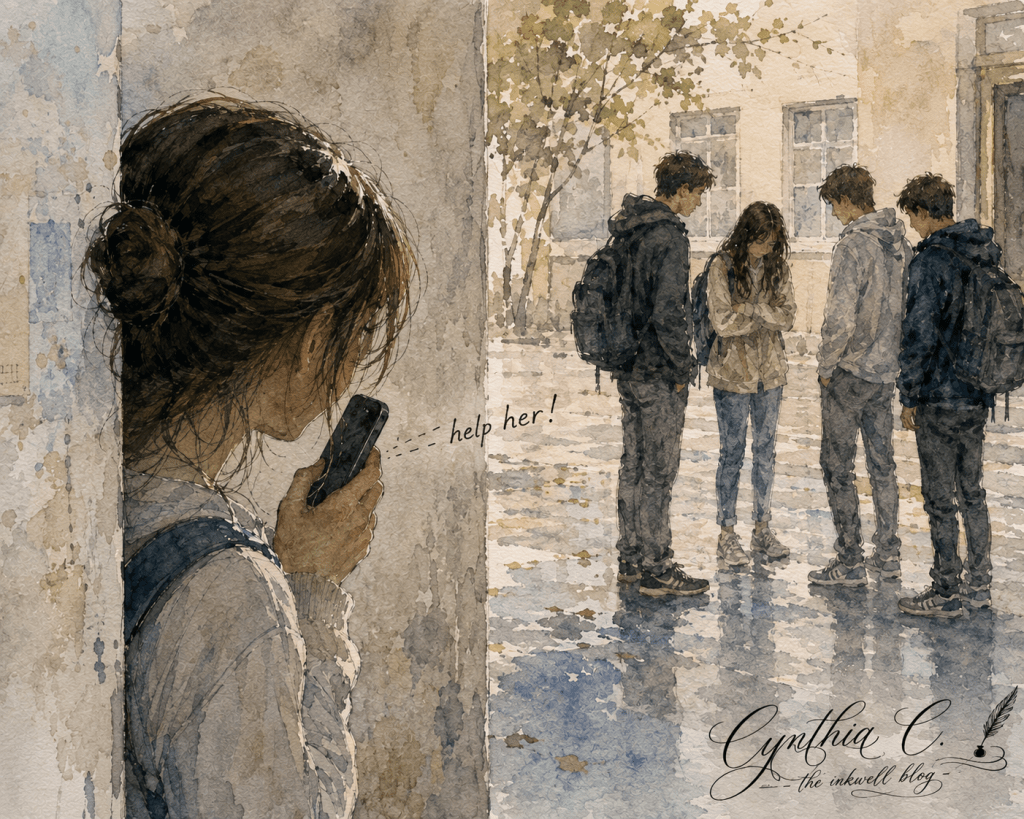
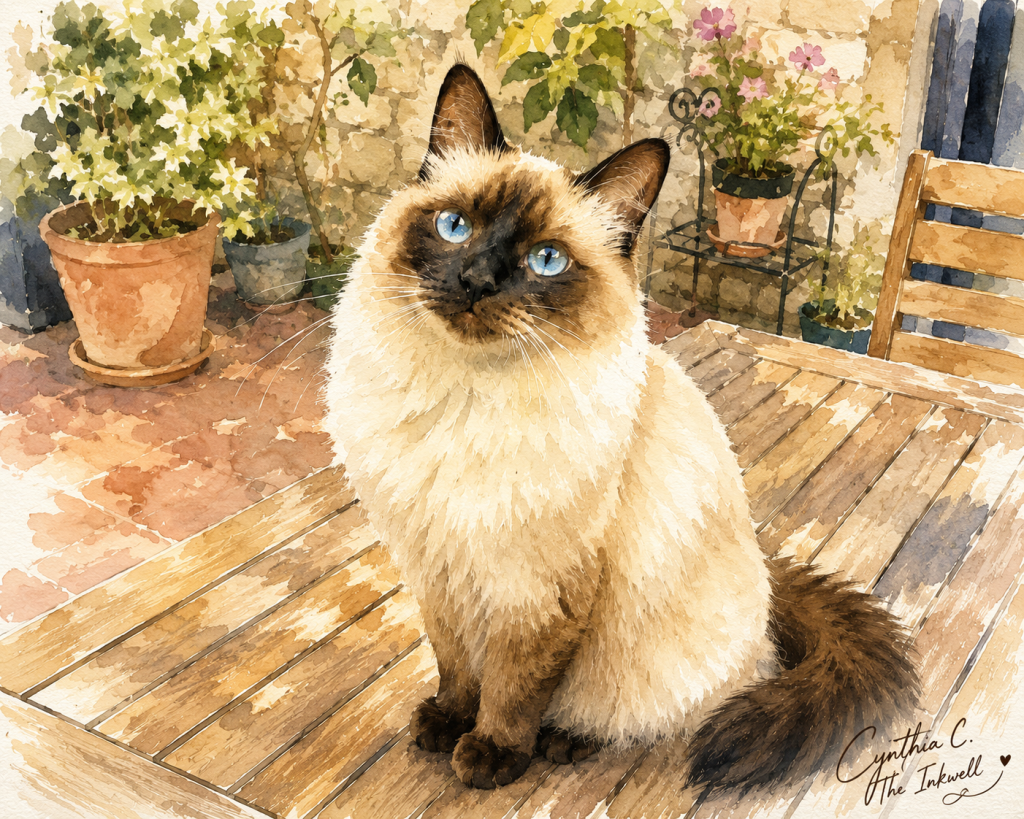

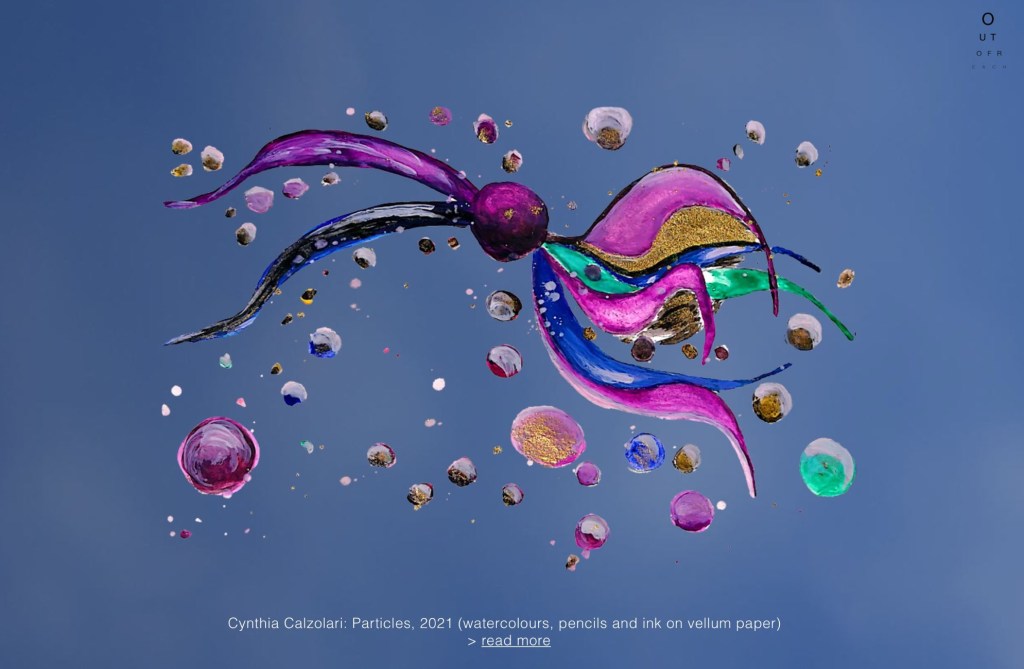

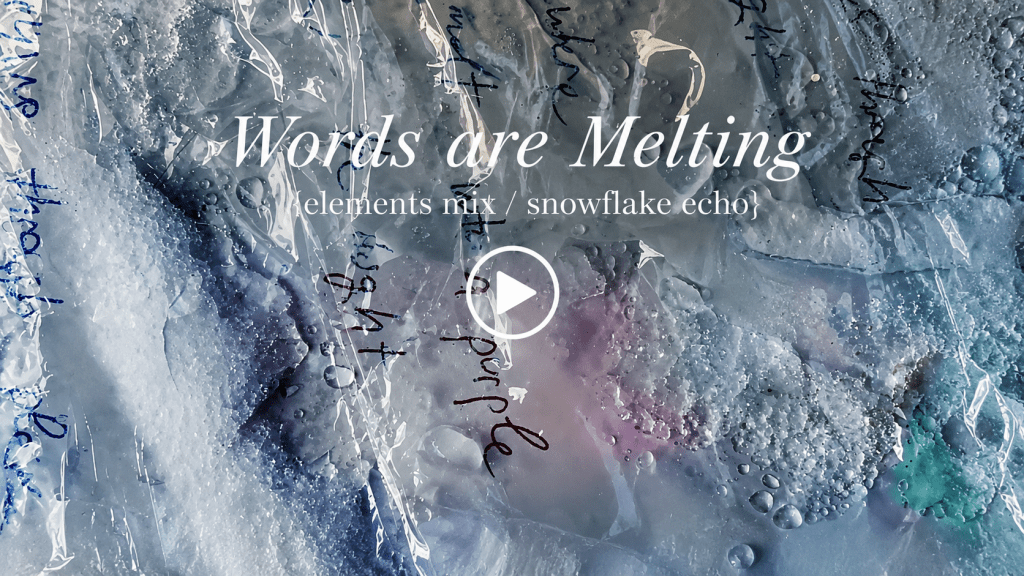

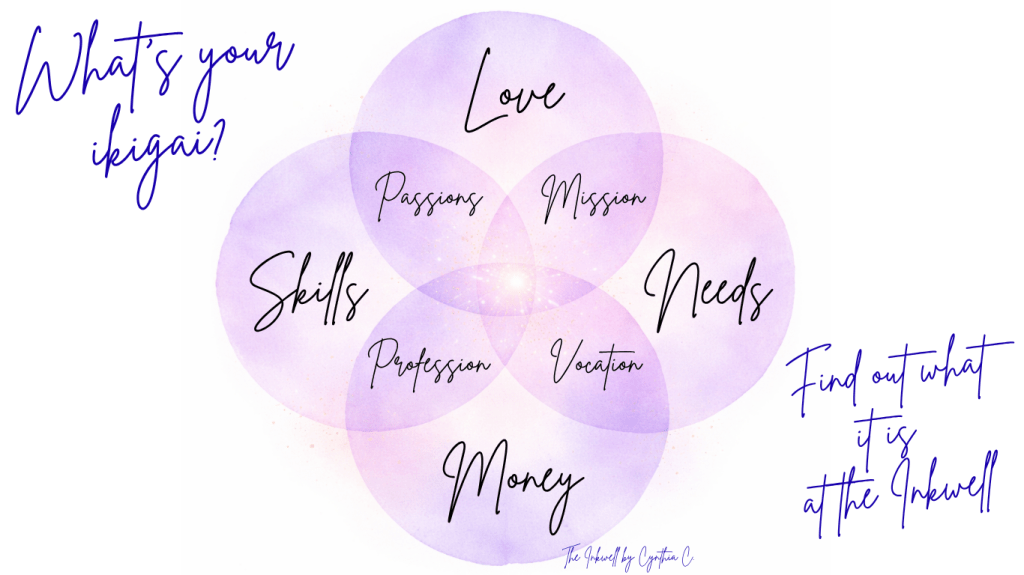




You must be logged in to post a comment.