🇬🇧 When Disaster Strikes: Lessons in Preparedness from Japan| 🇫🇷 Quand la catastrophe frappe : leçons de préparation depuis le Japon

Read in English…

Lire en français…

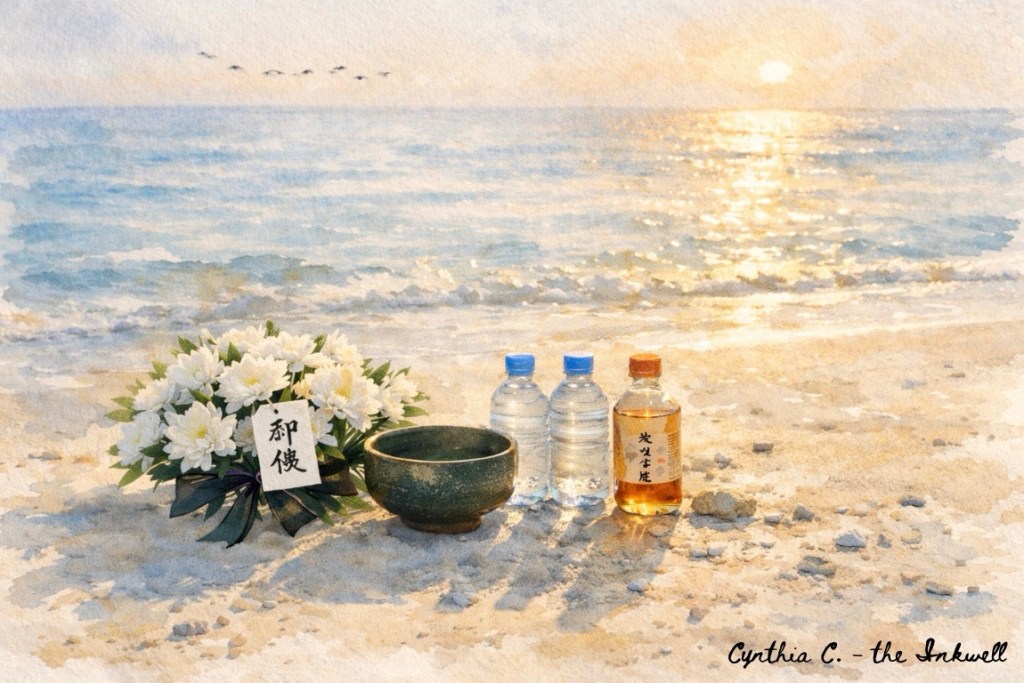
Remembering the 11th March Great East Earthquake

____

🇬🇧 When Disaster Strikes: Lessons in Preparedness from Japan

Every year on March 11, many people pause to remember the tragedy of the Great East Japan Earthquake. The disaster deeply affected the entire country and became one of the most important modern reminders of how powerful nature can be—and how essential preparation is.

This date also invites reflection on how different countries prepare their citizens for emergencies.

Some nations live with high natural risks but have limited training, weak infrastructure, or poor public awareness. Others have built a culture of preparedness that begins in childhood and continues throughout everyday life.

Italy, for example. It is a country exposed to earthquakes, floods, landslides, and volcanic activity. And yet, in practice, emergency education for ordinary citizens is extremely limited.

In schools, emergency drills are often little more than symbolic exercises. I remember never got a proper training as a student and only during the last year of high school the bell rings and whole classes messed together without even the register being walked outside like sheep in the yard. Stayed there…some students took the chance to smoke a cigarette, not one single teacher doing a proper training or explanation..and then back again, all messed together to the classrooms, with older students pushing younger ones up the stairs, and so on…

At the university I never saw a single training again, and I was there from 7am to 6pm.

Today, some schools continue with these “rush outside – all – together – now!” once a year—sometimes not even that—children are asked to leave their classrooms and walk outside into the school yard.

They can be at times lined up and taken out respecting an kind of order, still more or less with zero awareness of the importance of that missed opportunity, as almost nothing continues to be actually explained: no discussion of risks, no real instructions on how to react during a disaster, no training that would help them develop practical reflexes in an emergency situation.

The result is that many people grow up without ever learning what to do when a real emergency occurs.

The contrast with Japan is striking.

Japan is the country where life continues despite natural hazards do happen, such as earthquakes, tsunamis, typhoons, and heavy rains. Rather than ignoring these risks though, Japanese society has gradually developed systems where preparedness is integrated into everyday life.

Emergency education begins early in schools. Drills are frequent and structured. Workplaces practice evacuation procedures. Public institutions communicate clear instructions to the population.

Media organisations such as NHK, the national public broadcaster, also play an important role in teaching citizens practical survival knowledge, from evacuation behaviour to simple but crucial details—such as the best type of footwear to wear during a flood.

Over nearly forty years of life spent between Italy and Japan—studying, working, travelling, and experiencing everyday life in both countries—I have observed these differences firsthand.

Preparedness in Japan is not only about infrastructure or advanced technologies.

It is something deeply embedded in institutions, habits, and everyday awareness.

Personal Memory from Italy: The 2009 L’Aquila Earthquake

Preparedness is much about knowing what to do during disasters—and it is also about experiencing firsthand the suddenness and power of nature.

I remember clearly the night of the recent L’Aquila earthquake in Italy.

I had just returned from a night out with work colleagues downtown in Rome. I was part of the activity team of an environmental NGO, and after dinner and casual chats, two colleagues had kindly driven me and another teammate home. After a shower, I was sitting on my bed, texting the others to make sure they had reached home safely.

Suddenly, my cat jumped from the bed and began running frantically. Moments later, a huge, deep boom echoed from behind the wall, and our tall, heavy old wardrobe started moving and swirling. I was the only one awake. I called my sister and parents to wake them, warning them that an earthquake was happening. They felt the trembling floors just as the shaking subsided, leaving us stunned.

It wasn’t until the next morning that the full scale of the disaster became clear—the city of L’Aquila had been devastated.

This experience brought home the fragility of life in countries without strong citizen training and preparedness systems. Unlike in Japan, where emergency drills, evacuation plans, and early-warning systems are part of daily life, in Italy disasters often hit with little practical warning.

Other Natural Hazards in Italy: A Continuing Reality

Italy’s geography and climate expose the country to multiple types of natural disasters. Earthquakes are only one part of the picture. Floods, landslides, and volcanic risks remain constant threats in several regions.

Recent events show how serious these dangers still are.

In 2023, the 2023 Emilia‑Romagna floods devastated large parts of northern Italy. After days of intense rainfall, twenty-three rivers overflowed, flooding more than forty towns and triggering hundreds of landslides. At least 17 people lost their lives and more than 50,000 residents were displaced as entire neighbourhoods were submerged in water and mud.

The region had barely begun recovering when another severe flood struck in 2024, again affecting areas such as Faenza and Ravenna. Heavy rainfall caused rivers like the Lamone to overflow once more, inundating towns that had only recently repaired homes and infrastructure after the previous disaster.

Landslides are also a recurring danger. In 2022, heavy rains triggered the Ischia landslide on the island of Ischia near Naples, destroying houses and killing twelve people as mud and debris swept through the town of Casamicciola Terme.

More recently, in 2026, another major landslide struck the Sicilian town of Niscemi, forcing the evacuation of more than a thousand residents after heavy rains destabilised the terrain and caused a large section of land to collapse.

These events highlight a broader reality: millions of people in Italy live in areas exposed to geological instability, with landslides becoming more frequent due to extreme rainfall and environmental pressures.

Flooding has also marked the history of central Italy, particularly in Florence, where the Arno River has repeatedly overflowed over the centuries.

One of the most dramatic events occurred during the 1966 Flood of Florence, when the Arno burst its banks after days of heavy rain. Water and mud flooded the historic centre, reaching several metres in height in some areas. Thousands of homes, churches, and libraries were damaged, and an enormous number of priceless artworks and manuscripts were destroyed or severely affected.

The disaster also mobilised an extraordinary international response. Volunteers from around the world travelled to Florence to help rescue damaged books and artworks from mud and water. They became known as the “Mud Angels”, a symbol of cultural solidarity and recovery.

Tuscany continues to face similar risks today. Heavy rainfall regularly causes flooding and landslides in several parts of the region, particularly in river valleys and hilly areas where soil instability can quickly turn storms into dangerous situations.

In recent years, intense storms have caused flooding and landslides in different areas of the Tuscan Apennines. Extreme weather events are becoming more frequent, increasing pressure on infrastructure and communities that must adapt to changing environmental conditions.

These recurring events highlight how central Italy, like many other parts of the country, remains vulnerable to hydrogeological risks, especially when heavy rainfall combines with fragile terrain and densely populated historic cities.

Beyond earthquakes and floods, Italy also faces major volcanic risks.

The city of Naples lies close to Mount Vesuvius, the volcano responsible for the destruction of Pompeii in 79 AD.

Nearby lies another even larger volcanic system: the Campi Flegrei (Phlegraean Fields), a vast caldera with ongoing geological activity. Scientists closely monitor the area because millions of people live in its surroundings.

These examples show that natural hazards in Italy are not isolated events but part of a long and ongoing reality.

First Encounters with Japanese Emergency Preparedness

The first time I experienced a structured emergency procedure connected to Japan was actually outside Japan itself.

I used to visit the Japan Foundation library regularly. After completing a one-year intensive Japanese language program, it had become a weekly habit to spend time there reading and preparing my field research project .

One day, without warning, an emergency drill began.

The staff calmly guided everyone through the evacuation procedure. What impressed me most was how routine and natural the entire process felt. There was no confusion, no panic. Everyone knew exactly what to do.

What struck me even more was the realisation that Japanese institutions maintain these practices even abroad. Preparedness is not limited to Japan itself; it is treated as part of institutional culture.

A Personal Memory from Japan After the 2011 Disaster

I travelled to Japan for my first research stay one year after the Great East Japan Earthquake.

Even in Tokyo, far from the areas most directly devastated, the effects were still visible.

The city was darker at night because electricity consumption was still being reduced nationwide. Some supermarket shelves remained empty due to supply disruptions. Recovery was ongoing, and many communities were still dealing with the consequences of the disaster, yet streets and public transports were fully operational and functioning regularly – the only discomfort was reduced light at night in public spaces, and train speed.

Yet what impressed me most was not the difficulty.

It was the attitude of the people.

While travelling Tokyo, and south toward Kyoto, I encountered constant acts of kindness.

Even the train arrived at the stop of a small town festival (matsuri), someone offered me a traditional paper fan. From another market, a vendor insisted I take a tea sample.

On a train, an elderly man travelling with children smiled and told me:

“The matsuri was beautiful! Next year you have to come to our matsuri!”

The children laughed and proudly showed me their festival fans and summer dresses.

Despite the trauma that still lingered in the country, people seemed determined to move forward with energy, generosity, and love for life..towards an even more welcoming attitude towards visitors and foreigners.

It was a form of resilience that went beyond infrastructure or technology. It was something deeply human.

Practical Lessons in Disaster Preparedness

Below are some practices and insights I have observed over the years, along with useful information shared by NHK. There are plenty of official apps from both the government and national media to receive updates and support during crisis. Please refer to official sites for updated versions and instructions.

1. Preparedness Begins Before the Disaster

In Japan, disaster education begins in childhood.

Students regularly participate in evacuation drills and learn:

how to react during earthquakes

how to evacuate safely

where emergency shelters are located

how to use emergency supplies

Preparedness is treated as basic civic knowledge.

2. Emergency Kits Are Essential

Japanese households are encouraged to maintain emergency kits designed to sustain a person for at least 72 hours.

Typical kits include:

bottled water

preserved food

flashlight

batteries

portable radio

first aid supplies

hygiene products

copies of important documents

The principle is simple: be able to survive independently until rescue arrives.

3. Unexpected Lessons: Avoid Boots During Floods

One practical lesson I recently learned through educational programs from NHK surprised me.

During floods, boots can actually become dangerous.

They fill quickly with water, become extremely heavy, and significantly reduce mobility. In moving water this can make it much harder to walk or escape.

Instead, experts recommend wearing:

trainers

lightweight shoes

footwear made from quick-drying materials

Mobility is essential during evacuation.

4. Technology Can Support Survival

Japan also integrates disaster preparedness into everyday infrastructure.

A fascinating example is vending machines.

In many areas of Japan, certain vending machines are designed so that during emergencies a special section unlocks, providing free access to:

drinking water

emergency supplies

basic hygiene items

first aid materials

This simple idea turns a familiar object of daily life into a community survival resource.

5. Save Yourself First

One principle sometimes feels counterintuitive but is strongly emphasised in emergency training:

Save yourself first.

Attempting to rescue others without training can increase the number of victims.

Rescue operations require coordination and equipment. If you are injured while trying to help someone, both of you may end up in danger.

Professionally trained emergency teams exist precisely for these situations.

Your priority is to reach safety and regroup with others.

6. If You Are Near the Sea During an Earthquake

If an earthquake occurs while you are near the coast, tsunami risk becomes a critical concern.

A widely taught rule in Japan is:

Move to the highest possible level immediately.

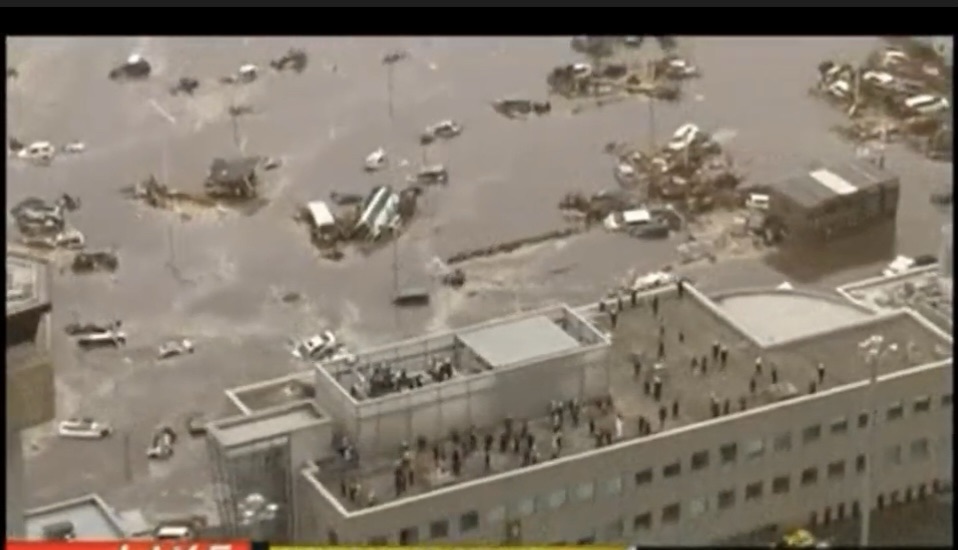
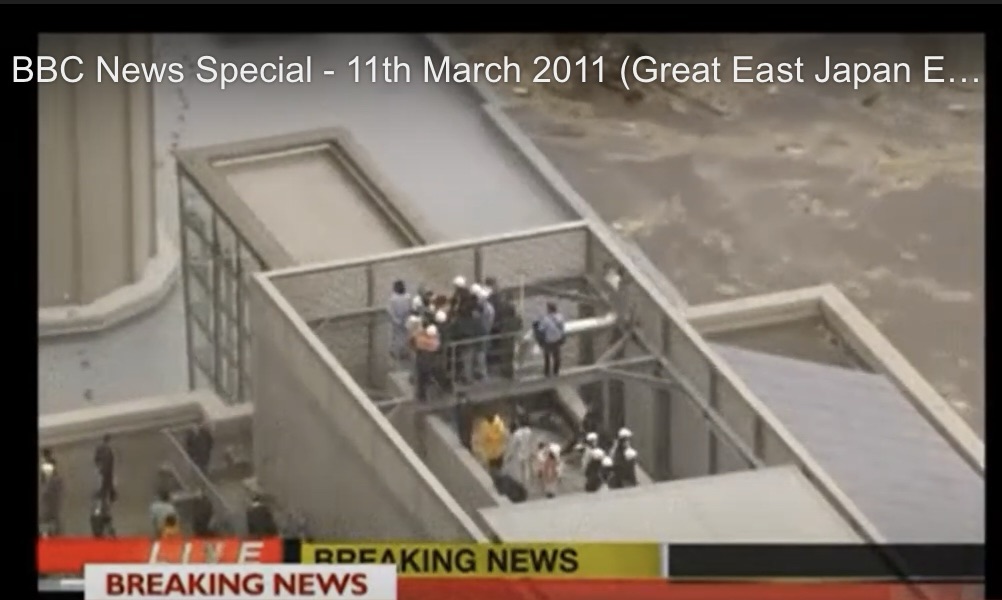
If you are inside a building, head toward the upper floors or rooftop terrace.

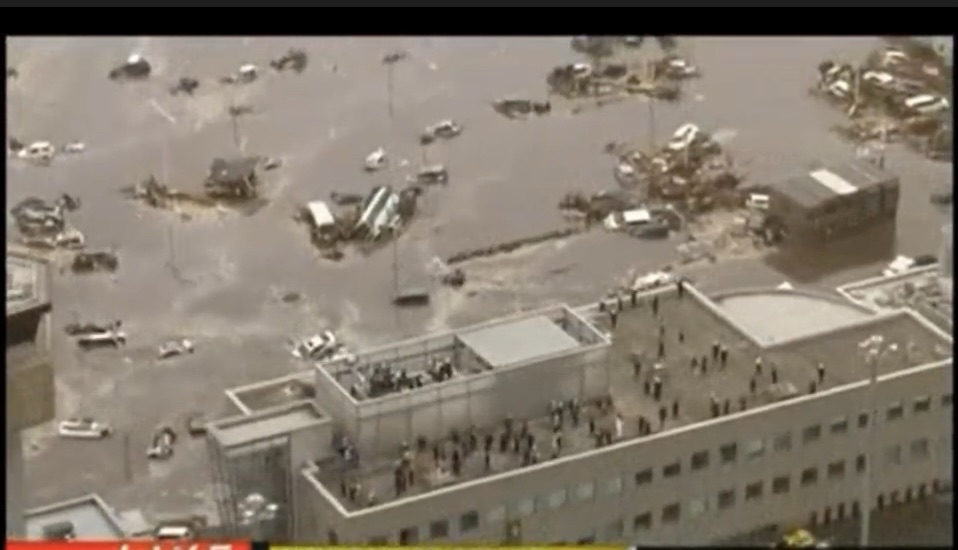
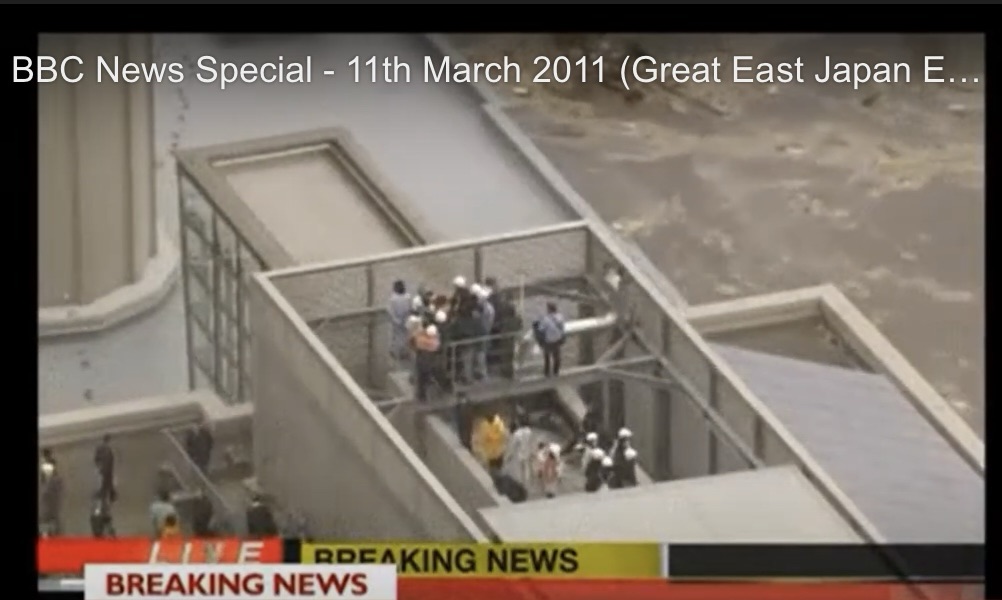
During the Great East Japan Earthquake, one famous example demonstrated this perfectly. A group of people quickly reached the roof of their building and waited there for rescue. When the tsunami waves arrived, the lower floors were completely destroyed, but the people on the rooftop survived.

Their survival became a powerful example of practices that are not only taught—but deeply embedded in public awareness.
7. Learn Basic Emergency Phrases in the Local Language

When travelling abroad, it can be extremely useful to learn a few emergency expressions in the local language.

Emergency Sentences in Japanese

When travelling abroad, learning a few emergency expressions in the local language can make a real difference. Here are some basic phrases in Japanese that may help in critical situations.
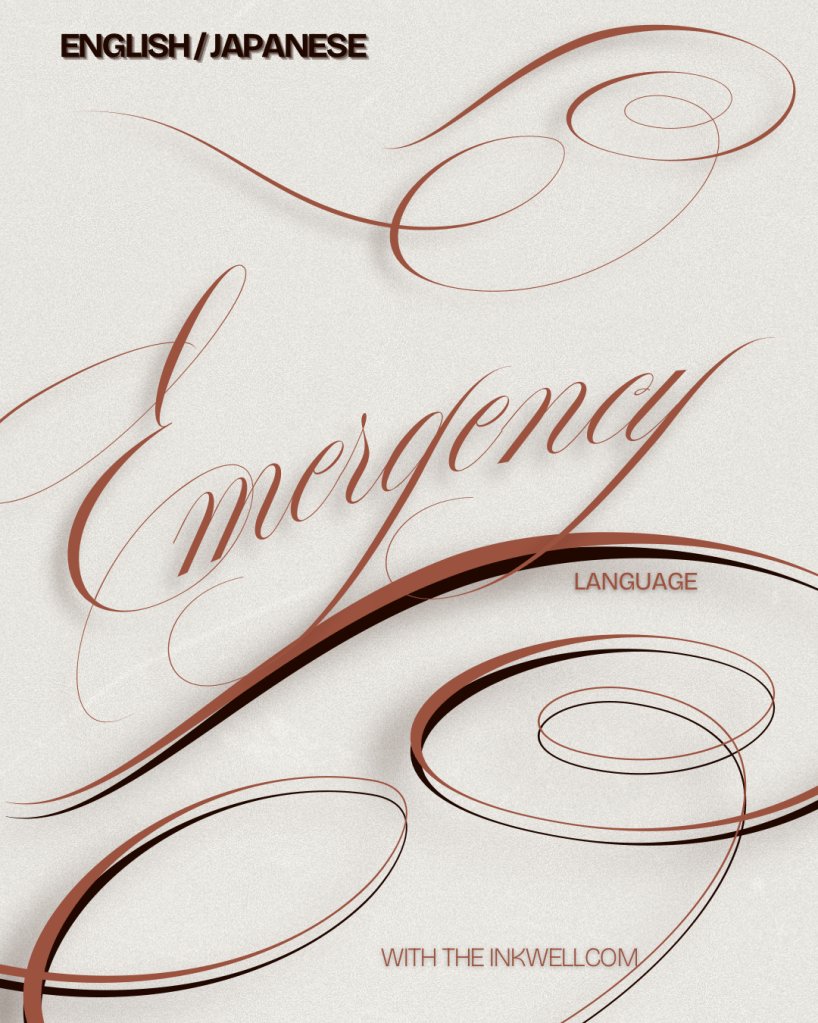
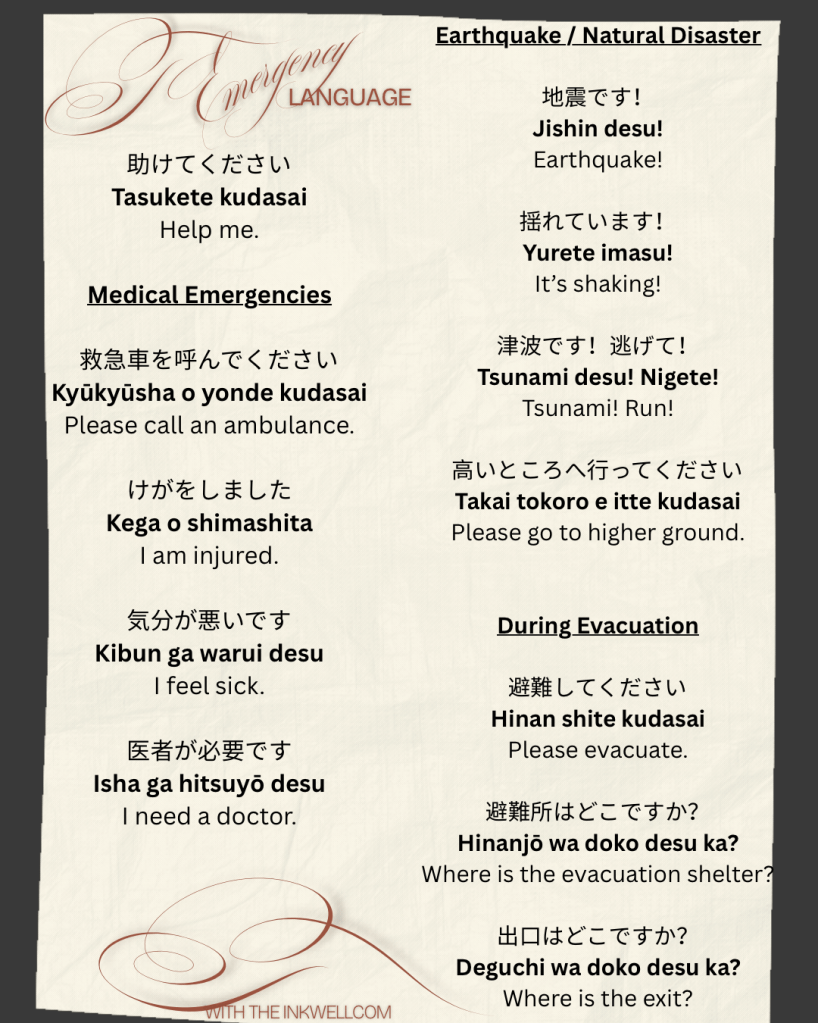
(Useful expressions to know during disasters or emergencies)

These few sentences can make an enormous difference if you ever need assistance.

Final Reflection: Preparedness in an Age of Climate Change 『Why Prevention Matters』

Preparedness is not about living in fear.

Natural disasters cannot always be prevented.

However, their impact can be significantly reduced through preparation, education, and investments in the right sectors….avoiding waste.

Effective systems require:

strong public education

community drills and training

accessible information

investment in science and technology

infrastructure designed for resilience

Japan demonstrates that preparedness is not only a technical issue.

It is also a cultural value shared by society.

It is about respecting the forces of nature while protecting human life.

The kindness I witnessed in Japan one year after the disaster—people sharing tea, children offering festival fans, strangers smiling on trains—revealed something profound.

Even after tragedy, resilience can flourish when a society combines knowledge, organisation, and solidarity with kindness.

Disaster preparedness ultimately teaches us one essential truth:

survival is not only about infrastructure—it is also about community.

It is about recognising reality and respecting the forces of nature while protecting human life.

The lessons that societies like Japan have developed over decades are becoming increasingly relevant for many other countries today.

Climate change is already intensifying extreme weather events around the world: stronger storms, heavier rainfall, more frequent flooding, heat waves, and environmental instability. Many places that previously considered disasters as far or rare events are now forced to confront them and even quite regularly.

For this reason, emergency preparedness should no longer be seen as a concern limited to and for certain regions. It is becoming one of the real societal challenges of this decade.

Education, prevention, and investment in scientific research and resilient infrastructure will be essential if societies want to minimise the human and economic cost of future disasters.

The memory of events like the Great East Japan Earthquake reminds us that recovery is possible—but it also shows how crucial preparation is before disaster strikes.

In the end, resilience is built through knowledge, organisation, and solidarity.

And perhaps most importantly, through the simple awareness that protecting life begins long before the emergency itself.

Conclusion: The importance of recognising danger

Prevention is not only a matter of technology or emergency response systems. It is also, and perhaps above all, a matter of culture and awareness.

Countries that invest in disaster education, scientific research, and infrastructure demonstrate that risks can be reduced when people understand the importance of preparation. Training citizens, informing communities, and building resilient systems are all essential steps in minimising the impact of natural hazards.

However, another factor plays a crucial role: the ability to recognise danger when it appears.

In Italy, one of the most serious problems is often the lack of collective awareness regarding the early signs of a whatever risk.

Whether we speak about natural disasters or about gender-based violence, a similar pattern can often be observed: warning signs are underestimated, the possibility of escalation is overlooked, and the danger is normalised until it becomes impossible to ignore.

This failure to recognise and respond to risk in its early stages -when it is more possible to have effective outcomes- frequently becomes one of the major underlying causes of tragedy.

Learning to identify danger, to speak openly about it, and to respond collectively and responsibly is therefore not only a matter of emergency management.

It is a cultural challenge that societies must face if they wish to protect lives in the future.

In an era where climate change is increasing the frequency and intensity of extreme events, improving prevention, education, and risk awareness must become one of the real emergencies of this decade.

___

🇫🇷 Quand la catastrophe frappe : leçons de préparation venues du Japon

Chaque année, le 11 mars, de nombreuses personnes s’arrêtent pour se souvenir de la tragédie du Grand tremblement de terre de l’Est du Japon. Cette catastrophe a profondément marqué tout le pays et reste l’un des rappels les plus importants de la puissance de la nature — et de l’importance vitale de la préparation.

Cette date invite également à réfléchir sur la manière dont différents pays préparent leurs citoyens aux situations d’urgence.

Certaines nations vivent avec des risques naturels élevés, mais disposent d’une formation limitée, d’infrastructures faibles ou d’une sensibilisation du public insuffisante. D’autres ont construit une culture de la préparation qui commence dès l’enfance et se poursuit tout au long de la vie quotidienne.

L’Italie, par exemple. Le pays est exposé aux tremblements de terre, aux inondations, aux glissements de terrain et aux activités volcaniques. Et pourtant, en pratique, l’éducation à la sécurité civile pour les citoyens ordinaires est extrêmement limitée.

Dans les écoles, les exercices d’évacuation ne sont souvent que symboliques. Je me souviens de n’avoir jamais reçu de véritable formation en tant qu’élève. Ce n’est que durant ma dernière année de lycée que la sonnerie a retenti et que toute la classe a été regroupée et sortie dans la cour, sans même qu’un registre ne soit vérifié. Certains élèves en ont profité pour fumer une cigarette, et aucun enseignant n’a donné de formation ou d’explication appropriée. Puis, retour en classe, tous entassés, les élèves plus âgés poussant les plus jeunes dans les escaliers, et ainsi de suite…

À l’université, je n’ai jamais vu un seul exercice de formation, alors que j’y étais de 7h à 18h.

Aujourd’hui, certaines écoles continuent ces exercices “tous dehors en même temps” une fois par an — parfois même pas cela. Les enfants sont simplement invités à sortir dans la cour. Parfois, ils sont alignés et encadrés, mais il n’y a pratiquement aucune explication sur les risques, aucune instruction réelle sur la réaction à adopter en cas de catastrophe, aucun apprentissage permettant de développer des réflexes pratiques en situation d’urgence.

Le résultat est que beaucoup grandissent sans jamais apprendre ce qu’il faut faire en cas de véritable urgence.

Le contraste avec le Japon est frappant.

Le Japon est un pays où la vie continue malgré les risques naturels : tremblements de terre, tsunamis, typhons et fortes pluies. Mais au lieu d’ignorer ces dangers, la société japonaise a progressivement développé des systèmes où la préparation fait partie intégrante de la vie quotidienne.

L’éducation à la sécurité commence dès l’école primaire. Les exercices sont fréquents et structurés. Les entreprises pratiquent des procédures d’évacuation. Les institutions publiques diffusent des instructions claires à la population.

Les médias, tels que NHK, la chaîne publique nationale, jouent également un rôle important en enseignant aux citoyens des connaissances pratiques de survie, depuis le comportement à adopter lors d’une évacuation jusqu’aux détails essentiels — comme le type de chaussures à privilégier lors d’une inondation.

Au cours de mes près de quarante années passées entre l’Italie et le Japon — études, travail, voyages et vie quotidienne — j’ai pu observer ces différences de première main.

La préparation au Japon ne se limite pas à l’infrastructure ou aux technologies avancées.

Elle est profondément ancrée dans les institutions, les habitudes et la conscience quotidienne.

Souvenir personnel d’Italie : le tremblement de terre de L’Aquila en 2009

La préparation consiste autant à savoir quoi faire qu’à vivre en direct la soudaineté et la puissance de la nature.

Je me souviens parfaitement de la nuit du tremblement de terre à L’Aquila.

Je venais de rentrer d’une sortie avec des collègues du travail à Rome. Je faisais partie de l’équipe d’animation d’une ONG environnementale. Après le dîner et les discussions, deux collègues m’avaient gentiment raccompagnée, moi et une autre collègue, chez moi. Après une douche, j’étais assise sur mon lit, envoyant des messages aux autres pour m’assurer qu’ils étaient bien rentrés.

Soudain, mon chat a sauté du lit et a commencé à courir partout de manière frénétique. Quelques minutes plus tard, un énorme boom profond a retenti derrière le mur, et notre vieille armoire haute et lourde a commencé à se déplacer et à tourbillonner. J’étais la seule réveillée. J’ai appelé ma sœur et mes parents pour les prévenir : un tremblement de terre avait lieu. Ils ont senti le sol trembler juste au moment où les secousses se sont calmées, nous laissant stupéfaits.

Ce n’est que le lendemain matin que l’ampleur de la catastrophe est devenue claire : la ville de L’Aquila avait été dévastée.

Cette expérience m’a fait prendre conscience de la fragilité de la vie dans les pays où les citoyens ne sont pas formés et préparés. Contrairement au Japon, où exercices d’évacuation, plans et systèmes d’alerte précoce font partie de la vie quotidienne, en Italie, les catastrophes frappent souvent sans avertissement pratique.

Autres risques naturels en Italie : une réalité continue

La géographie et le climat de l’Italie exposent le pays à de nombreux types de catastrophes naturelles. Les tremblements de terre ne sont qu’une partie du problème. Inondations, glissements de terrain et risques volcaniques représentent des menaces constantes dans plusieurs régions.

Exemples récents

Inondations en Émilie-Romagne (2023) : après plusieurs jours de pluie intense, 23 rivières ont débordé, inondant plus de quarante villes et déclenchant des centaines de glissements de terrain. Au moins 17 personnes ont perdu la vie et plus de 50 000 résidents ont été déplacés.

Nouvelle inondation (2024) : les rivières, comme le Lamone, ont de nouveau débordé, affectant des zones récemment réparées après les inondations précédentes.

Glissement de terrain à Ischia (2022) : la pluie a provoqué un glissement de terrain qui a détruit des maisons et tué douze personnes.

Glissement de terrain à Niscemi (2026) : plus de 1 000 habitants ont été évacués après l’effondrement d’une portion de terrain instable.

Ces événements montrent que des millions de personnes vivent dans des zones exposées à l’instabilité géologique, avec des glissements de terrain devenant plus fréquents à cause des pluies extrêmes et des pressions environnementales.

Florence et la Toscane

Les inondations ont également marqué l’histoire du centre de l’Italie, particulièrement à Florence, où l’Arno a régulièrement débordé.

Inondation de Florence (1966) : l’Arno a rompu ses digues après plusieurs jours de pluie. Des mètres d’eau et de boue ont envahi le centre historique. Des milliers de maisons, églises et bibliothèques ont été endommagées, et un nombre incalculable d’œuvres et manuscrits précieux ont été détruits ou gravement affectés.

Les “Anges de la Boue” : des volontaires du monde entier sont venus aider à sauver les livres et œuvres touchés, symbole de solidarité culturelle et de reconstruction.

La Toscane reste vulnérable aujourd’hui : pluies intenses provoquent régulièrement inondations et glissements dans les vallées et zones montagneuses. Les événements extrêmes se multiplient, mettant à l’épreuve infrastructures et communautés.

Risques volcaniques

Au-delà des tremblements de terre et inondations, l’Italie fait face à de grands risques volcaniques.

Naples : proche du Vésuve, responsable de la destruction de Pompéi en 79 ap. J.-C.

Campi Flegrei : vaste caldeira active, surveillée de près en raison de la population dense alentour.

Ces exemples montrent que les catastrophes naturelles en Italie ne sont ni isolées ni exceptionnelles, mais font partie d’une réalité historique et actuelle.

Premiers contacts avec la préparation japonaise

La première fois que j’ai expérimenté une procédure d’urgence japonaise structurée fut en dehors du Japon.

Je fréquentais régulièrement la bibliothèque de la Japan Foundation après une année intensive d’études de la langue japonaise.

Un jour, sans avertissement, un exercice d’évacuation a commencé.

Le personnel a guidé calmement chacun à travers la procédure. Tout le monde savait exactement quoi faire. Aucune panique, aucune confusion.

Ce qui m’a frappé encore plus, c’est de constater que les institutions japonaises maintiennent ces pratiques même à l’étranger. La préparation est traitée comme une culture institutionnelle, pas seulement comme une mesure ponctuelle.

Souvenir personnel du Japon après le séisme de 2011

Je me suis rendue au Japon pour mon premier séjour de recherche un an après le Grand tremblement de terre de l’Est du Japon.

Même à Tokyo, loin des zones les plus touchées, les effets étaient visibles : moins de lumière la nuit, rayons de supermarché vides, perturbations de la vie quotidienne.

Mais ce qui m’a le plus impressionnée, ce n’était pas la difficulté : c’était l’attitude des gens.

Un petit village, un festival (matsuri) : on m’offre un éventail traditionnel.

Sur un marché : un vendeur insiste pour que je prenne un échantillon de thé.

Dans un train, un vieil homme avec des enfants me sourit :

« Le matsuri était magnifique ! L’année prochaine, vous devez venir à notre matsuri ! »

Les enfants riaient et me montraient fièrement leurs éventails et vêtements de festival.

Malgré le traumatisme encore présent, les gens étaient déterminés à avancer avec énergie, générosité et amour de la vie.

Leçons pratiques de préparation aux catastrophes

La préparation commence avant la catastrophe:

Éducation à la sécurité dès l’enfance

Exercices réguliers, refuges connus, utilisation des kits de secours

Les kits d’urgence sont essentiels

Eau, nourriture, lampe, radio, premiers secours, documents importants

Principe : survivre de manière autonome 72 heures

Leçons inattendues : éviter les bottes lors d’inondations

Elles se remplissent d’eau et réduisent la mobilité

Préférer chaussures légères et à séchage rapide

La technologie soutient la survie

Certaines distributeurs automatiques débloquent en urgence eau, fournitures et produits d’hygiène gratuitement

Se sauver d’abord

Tenter de sauver quelqu’un sans formation peut être dangereux

L’objectif : atteindre un lieu sûr et se regrouper

Proximité de la mer pendant un tremblement de terre

Se diriger vers les niveaux supérieurs du bâtiment

Exemples concrets lors du Grand tremblement de 2011 : les personnes arrivés sur le toit ont survécu aux vagues des tsunamis
Apprendre des phrases d’urgence locales

Exemples japonais :

助けてください (Tasukete kudasai) – Aidez-moi !

火事です (Kaji desu) – Au feu !

地震です (Jishin desu) – Tremblement de terre !

Réflexion finale : la préparation à l’ère du changement climatique

La préparation ne consiste pas à vivre dans la peur.

Les catastrophes naturelles ne peuvent pas toujours être évitées, mais leur impact peut être réduit grâce à la préparation, l’éducation et les investissements adaptés.

Le Japon montre que la préparation est aussi une valeur culturelle, fondée sur le respect de la nature et la protection de la vie humaine.

La gentillesse observée après le séisme — partager du thé, offrir des éventails — révèle que la résilience se construit par la connaissance, l’organisation et la solidarité.

Conclusion : l’importance de reconnaître le danger

La prévention n’est pas seulement une question de technologie ou de systèmes d’urgence. C’est avant tout une question de culture et de conscience.

Dans beaucoup de pays, et particulièrement en Italie, un des problèmes majeurs est le manque de reconnaissance précoce du danger.

Qu’il s’agisse de catastrophes naturelles ou de violences basées sur le genre, les signes d’alerte sont souvent sous-estimés, la possibilité d’escalade négligée, et le danger normalisé jusqu’à ce qu’il devienne impossible à ignorer.

Ce défaut de perception est une cause majeure de tragédies évitables.

À l’ère du changement climatique, où les événements extrêmes se multiplient et s’intensifient, l’éducation, la prévention et la conscience du risque doivent devenir l’une des véritables urgences de cette décennie.

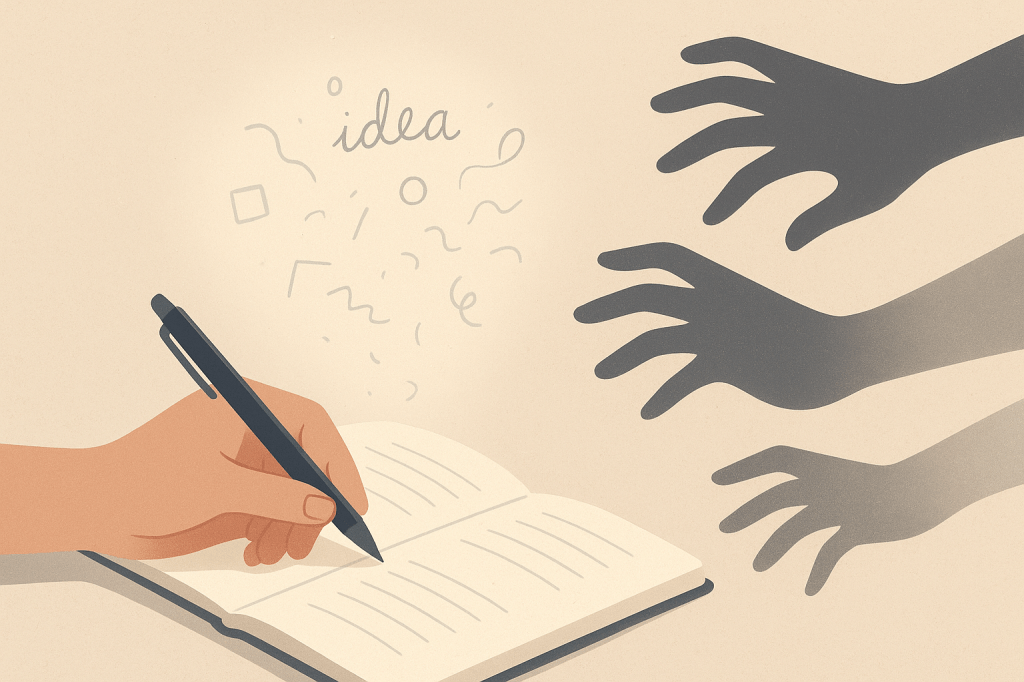
When Inspiration Crosses the Line | Quand l’inspiration dépasse la limite

🇬🇧 Read the full post clicking here

🇫🇷 Ici pour lire en français

🇬🇧 When Inspiration Crosses the Line: Reflections on Intellectual Respect

There is something I want to clarify before anything else: this post is not intended to be judgmental but, I hope it can help to reflect on major unseen wounds the powerful ones can inflict on the less influential and known authors.. and possibly help to develop more intellectual (and human) honesty.

I know that influence often flows without intention. We absorb what we read, what we hear, what resonates with us. It’s normal.

But sometimes that “inspiration” travels too far — to the point where someone’s work is lifted almost intact, placed into another context, and released as if it had no origin.

It’s very easy to do, especially when that source is a smaller voice, or when the idea comes from someone who isn’t a well-known author, unlike certain writers who — after a long writing life — sometimes seem to run out of novelty, and yet, still feel entitled to absorb from those less visible.

What strikes me in this era is the growing hunger for recognition, for fame especially on the web and mass media addictions that we couldn’t even imagine 10 years ago, as if visibility were the only shield that could protect one’s ideas from being quietly taken…

Perhaps that is why so many feel compelled to cling to the spotlight: because anything created outside of it becomes too easy to appropriate.

And truly, it would be enough to acknowledge the source.

In the last few months, I’ve noticed something curious — and unsettling.

Some of the reflections I’ve shared here, crafted with care and rooted in years of study, suddenly reappeared in articles, newsletters, and social commentaries written by people who have never exchanged a word with me although we have those famous 6 degrees of separation (my Italian teacher in high school was the daughter of the major Italian news director…and some who studied at my same school are now working in major tv shows and programmes…so…it’s not so difficult…). My phrases, my angles, my theories — repackaged as if they had always belonged to someone else.

It’s not dramatic. But it is revealing.

And it raises a bigger question: what does it mean to write, to create, when the lines between inspiration, borrowing, and exploitation have grown dangerously thin?

The Anthropologist’s Lens: Gifts, Theft, and the Circulation of Ideas

Anthropology has long studied how ideas move. Marcel Mauss described the “spirit of the gift”: even an object carries the imprint of the giver.

What we post online works the same way.

Even when words float freely, they carry a signature — an emotional, intellectual fingerprint.

The problem today is not that ideas circulate. It’s that platforms encourage strip-mining of thought without context, or acknowledgment.

Borrowing becomes extraction.

Inspiration becomes silent appropriation.

What once was dialogue now feels like content harvesting.

It is important to see what that inspiration has produced too: if someone less visible, a student for example, takes note during a lesson and develops reasonings based on what listens, it’s something (also because the professors are supposed to be trained, prepared to share only what they intend and useful for the lesson) – if a professor, a teacher, an established researcher uses what a student is beginning to develop…well, in my humble opinion, is something else…especially because that student is not prepared, not trained yet to protect themselves and their work from others’ greed.

This is something I’ve never been taught at University, and I have truly missed and felt I needed as a student coming from a family with no experience in university life: how to protect myself and my work from jackals.

Same with writers, or politicians: if a writer or politician doesn’t bother to pay a ghost writer as the good politicians of a generation ago used to do, it says already a lot of what you can expect from them…and I don’t like it…because there’s a echo of dishonesty and greed in such acts, that a civic society shouldn’t let happen.

Why it has to be so difficult to admit someone with less experience comes with a good idea? Why, instead of levelling down such brilliant minds, institutions and supervisors don’t acknowledge and guide in respectful ways said researcher?

Too many times I’ve seen and experienced how some feel entitled to appropriate others’ less famous or published authors-researchers, and kneecap them…because, yes, probably some of you don’t know how it feels, but I assure you when someone that is part (hence represents) an institution — being an university, a publishing company, or whatever— acts like that, they drain little by little that trust a young researcher has towards them, and society at large at times, and really you feel like they are shooting in your legs.

There is also Emotional Labour Behind —

Although people often underestimate the invisible labour behind writing.

Even a single post of a blog might be shaped by years of reading, fieldwork, lived experience, healing, or spiritual reflection. When someone takes the surface — a sentence, a point of view, an argument — they erase not just the source, but the process…and the person behind it.

Not mentioning physical pain when, as it’s happening recently to me, you start to experience chronic arthritis.

For many of us, especially those who write across culture, ethics, spirituality, and memory, the cost is double:

our voice is copied, but our vulnerability remains ours alone.

It’s not “just content”.

It’s intellectual labour — often unpaid and uncredited.

The Unpublished Work Problem

What unsettles me most is that this dynamic isn’t new.

It happened even when I was still studying, sharing early drafts, research ideas, or theoretical links during seminars, workshops, or private conversations.

That kind of intellectual production is almost impossible to protect: it isn’t published, it carries no official timestamp, and the fragility of student work makes it easy for others to absorb your insights and present them later as their own.

Those ideas existed — but only in spoken form, private notes, and early manuscripts that never received the “protection” of a publication date.

And so, when I see echoes of my academic reflections in later articles or research by others, I’m left with a familiar feeling: knowing something came from my mind, and in-field work, yet having no formal way to claim it back.

Sexism and Power Dynamics

This dynamic, unfortunately, often unfolds in profoundly gendered ways.

Women’s ideas, labour, and intellectual contributions are still too frequently absorbed, reframed, or claimed by more influential men who benefit from institutional positions, visibility, or authority – especially in patriarchal societies where this is just normalised as sexual harassment.

It is not always loud or explicit; often it is subtle, disguised as “mentorship,” “guidance,” or mere coincidence.

But beneath these narratives lies an old pattern: when power is unevenly distributed, the work of women becomes easier to appropriate, easier to silence, and harder to defend.

This is not only an issue of individual ethics — it reflects structural inequalities that allow certain voices to be amplified simply because they belong to men, while women must fight twice as hard to protect what they create.

Naming this imbalance is crucial, because respecting intellectual labour also means dismantling the gendered hierarchies that continue to shape who gets credit, who is paid (more), who is listened to, and who is quietly erased.

Some examples of how this habit is well rooted -throughout international contexts…

📚 Literature & Philosophy:

1. Zelda Fitzgerald (writer) — overshadowed by F. Scott Fitzgerald

Much of Zelda’s writing — diary passages, letters, even scenes she drafted — ended up incorporated into F. Scott Fitzgerald’s novels, most famously The Great Gatsby and Tender Is the Night. He often discouraged her from publishing independently, claiming it threatened his reputation.

2. Mary Wollstonecraft Shelley (writer) — initially credited to Percy Shelley

Early readers and critics believed Frankenstein had been written by Percy Shelley, not Mary. Percy edited the manuscript heavily and attached a preface in his own name, leading to decades of misattribution despite Mary being the true author.

3. Colette (novelist) — early novels published under her husband Willy’s name

Colette’s husband, Henry Gauthier-Villars (“Willy”), forced her to write the Claudine series while he published them under his own name. Only years later was she able to reclaim her authorship.

4. Simone de Beauvoir — overshadowed by Sartre’s fame

Although not “stolen,” her work was consistently diminished and subsumed under Sartre’s influence. Many of her philosophical contributions were attributed to him, despite her independent innovations.

🎼 Music & Composition:

5. Clara Schumann (composer & pianist) — overshadowed by Robert Schumann

Clara was a celebrated virtuoso and respected composer in her own right, but her works were often attributed to her husband or dismissed as secondary. Some of her compositions are now believed to have been published under Robert’s name.

6. Fanny Mendelssohn (composer) — published under Felix Mendelssohn’s name

Fanny wrote over 400 pieces, but her family discouraged her from publishing because she was a woman. Several of her songs were published under Felix’s name, with Felix later admitting she had superior musical talent.

7. Alma Mahler (composer) — silenced by Gustav Mahler

Gustav Mahler forbade Alma from composing after marriage, insisting there could not be “two composers in one family.” She wrote exceptional music early in life, much of it unpublished or suppressed.

🎨 Art & Academia:

8. Camille Claudel (sculptor) — overshadowed by Auguste Rodin

Claudel was Rodin’s collaborator and contributed heavily to some of his celebrated works. Her own artistic identity was overshadowed, and her contributions were often absorbed into Rodin’s legacy.

9. Lise Meitner (physicist) — discovery of nuclear fission credited to Otto Hahn

Although not a writer/composer, this is one of the clearest cases of intellectual appropriation: Meitner’s theoretical explanation of nuclear fission was essential, yet the Nobel Prize was given only to Hahn.

🖋 Publishing & Academia:

10. Rosalind Franklin (scientist) — DNA structure credited to Watson & Crick

Watson and Crick used Franklin’s photographs and data without permission or acknowledgment, building their model of DNA on her research. Her contribution was minimized for decades.

The Line Between Influence and Exploitation

Influence is natural. We all absorb and remix ideas.

Exploitation, however, has a different flavour. It often looks like:

No credit, even when the concept is nearly identical.

Rapid extraction: someone publishes your ideas days after you share them (and before you are allowed to expand said work).

Flattened context: your nuanced reflections appear in a superficial retelling.

Asymmetry of power: larger platforms take from smaller, careful voices, levelling down the main reasoning behind (because the priority is to publish sooner, faster and possibly more – to convince themselves -at least- of their superiority) .

This dynamic mirrors older patterns of cultural appropriation — the strong taking from the small, the loud taking from the reflective, the fast taking from the slow.

Five Small Things That (CAN) Make a Huge Difference

In reality, protecting intellectual work does not require monumental reforms.

It requires simply for small, although essential and civic gestures, that reflect honesty, integrity, and a basic respect for the labour of others.

Whether one is a supervisor, editor, publisher, or simply a reader, these actions matter:

Acknowledge your sources, even when they come from students, independent authors, or lesser-known voices. Prestige does not equal origin.

Cite ideas precisely, not vaguely; a clear reference is a form of intellectual fairness and prevents unintentional appropriation.

Maintain ethical boundaries in supervision and mentorship: support students’ growth without absorbing their insights into your own work.

Ask for permission when drawing on someone’s unpublished material — drafts, conversations, or seminar contributions are not “free”.

Encourage transparent publishing practices: dated drafts, collaborative agreements, and proper attribution protect everyone involved.

These may look like minor habits, but together they create a culture where thought is valued, not extracted.

Conclusion — On Trust, Institutions, and the Real Cost of Unacknowledged Work

Seeing others use your ideas without recognition is more than disappointing; it can erode motivation, confidence, and — perhaps most seriously — trust toward entire institutions.

When original contributions are overlooked or quietly absorbed into someone else’s research, students and independent authors learn a painful lesson: that VERY OFTEN visibility, not merit, determines whose ideas survive.

And this is dangerous.

It is essential that academic environments, publishers, and cultural institutions create clear methods for protecting student work and the creations of lesser-known authors. Because stealing from others does not make anyone grow. You might get away with it once, perhaps even twice — but the absence of the original mind behind those ideas eventually reveals itself. The reasoning, the method, the depth that were never yours cannot sustain you, and they cannot save an institution built on borrowed insight when they will need them original mind.

This is precisely where problems begin.

Respecting intellectual origins is not a courtesy; it is a safeguard.

It protects not only the author, but also the integrity of whoever engages with their ideas. When we acknowledge where thought comes from, we strengthen the entire structure of knowledge, and of a society itself.

Side Notes: Finding Strength to Write Again

I started to write again after a long period of silence and creative block, caused by seeing my work and ideas being silenced and later used by others. The turning point came thanks to a project I was awarded by two major Japanese institutions in an international selection. This recognition reminded me of my worth and confirmed that the work I had done was more than good enough.

As unfortunately that was a short-term project, I had to find within myself the strength and courage to continue, despite having no publishers or mentors actively supporting my writing at the time. Since then, I have managed to publish three articles — plus one more with an European University, though the journal is currently facing budget constraints due to global conflicts — simply because their value, both intellectual and human, was undeniable. I feel extremely proud and thankful, even if these should be the only works I ever see published in my life.

I continue to write and strive for visibility not for personal recognition, but for the work itself. I see too much mainstream discourse being treated as the “Holy Grail,” often with little to no reflection from researchers on the real impact of their own work on societies involved-considered. This is why I persist: to support ideas that are informed by welfare, women’s and children’s rights, and to ensure these principles remain central in every project.

The future is in today’s work : is shaped by what we choose to support, and grow now, for tomorrow.

This is why I cannot accept works that are based on losing progress and sight of human fundamental rights – regardless of their origins or beliefs.

I cannot ignore gender-based violence. I cannot, and will not, produce a major work that feels folkloristic or aestheticized if it entirely misses the lived realities of women and children — their basic needs, dignity, and rights.

My writing must always speak to these truths, grounding research, reflection, and publication in ethical responsibility.

If this means I will continue to have little support for my work, I will acknowledge it whilst continuing to feel proud and honest with others and respectful of humanity as of my own values.

____

🇫🇷 Quand l’inspiration dépasse la limite : réflexions sur le respect intellectuel

Il y a quelque chose que je souhaite clarifier avant toute chose : ce texte n’a aucune intention d’être moralisateur, mais j’espère qu’il pourra aider à réfléchir aux blessures invisibles que les plus puissants peuvent infliger aux auteurs moins connus ou moins influents… et peut-être encourager davantage d’honnêteté intellectuelle (et humaine).

Je sais que l’influence circule souvent sans intention. Nous absorbons ce que nous lisons, ce que nous entendons, ce qui résonne en nous. C’est normal .

Main parfois, cette « inspiration » va trop loin — au point que le travail de quelqu’un est repris presque tel quel, déplacé dans un autre contexte et publié comme s’il n’avait aucune origine.

C’est très facile à faire, surtout lorsque la source est une voix plus petite, ou lorsque l’idée vient de quelqu’un qui n’est pas un auteur célèbre — contrairement à certains écrivains qui, après une longue carrière, semblent parfois manquer de nouveauté mais se sentent tout de même légitimes d’absorber ce qui vient de ceux qui sont moins visibles.

Ce qui me frappe dans cette époque, c’est la faim croissante de reconnaissance, de célébrité, surtout avec l’addiction aux médias de masse et au web que nous n’aurions jamais pu imaginer il y a dix ans — comme si la visibilité était devenue le seul bouclier capable de protéger ses idées contre l’appropriation discrète…

Peut-être est-ce pour cela que tant de personnes s’accrochent désespérément à la lumière : parce que tout ce qui est créé en dehors d’elle devient trop facile à prendre.

Et, vraiment, il suffirait d’en reconnaître la source.

Ces derniers mois…

J’ai remarqué quelque chose de curieux — et d’inquiétant.

Certaines réflexions que j’ai publiées ici, pensées avec soin, enracinées dans des années d’étude, sont soudainement réapparues dans des articles, des newsletters ou des commentaires publics écrits par des personnes qui n’ont jamais échangé un mot avec moi, même si nous partageons ces fameux « six degrés de séparation » (ma professeure d’italien au lycée était la fille d’un des plus grands directeurs de presse italiens… et certains anciens élèves de mon école travaillent aujourd’hui dans de grandes émissions télévisées… donc ce n’est pas si improbable).

Mes phrases, mes angles, mes raisonnements — réemballés comme s’ils avaient toujours appartenu à quelqu’un d’autre.

Ce n’est pas dramatique.

Mais c’est révélateur.

Et cela pose une question plus vaste :

que signifie écrire, créer, quand les frontières entre inspiration, emprunt et exploitation deviennent dangereusement floues ?

Le regard de l’anthropologue : dons, vols et circulation des idées

L’anthropologie étudie depuis longtemps la manière dont les idées circulent.

Marcel Mauss parlait de « l’esprit du don » : même un objet porte l’empreinte de celui qui l’a offert.

Ce que nous publions en ligne fonctionne de la même manière.

Même lorsque les mots flottent librement, ils gardent une signature — une empreinte émotionnelle et intellectuelle.

Le problème aujourd’hui n’est pas que les idées circulent :

c’est que les plateformes encouragent l’extraction de pensée sans contexte, sans attribution.

L’emprunt devient extraction.

L’inspiration devient appropriation silencieuse.

Ce qui était dialogue devient récolte de contenu.

Il est important aussi de voir ce que cette « inspiration » produit réellement : si une personne moins visible, par exemple un étudiant, prend des notes pendant un cours et développe des raisonnements à partir de ce qu’il entend, c’est une chose (d’autant plus que les professeurs sont censés être formés et partager uniquement ce qu’ils souhaitent transmettre).

Mais si un professeur, un enseignant, un chercheur établi utilise ce qu’un étudiant commence à développer… alors, à mon humble avis, c’est tout autre chose — surtout parce que cet étudiant n’est pas encore préparé ni formé pour se protéger de la convoitise d’autrui.

C’est quelque chose qu’on ne m’a jamais appris à l’Université, et cela m’a énormément manqué : comment me protéger, moi et mon travail, des chacals.

Même chose pour les écrivains ou les hommes politiques : si un auteur ou un politicien ne se donne même pas la peine de rémunérer un nègre littéraire, comme le faisaient les bonnes figures politiques d’autrefois, cela en dit déjà long… Il y a dans ces gestes un écho de malhonnêteté et de cupidité qu’une société civique ne devrait pas tolérer.

Pourquoi est-il si difficile d’admettre qu’une personne moins expérimentée peut avoir une bonne idée ?

Pourquoi, au lieu de rabaisser ces esprits brillants, les institutions et les superviseurs n’admettent-ils pas, n’accompagnent-ils pas, ne guident-ils pas avec respect ces chercheurs ?

J’ai trop souvent vu — et vécu — comment certains se sentent autorisés à s’approprier le travail d’auteurs moins connus ou moins publiés, et à les saboter…

Et je vous assure que lorsque quelqu’un représentant une institution — université, maison d’édition ou autre — agit ainsi, il draine peu à peu la confiance qu’un jeune chercheur place en lui… et parfois en la société tout entière.

On a vraiment l’impression qu’ils vous tirent dans les jambes.

Il y a aussi le travail émotionnel derrière l’écriture…

On sous-estime souvent le travail invisible derrière l’écriture.

Même un simple billet de blog peut être façonné par des années de lectures, de terrain, d’expérience vécue, de guérison, ou de réflexion spirituelle.

Quand quelqu’un prend la surface — une phrase, un point de vue, un argument — il efface non seulement la source, mais aussi le processus… et la personne derrière.

Sans parler de la douleur physique lorsque, comme cela m’arrive récemment, on commence à ressentir une arthrite chronique.

Pour beaucoup d’entre nous, surtout celles et ceux qui écrivent entre culture, éthique, spiritualité et mémoire, le coût est double :

notre voix est copiée, mais notre vulnérabilité reste nôtre.

Ce n’est pas « juste du contenu ».

C’est du travail intellectuel — souvent non payé, non crédité.

Le problème du travail non publié

Ce qui me trouble le plus, c’est que cette dynamique n’a rien de nouveau.

Elle existait déjà lorsque j’étais étudiante : brouillons, idées de recherche, liens théoriques partagés pendant des séminaires, ateliers ou conversations privées.

Cette production intellectuelle est presque impossible à protéger : elle n’est pas publiée, n’a pas de date officielle, et la fragilité du travail étudiant le rend trop facile à absorber et à revendiquer plus tard.

Ces idées existaient — mais seulement sous forme orale, de notes privées ou de manuscrits précoces… sans protection éditoriale.

Donc, quand je retrouve l’écho de mes réflexions académiques dans des articles ou recherches ultérieurs, je ressens un sentiment familier : savoir que quelque chose vient de mon esprit, de mon terrain, sans avoir aucun moyen de le revendiquer.

Sexisme et dynamiques de pouvoir

Cette dynamique se manifeste, malheureusement, dans des formes profondément genrées.

Les idées, le travail et les contributions intellectuelles des femmes sont encore trop souvent absorbés, reframés ou revendiqués par des hommes plus influents bénéficiant de positions institutionnelles, de visibilité ou d’autorité — surtout dans des sociétés patriarcales où ce comportement est normalisé comme forme de harcèlement.

Ce n’est pas toujours flagrant ; c’est souvent subtil, déguisé en « mentorat », « guidage », ou simple « coïncidence ».

Mais derrière ces récits se cache un vieux schéma : lorsque le pouvoir est inégalement distribué, le travail des femmes devient plus facile à prendre, à réduire au silence, à effacer.

Cela reflète des inégalités structurelles :

qui a le droit d’être entendu ?

qui est payé (davantage) ?

qui est reconnu ?

et qui est discrètement effacé ?

Reconnaître ce déséquilibre est essentiel, car respecter le travail intellectuel signifie aussi démanteler les hiérarchies de genre qui déterminent encore aujourd’hui à qui appartient la pensée.

Exemples connus de cette habitude solidement enracinée…

📚 Littérature & philosophie:

Zelda Fitzgerald — absorbée par F. Scott Fitzgerald

Mary Shelley — souvent attribuée à Percy Shelley

Colette — publiée au nom de son mari Willy

Simone de Beauvoir — constamment minimisée au profit de Sartre

🎼 Musique & composition:

Clara Schumann — éclipsée par Robert Schumann

Fanny Mendelssohn — publiée sous le nom de Felix

Alma Mahler — interdite de composer par Gustav

🎨 Art, sciences & académies:

Camille Claudel — contributions absorbées par Rodin

Lise Meitner — éclipsée par Otto Hahn

Rosalind Franklin — bases de l’ADN utilisées sans autorisation

La ligne entre influence et exploitation

L’influence est naturelle.

L’exploitation a un tout autre goût.

Elle ressemble souvent à :

aucune citation alors que le concept est quasi identique ;

extraction rapide : quelqu’un publie vos idées avant que vous puissiez les développer ;

aplatissement : vos nuances disparaissent ;

asymétrie de pouvoir : les grandes plateformes prennent aux voix plus petites.

Cela reflète des schémas anciens d’appropriation culturelle :

le fort prenant au petit, le bruyant prenant au réfléchi, le rapide prenant au patient.

Cinq petites choses qui (peuvent) changer beaucoup

Reconnaître vos sources, même lorsqu’elles viennent d’étudiants ou d’auteurs indépendants.

Citer précisément, pas vaguement.

Maintenir des limites éthiques dans l’encadrement académique.

Demander la permission avant d’utiliser du matériel non publié.

Encourager la transparence éditoriale : brouillons datés, accords clairs.

Ces gestes créent une culture où la pensée est respectée, pas extraite.

Conclusion — Sur la confiance, les institutions et le coût réel du travail non reconnu

Voir ses idées utilisées sans reconnaissance n’est pas seulement décevant ; cela peut éroder la motivation, la confiance et — plus grave encore — la foi envers les institutions.

Trop souvent, jeune chercheur ou auteur indépendant apprend que la visibilité, et non le mérite, détermine la survie d’une idée.

Et c’est dangereux.

Les institutions doivent mettre en place des moyens clairs pour protéger le travail étudiant et celui des auteurs moins connus.

Voler les idées d’autrui ne fait grandir personne.

On peut le faire une fois, deux fois… mais l’absence de la pensée originale finit toujours par se voir.

Les raisonnements qui ne vous appartiennent pas ne vous soutiendront pas lorsque vous en aurez besoin.

Notes personnelles : retrouver la force d’écrire

J’ai recommencé à écrire après une longue période de silence, causée par la douleur de voir mes idées être tues puis utilisées par d’autres.

Le tournant est venu grâce à un projet attribué par deux grandes institutions japonaises lors d’une sélection internationale.

Cette reconnaissance m’a rappelé ma valeur.

Mais ce projet était court. Alors j’ai dû trouver en moi le courage de continuer, sans éditeur, sans superviseur pour me soutenir.

Depuis, j’ai publié trois articles — et un quatrième en attente, malgré des difficultés budgétaires liées aux conflits actuels.

Je continue à écrire non pour être vue, mais pour que le travail lui-même soit visible.

Je refuse les discours superficiels, folklorisants, détachés des réalités des femmes et des enfants.

Je ne peux ignorer les violences de genre.

Je ne peux produire un travail qui trahit la dignité humaine.

Si cela signifie recevoir peu de soutien, j’en prends acte.

Je préfère rester fidèle à mes valeurs, à l’éthique, et au respect de l’humanité.

🇬🇧 Old Cafés, New Cafés: Not a Battle, But an Adjustment / 🇫🇷 Anciens cafés, nouveaux cafés : non pas une bataille, mais un ajustement

🇫🇷 Continuez votre lecture en français ⬇️

🇬🇧 Read in English here ⬇️

🇬🇧 Old Cafés, New Cafés: Not a Battle, But an Adjustment

When we speak about cafés, there’s often a familiar narrative: the old, authentic cafés are disappearing, pushed aside by global chains. The implication is always the same — that something precious has been lost, that modern life has destroyed tradition.

But is it really that simple?

If you look closely, the story of cafés has always been one of adaptation. In every era, cafés mirrored the needs of society:

The 19th-century Parisian café where writers scribbled and debated. The Italian espresso bar built for a five-minute pause before work. Today’s Starbucks or Korean study café, where Wi-Fi, outlets, and larger tables matter as much as the menu.

What looks like “loss” is often just adjustment: a shift to new rhythms of life, new rights, and new expectations. Students need affordable seats for hours; freelancers need a public space to work when rent makes a home office impossible; friends need a neutral place to meet that feels safe and accessible.

I can’t help but noticing (and here is someone who is also an archaeologist speaking) a troubling undertone in the obsession with “reviving the old.” Too often, behind nostalgic calls for authenticity lies something else: an attempt to deny or erase contemporary needs — especially those that workers and women fought for over centuries. Rights to dignity, to fairer treatment, to spaces that adapt to human realities rather than forcing people into outdated molds.

This reflection comes from personal experience. I once worked for narrow-minded store owners in the historic center of Rome, where nostalgia for the “old ways” too often masked exploitation and contempt for workers. More recently, I was reminded of this dynamic while watching a K-drama about female employees in coffee companies — women expected to endure abuse in silence, all in the name of tradition and loyalty.

And who would benefit from resisting the natural, smooth progress that society — with its coffee habits and much more — is making? I have the feeling it won’t be women, nor workers…

The café has always been less about coffee than about connection, possibility, and belonging. If today’s cafés respond to the rights and needs that society has fought to secure, then they aren’t a betrayal of tradition — they are its evolution.

🇫🇷 Anciens cafés, nouveaux cafés : non pas une bataille, mais un ajustement

Quand on parle de cafés, on entend souvent la même histoire : les anciens cafés authentiques disparaissent, remplacés par les grandes chaînes mondialisées. L’implication est toujours la même — quelque chose de précieux aurait été perdu, la vie moderne aurait détruit la tradition.

Mais est-ce vraiment si simple ?

En réalité, l’histoire des cafés est depuis toujours celle de l’adaptation. À chaque époque, ils ont reflété les besoins de la société :

Le café parisien du XIXe siècle, où l’on écrivait et débattait. Le bar à espresso italien, pensé pour une pause de cinq minutes avant le travail. Les Starbucks ou study cafés coréens d’aujourd’hui, où le Wi-Fi, les prises électriques et les grandes tables comptent autant que la carte.

Ce qui semble une “perte” est bien souvent un ajustement : une réponse aux nouveaux rythmes de vie, aux nouveaux droits, aux nouvelles attentes. Les étudiants ont besoin d’un espace abordable pour travailler des heures durant ; les indépendants d’un lieu public pour exercer leur activité quand le loyer rend impossible un bureau à domicile ; les amis d’un espace neutre, sûr et accessible pour se retrouver.

Je ne peux m’empêcher de remarquer (et ici parle aussi quelqu’un qui est archéologue) une tonalité inquiétante dans cette obsession de “faire revivre l’ancien.” Trop souvent, derrière ces appels nostalgiques à l’authenticité se cache autre chose : une tentative de nier ou d’effacer les besoins contemporains — en particulier ceux que les travailleurs et les femmes ont conquis au fil de siècles de luttes. Le droit à la dignité, à un traitement plus juste, à des espaces qui s’adaptent aux réalités humaines plutôt que de forcer les individus dans des moules dépassés.

Cette réflexion naît aussi d’une expérience personnelle. J’ai travaillé pour de petits commerçants étroits d’esprit dans le centre historique de Rome, où la nostalgie des “anciennes manières” masquait trop souvent exploitation et mépris des salariés. Plus récemment, une série coréenne m’a rappelé cette dynamique : des employées de cafés, femmes contraintes d’endurer abus et humiliations, au nom de la tradition et de la loyauté.

Et qui profiterait d’une résistance au progrès naturel, fluide, que la société — avec ses habitudes de café et bien plus — est en train d’accomplir ? J’ai le sentiment que ce ne seront ni les femmes, ni les travailleurs…

Le café a toujours été moins une affaire de boisson qu’une affaire de lien, de possibilité et d’appartenance. Si les cafés d’aujourd’hui répondent aux droits et aux besoins que la société a su conquérir, ils ne trahissent pas la tradition — ils en sont l’évolution.