🇬🇧 What’s your ikigai? | 🇫🇷 Quel est ton ikigai ?

🇬🇧 Continue reading in English here…

🇫🇷 Pour lire en français aller ici…

🇬🇧 IKIGAI(生き甲斐)— A Concept, Not a Trend

In recent years, ikigai has become a widely shared term across Western media, often simplified into diagrams or productivity formulas. While this circulation reflects -at times- a genuine curiosity toward Japanese philosophy, it also risks flattening a concept that is, in reality, deeply cultural, nuanced, and lived rather than “applied.”

I have developed my professional skills and expertise while working across Japan, France, the United Kingdom, and Italy, so I have seen this happening very often: Concepts do not travel unchanged. They are interpreted, reorganised, and sometimes reshaped to fit different intellectual traditions and social expectations.

What begins as a lived philosophy can easily become a model.

What is fluid becomes structured.

What is personal experience becomes a universal truth.

For this reason, approaching ikigai requires a certain attention—not only to its meaning, but to the context from which it emerges.

Ikigai as often happens abroad with Japanese words, has been used as topic to boost some sort of empty rhetoric about Japan or to show off some self proclaimed expertise without having taken a single course in Eastern Asia studies of any sorts.

Ikigai (生き甲斐) indeed, is not simply a word or a diagram—it is a philosophical orientation toward life.

Let’s give a closer look at what Ikigai (生き甲斐) Actually Refers To

Composed by the kanji 生き甲斐 we can identity first two main elements in it:

生き (iki) → living, being alive, to live

甲斐 (gai) → value, effect, result, worth, where 斐 alone means beautiful, and all together gives the sense of that which makes something worth.

A translation would therefore be:

“What gives value to life” with a sense of living value of things in one’s own life.

Hence nothing directly referring to success. Nor career or productivity. Rather something that one can find in small little things of everyday life.

Vey different from the diagram and set of values generally attached to this concept, don’t you think?

In Japan, it is generally referred to as meaning, in its purest, and most intimate, everyday form.

Rather than a set of instructions, it points toward a sense of meaning that emerges through living; Not something abstract, and not something to be found through some very difficult calculations.

It is embedded in daily life, in self awareness, and in small continuities.

Between Interpretation and Reduction

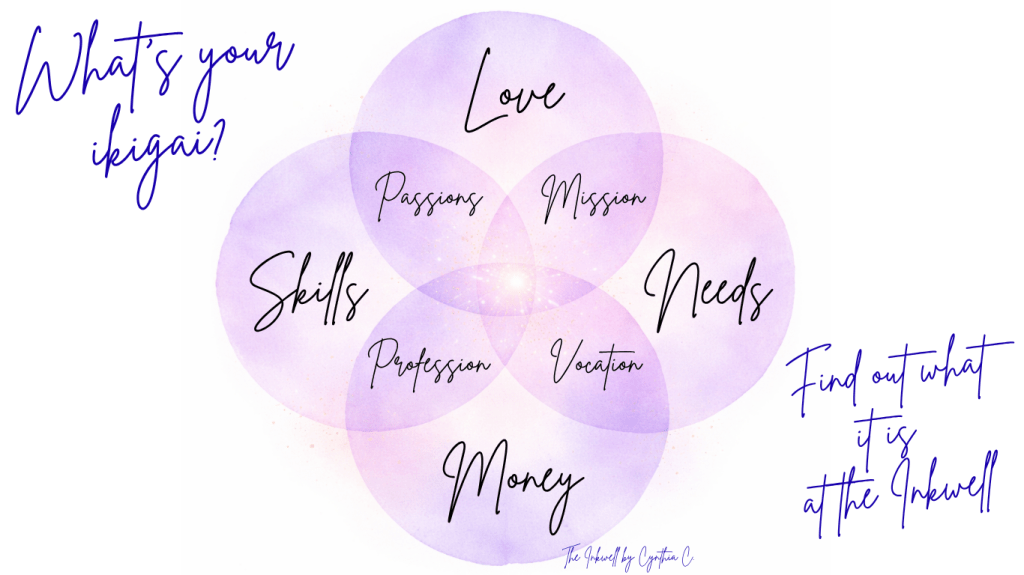
One of the most widespread reinterpretations of ikigai is the 4-circle Venn diagram, or four-circle diagram, that should be used to identify what one likes doing, has expertises in, what they think the world and society need, and what they could be paid for, and consequently combining all this answers, be able to indicate the one ideal life activity/job.

The questions to answer on each of these four parts are :

what do you like?

what are you good at?

what does the world need?

what can you be paid for?

This structure is effective, which explains its success.

It offers clarity, direction, and a sense of control.

However, it is important to acknowledge that:

this model does not originate from Japanese tradition.

It is a reconstruction—one that reflects a particular cultural tendency to organise meaning into systems.

On the Origins of the “Ikigai Diagram”

As already mentioned, the diagram most commonly associated with ikigai today—the four intersecting circles—does not originate from Japan.

Its structure can be traced back to a model developed by Spanish author Andrés Zuzunaga, who, in the early 2010s, created a visual framework exploring the idea of purpose through the intersection of the 4 famous:

what you love

what you are good at

what the world needs

what you can be paid for

This model circulated independently before later being associated with the term ikigai, particularly through Western self-development literature and coaching practices.

Over time, the two became merged.

Books such as Ikigai: The Japanese Secret to a Long and Happy Life contributed significantly to the global popularisation of the term, though the diagram itself reflects more a Western framework of purpose and career alignment than a traditional Japanese conceptualisation.

Why This Matters?

This is not to dismiss the usefulness of the diagram, on the contrary, it can function as a valuable reflective tool for people from cultures where such conceptualisations are fundamental.

However, understanding its origin allows us to see it for what it is:

not a representation of ikigai itself,

but an interpretation—shaped by different cultural expectations and understandings.

Furthermore, this same diagram introduces to this concept:

structure

a sort of profiling approach,

and often, an implicit link to productivity and economic expections.

The Japanese Origins

A more recent western understanding of ikigai has been developed from Japan, and most notably was discussed by Japanese psychiatrist Mieko Kamiya in her 1966 work, but it only entered widespread Western discourse much later.

As mentioned, one of the first major global bestsellers to introduce the term to a broad international audience was Ikigai: The Japanese Secret to a Long and Happy Life, a self-development book by Héctor García and Francesc Miralles, published in English in 2016–2017. This book, inspired by observations in Okinawa, played a decisive role in transforming ikigai into a widely recognised concept within self-development literature, contributing to its interpretation as a form of purpose linked to daily habits, longevity, and personal fulfilment.

Its international success—selling millions of copies and being translated into numerous languages—helped establish ikigai as part of a broader trend of importing Asian lifestyle philosophies into other cultural frameworks (alongside other concepts such as zen or wabisabi, but also yoga related elements that hugely have permeated European societies since late 19th and early 20th centuries).

Ikigai, in its original context, remains:

informal

non-visual

detached from professional identity

In Japan, ikigai can be:

quiet

partial

evolving

contradictory

And importantly, it does not need to be justified through productivity or economic value.

Language, Culture, and Misinterpretation

As you can easily observe even at the supermarket, when concepts travel between cultures—especially those rooted in lived practices—they often become reframed through external expectations.

This Venn model diagram can be useful, and as we saw, it is a modern reinterpretation, inspired by—but not completely equivalent to—ikigai.

Think of ikigai as something that can be:

small (a morning ritual, a craft, a relationship)

evolving (changing across life stages)

quiet (not necessarily visible or “productive”)

This distinction matters, especially in a global context where meaning is often tied to performance.

“Ikigai as an Inner Dialogue”

Not by imposing structure from the outside, but by allowing an internal dialogue to take place.

A dialogue that is often postponed.

At its core, ikigai is not something you “find” once.

It is something you continuously negotiate within yourself.

An Inner Conversation We Rarely Allow

At the centre of ikigai is a form of questioning that is deceptively simple.

It begins with a simple, yet often neglected act:

Allowing oneself to ask honest questions.

This inner dialogue moves between two dimensions:

1. The Personal Sphere

Your intimate, individual world:

What do I naturally enjoy?

What brings me calm or energy?

What do I return to, even without reward?

What did I love before I felt observed or evaluated, or even undervalued?

This dimension is not always stable.

It shifts, it withdraws, it reappears.

This is the space of authenticity, often silenced by external pressure.

2. The Social Sphere

A space that situates the individual among others:

Where can I be useful?What is needed in the environments I am part of?

What skills can I offer without self-betrayal?What can I offer without feeling diminished?

How can I contribute without exhaustion or resentment?

What feels aligned, rather than imposed?

This is not about sacrifice—but about sustainable participation in society.

“It is more a sustainable process, like constructing a path”

In Japan, as elsewhere, uncertainty exists.

People lose direction, question their place, hesitate between possibilities.

Ikigai does not resolve this uncertainty.

It offers something else:

a way to construct a path so to allow everyone to explore oneself through questions, although none of the answers may appear clearly defined.

Ikigai indeed, emerges not from perfection, but from balance. It is the subtle convergence where:

personal happiness does not exclude responsibility

contribution does not erase individuality

As already saw, in Western adaptations, this is often mapped into four guiding questions:

What do I love? (passion)

What am I good at? (vocation / skills)

What does the world need? (mission)

What can I be paid for? (profession)

But rather than fixed categories, think of these as overlapping, sometimes in tension.

Hence, to summarise, in Japanese contexts, ikigai:

does not require monetisation

does not require ambition

does not require visibility

A person’s ikigai might be:

tending a garden

caring for family

practicing a craft

maintaining a daily ritual

baking

Gentle Practices

Rather than solving ikigai as a puzzle, it can be approached as a practice of attention.

You might begin with:

noticing what gives you energy (not just pleasure)

observing what feels meaningful after it is done

identifying what drains you—even if socially valued

Over time, patterns emerge.

And within those patterns, a path forms—not imposed, but recognised.

This is not a question of adaptation or sacrifice,

but of finding a position that remains livable over time.

Difficult times are not new.

Every society, in every era, has faced uncertainty, imbalance, and transformation.

What changes is how we respond.

“Points of Tension, Not Boxes to Fill”

What do I love?

What am I capable of?

What is needed?

What can sustain me?

We have read often these questions in this post, and I hope you can now think of them rather than as fixed categories, as:

points of tension that require ongoing adjustment

They do not necessarily align.

And they are not meant to.

Ikigai does not appear as a perfect intersection as you can see now.

It takes shape within the space where different conditions, or even contradictions, become manageable.

“Rethinking Value”

One of the most significant shifts, when returning closer to the Japanese understanding, is this:

Ikigai does not need to be visible.

It does not need to be productive.

It does not need to be monetised.

It may exist in:

Small everyday life repetition (ie. having tea…)

care (ie. gardening…)

maintenance (ie. Tidying up…)

attention to detail (ie. Cooking…)

continuity over time (ie. Finding time to send a message to a dear one, or to call, or write a letter…)

Recognising this allows for a different relationship to value—one that is not entirely dependent on external validation, but comes from our inner wellbeing and adjusts in accordance with it, whilst staying in balance with the world outside us.

Conclusions

Periods of difficulty, uncertainty, and imbalance are not anomalies.

They are recurring conditions across time and societies.

What changes is the way individuals relate to themselves within those conditions.

Returning to concepts such as ikigai is not about adopting a model,

but about reopening a space of reflection that is often neglected.

Not to find definitive answers,

but to allow a more attentive relationship to one’s own trajectory whilst keeping respect for the worlds beyond ourselves.

And perhaps, especially in more difficult moments, to begin again from something essential:

to learn to love oneself—so as to become more compassionate and more helpful towards others.

Not necessarily by being visible,

not necessarily by being present in a conventional sense,

but by contributing—sometimes quietly, sometimes from a distance—

in ways that remain aligned with both oneself and the world one is part of.

——

🇫🇷 IKIGAI(生き甲斐)— Un concept, pas une tendance

Ces dernières années, ikigai est devenu un terme largement diffusé dans les médias occidentaux, souvent simplifié en diagrammes ou en formules de productivité. Si cette circulation reflète — parfois — une véritable curiosité pour la philosophie japonaise, elle risque également d’aplatir un concept qui est, en réalité, profondément culturel, nuancé et vécu, plutôt que « appliqué ».

J’ai développé mes compétences et mon expertise professionnelles en travaillant entre le Japon, la France, le Royaume-Uni et l’Italie, et j’ai donc observé ce phénomène à de nombreuses reprises : les concepts ne voyagent pas inchangés. Ils sont interprétés, réorganisés, et parfois remodelés pour s’adapter à différentes traditions intellectuelles et attentes sociales.

Ce qui commence comme une philosophie vécue peut facilement devenir un modèle.

Ce qui est fluide devient structuré.

Ce qui relève de l’expérience personnelle devient une vérité universelle.

Pour cette raison, aborder l’ikigai demande une certaine attention — non seulement à son sens, mais aussi au contexte dont il émerge.

L’ikigai, comme cela arrive souvent à l’étranger avec les mots japonais, a parfois été utilisé comme prétexte pour alimenter une rhétorique creuse sur le Japon, ou pour afficher une expertise autoproclamée sans avoir suivi la moindre formation en études d’Asie orientale.

L’ikigai (生き甲斐), en réalité, n’est pas simplement un mot ou un diagramme — c’est une orientation philosophique vers la vie.

Regardons de plus près ce à quoi renvoie réellement l’ikigai (生き甲斐)

Composé des kanji 生き甲斐, on peut en identifier deux éléments principaux :

生き (iki) → vivre, être en vie 甲斐 (gai) → valeur, effet, résultat, mérite (où 斐 seul signifie « beau »), l’ensemble suggérant ce qui donne de la valeur à quelque chose

Une traduction possible serait donc :

« Ce qui donne de la valeur à la vie », avec l’idée d’une valeur vécue dans sa propre existence.

Rien qui ne renvoie directement au succès, ni à la carrière ou à la productivité.

Il s’agit plutôt de quelque chose que l’on peut trouver dans les petites choses du quotidien.

Très différent du diagramme et de l’ensemble de valeurs généralement associés à ce concept, n’est-ce pas ?

Au Japon, il est généralement compris comme une forme de sens, dans son expression la plus pure, intime et quotidienne.

Plutôt qu’un ensemble d’instructions, il désigne un sens qui émerge du fait de vivre.

Rien que l’on puisse atteindre à travers des calculs complexes.

Il est ancré dans la vie quotidienne, dans la conscience de soi, et dans les continuités discrètes.

Entre interprétation et réduction

L’une des réinterprétations les plus répandues de l’ikigai est le diagramme de Venn à quatre cercles, censé permettre d’identifier ce que l’on aime faire, ce en quoi l’on est compétent, ce dont le monde ou la société a besoin, et ce pour quoi l’on peut être rémunéré, afin de déterminer, à l’intersection de ces éléments, une activité ou un métier idéal.

Les questions associées sont :

Qu’aimez-vous ? En quoi êtes-vous compétent ? De quoi le monde a-t-il besoin ? Pour quoi pouvez-vous être payé ?

Cette structure est efficace, ce qui explique son succès.

Elle apporte clarté, direction et un sentiment de contrôle.

Cependant, il est important de souligner que :

ce modèle n’est pas issu de la tradition japonaise.

Il s’agit d’une reconstruction — qui reflète une tendance culturelle spécifique à organiser le sens en systèmes.

Sur l’origine du « diagramme de l’ikigai »

Comme mentionné précédemment, le diagramme le plus souvent associé à l’ikigai aujourd’hui — les quatre cercles qui se chevauchent — ne provient pas du Japon.

Sa structure peut être retracée à un modèle développé par l’auteur espagnol Andrés Zuzunaga, qui, au début des années 2010, a proposé un cadre visuel explorant l’idée de « purpose » à travers l’intersection de quatre dimensions :

ce que vous aimez

ce en quoi vous êtes bon

ce dont le monde a besoin

ce pour quoi vous pouvez être payé

Ce modèle a circulé de manière indépendante avant d’être associé au terme ikigai, notamment à travers la littérature de développement personnel et les pratiques de coaching occidentales.

Avec le temps, les deux ont fini par se confondre.

Des ouvrages tels que Ikigai: The Japanese Secret to a Long and Happy Life ont contribué de manière significative à la popularisation mondiale du terme, bien que le diagramme reflète davantage un cadre occidental de recherche de sens et d’alignement professionnel qu’une conceptualisation japonaise traditionnelle.

Pourquoi cela importe

Il ne s’agit pas de rejeter l’utilité du diagramme.

Au contraire, il peut constituer un outil de réflexion pertinent, notamment dans des cultures où ce type de structuration est fondamental.

Cependant, comprendre son origine permet de le considérer pour ce qu’il est :

non pas une représentation de l’ikigai lui-même,

mais une interprétation — façonnée par des attentes culturelles spécifiques.

Par ailleurs, ce diagramme introduit dans ce concept :

une structure

une forme de logique de profilage

et souvent un lien implicite avec la productivité et les attentes économiques

Les origines japonaises

Une compréhension occidentale plus récente de l’ikigai s’est développée à partir du Japon, notamment à travers les travaux de la psychiatre japonaise Mieko Kamiya en 1966, mais le concept n’est entré dans le discours occidental de manière large que bien plus tard.

Comme mentionné, l’un des premiers grands succès internationaux à populariser le terme fut Ikigai: The Japanese Secret to a Long and Happy Life, publié en anglais en 2016–2017 par Héctor García et Francesc Miralles. Inspiré d’observations à Okinawa, cet ouvrage a joué un rôle déterminant dans la diffusion de l’ikigai dans la littérature de développement personnel.

Son succès international — avec des millions d’exemplaires vendus et de nombreuses traductions — a contribué à inscrire l’ikigai dans une tendance plus large d’importation de philosophies de vie asiatiques dans d’autres cadres culturels (aux côtés de concepts comme le zen ou le wabi-sabi, mais aussi d’éléments liés au yoga, présents en Europe dès la fin du XIXe siècle).

Dans son contexte d’origine, l’ikigai reste :

informel

non visuel

détaché de l’identité professionnelle

Langue, culture et malentendus

Comme on peut facilement l’observer, même au supermarché, lorsque des concepts circulent entre cultures — en particulier ceux ancrés dans des pratiques vécues — ils sont souvent reformulés selon des attentes extérieures.

Le diagramme peut être utile, mais il reste une réinterprétation moderne.

Pensez l’ikigai comme quelque chose qui peut être :

petit (un rituel du matin, un artisanat, une relation)

évolutif (changeant selon les étapes de la vie)

discret (pas nécessairement visible ou « productif »)

Cette distinction est importante, surtout dans un contexte global où le sens est souvent lié à la performance.

« L’ikigai comme dialogue intérieur »

Non pas en imposant une structure depuis l’extérieur, mais en permettant à un dialogue intérieur de se produire.

Un dialogue qui est souvent remis à plus tard.

Au cœur de l’ikigai, ce n’est pas quelque chose que l’on « trouve » une fois pour toutes.

C’est quelque chose que l’on négocie continuellement avec soi-même.

Une conversation intérieure que l’on se permet rarement

Au centre de l’ikigai se trouve une forme de questionnement d’une simplicité trompeuse.

Elle commence par un acte simple, mais souvent négligé :

Se permettre de poser des questions honnêtes.

Ce dialogue intérieur oscille entre deux dimensions :

1. La sphère personnelle

Votre monde intime et individuel :

Qu’est-ce que j’apprécie naturellement ?

Qu’est-ce qui me procure calme ou énergie ?

À quoi reviens-je, même sans récompense ?

Qu’aimais-je avant de me sentir observé·e, évalué·e, ou même sous-estimé·e ?

Cette dimension n’est pas toujours stable.

Elle fluctue, se retire, réapparaît.

C’est l’espace de l’authenticité, souvent étouffé par la pression extérieure.

2. La sphère sociale

Un espace qui situe l’individu parmi les autres :

Où puis-je être utile ?

Qu’est-ce qui est nécessaire dans les environnements dont je fais partie ?

Quelles compétences puis-je offrir sans me trahir ?

Que puis-je offrir sans me sentir diminué·e ?

Comment puis-je contribuer sans épuisement ni ressentiment ?

Qu’est-ce qui semble aligné, plutôt qu’imposé ?

Il ne s’agit pas de sacrifice, mais d’une participation durable à la société.

« C’est plutôt un processus durable, comme construire un chemin »

Au Japon, comme ailleurs, l’incertitude existe.

Les gens perdent leur direction, questionnent leur place, hésitent entre plusieurs possibilités.

L’ikigai ne résout pas cette incertitude.

Il propose autre chose :

une manière de construire un chemin pour permettre à chacun·e d’explorer soi-même à travers des questions, même si aucune réponse ne semble clairement définie.

L’ikigai émerge en effet non pas de la perfection, mais de l’équilibre. C’est la convergence subtile où :

le bonheur personnel n’exclut pas la responsabilité

la contribution n’efface pas l’individualité

Comme nous l’avons déjà vu, dans les adaptations occidentales, cela se traduit souvent par quatre questions directrices :

Qu’est-ce que j’aime ? (passion)

Dans quoi suis-je bon·ne ? (vocation / compétences)

De quoi le monde a-t-il besoin ? (mission)

Pour quoi puis-je être rémunéré·e ? (profession)

Mais plutôt que des catégories fixes, considérez-les comme superposées, parfois en tension.

Ainsi, pour résumer, dans les contextes japonais, l’ikigai :

ne nécessite pas de monétisation

ne nécessite pas d’ambition

ne nécessite pas de visibilité

L’ikigai d’une personne peut être :

prendre soin d’un jardin

s’occuper de sa famille

pratiquer un artisanat

maintenir un rituel quotidien

Pratiques douces

Plutôt que de résoudre l’ikigai comme un puzzle, on peut l’aborder comme une pratique d’attention .

Vous pouvez commencer par :

noter ce qui vous donne de l’énergie (pas seulement du plaisir)

observer ce qui semble signifiant après l’avoir fait

identifier ce qui vous épuise — même si c’est socialement valorisé

Avec le temps, des motifs se dessinent.

Et au sein de ces motifs, un chemin se forme — non imposé, mais reconnu.

Il ne s’agit pas d’adaptation ou de sacrifice,

mais de trouver une position qui reste vivable dans le temps.

Les périodes difficiles ne sont pas nouvelles.

Chaque société, à chaque époque, a fait face à l’incertitude, au déséquilibre et à la transformation.

Ce qui change, c’est la manière dont nous y répondons.

« Points de tension, pas cases à remplir »

Qu’est-ce que j’aime ?

De quoi suis-je capable ?

De quoi y a-t-il besoin ?

Qu’est-ce qui peut me soutenir ?

Nous avons souvent lu ces questions dans ce texte, et j’espère que vous pouvez maintenant les envisager non pas comme des catégories fixes, mais comme :

des points de tension nécessitant un ajustement permanent

Elles ne s’alignent pas forcément.

Et elles ne sont pas censées le faire.

L’ikigai n’apparaît pas comme une intersection parfaite, comme vous pouvez le constater.

Il prend forme dans l’espace où différentes conditions, voire contradictions, deviennent gérables.

« Repenser la valeur »

L’un des changements les plus significatifs, lorsqu’on revient à la compréhension japonaise, est le suivant :

L’ikigai n’a pas besoin d’être visible.

Il n’a pas besoin d’être productif.

Il n’a pas besoin d’être monétisé.

Il peut exister dans :

Petites répétitions du quotidien (ex. prendre le thé…)

soin (ex. jardinage…)

entretien (ex. ranger…)

attention aux détails (ex. cuisiner…)

continuité dans le temps (ex. trouver le temps d’envoyer un message à un être cher, de téléphoner ou d’écrire une lettre…)

Reconnaître cela permet une relation différente à la valeur — une relation qui ne dépend pas entièrement de la validation extérieure, mais qui provient de notre bien-être intérieur et s’ajuste en conséquence, tout en restant en équilibre avec le monde extérieur.

Conclusions

Les périodes de difficulté, d’incertitude et de déséquilibre ne sont pas des anomalies.

Ce sont des conditions récurrentes à travers le temps et les sociétés.

Ce qui change, c’est la manière dont les individus se rapportent à eux-mêmes dans ces conditions.

Revenir à des concepts comme l’ikigai ne consiste pas à adopter un modèle,

mais à rouvrir un espace de réflexion souvent négligé.

Pas pour trouver des réponses définitives,

mais pour permettre une relation plus attentive à sa propre trajectoire tout en respectant les mondes au-delà de soi.

Et peut-être, surtout dans les moments difficiles, recommencer par quelque chose d’essentiel :

apprendre à s’aimer soi-même — afin de devenir plus compatissant·e et plus utile envers les autres.

Pas nécessairement en étant visible,

pas nécessairement en étant présent au sens conventionnel,

mais en contribuant — parfois discrètement, parfois de loin —

d’une manière qui reste alignée à la fois avec soi-même et avec le monde dont on fait partie.

🇬🇧 When Disaster Strikes: Lessons in Preparedness from Japan| 🇫🇷 Quand la catastrophe frappe : leçons de préparation depuis le Japon

Read in English…

Lire en français…

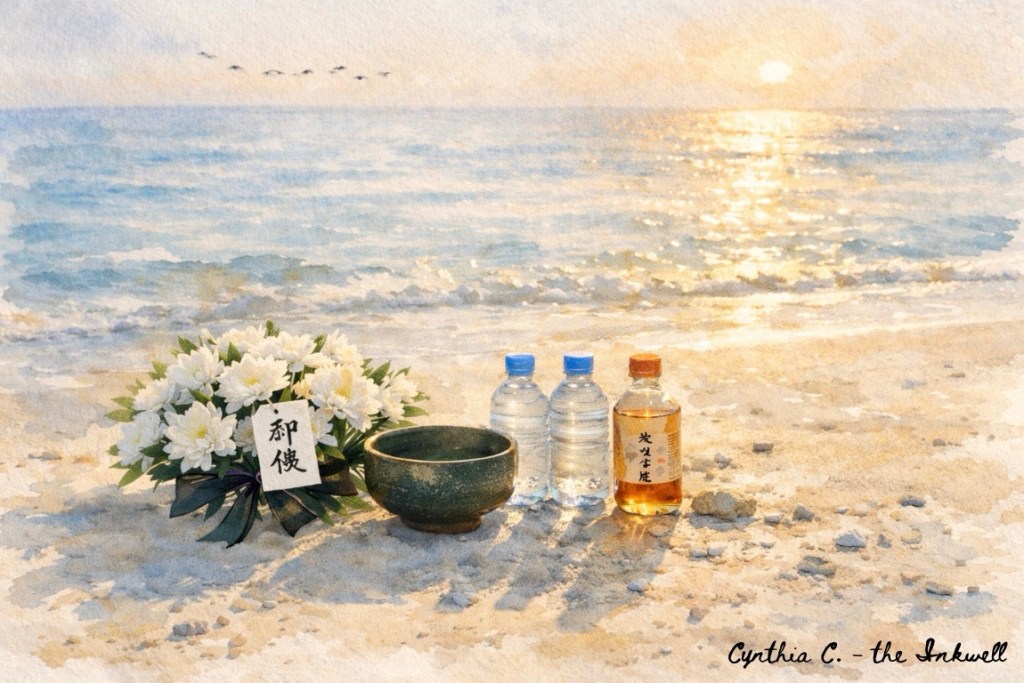
Remembering the 11th March Great East Earthquake

____

🇬🇧 When Disaster Strikes: Lessons in Preparedness from Japan

Every year on March 11, many people pause to remember the tragedy of the Great East Japan Earthquake. The disaster deeply affected the entire country and became one of the most important modern reminders of how powerful nature can be—and how essential preparation is.

This date also invites reflection on how different countries prepare their citizens for emergencies.

Some nations live with high natural risks but have limited training, weak infrastructure, or poor public awareness. Others have built a culture of preparedness that begins in childhood and continues throughout everyday life.

Italy, for example. It is a country exposed to earthquakes, floods, landslides, and volcanic activity. And yet, in practice, emergency education for ordinary citizens is extremely limited.

In schools, emergency drills are often little more than symbolic exercises. I remember never got a proper training as a student and only during the last year of high school the bell rings and whole classes messed together without even the register being walked outside like sheep in the yard. Stayed there…some students took the chance to smoke a cigarette, not one single teacher doing a proper training or explanation..and then back again, all messed together to the classrooms, with older students pushing younger ones up the stairs, and so on…

At the university I never saw a single training again, and I was there from 7am to 6pm.

Today, some schools continue with these “rush outside – all – together – now!” once a year—sometimes not even that—children are asked to leave their classrooms and walk outside into the school yard.

They can be at times lined up and taken out respecting an kind of order, still more or less with zero awareness of the importance of that missed opportunity, as almost nothing continues to be actually explained: no discussion of risks, no real instructions on how to react during a disaster, no training that would help them develop practical reflexes in an emergency situation.

The result is that many people grow up without ever learning what to do when a real emergency occurs.

The contrast with Japan is striking.

Japan is the country where life continues despite natural hazards do happen, such as earthquakes, tsunamis, typhoons, and heavy rains. Rather than ignoring these risks though, Japanese society has gradually developed systems where preparedness is integrated into everyday life.

Emergency education begins early in schools. Drills are frequent and structured. Workplaces practice evacuation procedures. Public institutions communicate clear instructions to the population.

Media organisations such as NHK, the national public broadcaster, also play an important role in teaching citizens practical survival knowledge, from evacuation behaviour to simple but crucial details—such as the best type of footwear to wear during a flood.

Over nearly forty years of life spent between Italy and Japan—studying, working, travelling, and experiencing everyday life in both countries—I have observed these differences firsthand.

Preparedness in Japan is not only about infrastructure or advanced technologies.

It is something deeply embedded in institutions, habits, and everyday awareness.

Personal Memory from Italy: The 2009 L’Aquila Earthquake

Preparedness is much about knowing what to do during disasters—and it is also about experiencing firsthand the suddenness and power of nature.

I remember clearly the night of the recent L’Aquila earthquake in Italy.

I had just returned from a night out with work colleagues downtown in Rome. I was part of the activity team of an environmental NGO, and after dinner and casual chats, two colleagues had kindly driven me and another teammate home. After a shower, I was sitting on my bed, texting the others to make sure they had reached home safely.

Suddenly, my cat jumped from the bed and began running frantically. Moments later, a huge, deep boom echoed from behind the wall, and our tall, heavy old wardrobe started moving and swirling. I was the only one awake. I called my sister and parents to wake them, warning them that an earthquake was happening. They felt the trembling floors just as the shaking subsided, leaving us stunned.

It wasn’t until the next morning that the full scale of the disaster became clear—the city of L’Aquila had been devastated.

This experience brought home the fragility of life in countries without strong citizen training and preparedness systems. Unlike in Japan, where emergency drills, evacuation plans, and early-warning systems are part of daily life, in Italy disasters often hit with little practical warning.

Other Natural Hazards in Italy: A Continuing Reality

Italy’s geography and climate expose the country to multiple types of natural disasters. Earthquakes are only one part of the picture. Floods, landslides, and volcanic risks remain constant threats in several regions.

Recent events show how serious these dangers still are.

In 2023, the 2023 Emilia‑Romagna floods devastated large parts of northern Italy. After days of intense rainfall, twenty-three rivers overflowed, flooding more than forty towns and triggering hundreds of landslides. At least 17 people lost their lives and more than 50,000 residents were displaced as entire neighbourhoods were submerged in water and mud.

The region had barely begun recovering when another severe flood struck in 2024, again affecting areas such as Faenza and Ravenna. Heavy rainfall caused rivers like the Lamone to overflow once more, inundating towns that had only recently repaired homes and infrastructure after the previous disaster.

Landslides are also a recurring danger. In 2022, heavy rains triggered the Ischia landslide on the island of Ischia near Naples, destroying houses and killing twelve people as mud and debris swept through the town of Casamicciola Terme.

More recently, in 2026, another major landslide struck the Sicilian town of Niscemi, forcing the evacuation of more than a thousand residents after heavy rains destabilised the terrain and caused a large section of land to collapse.

These events highlight a broader reality: millions of people in Italy live in areas exposed to geological instability, with landslides becoming more frequent due to extreme rainfall and environmental pressures.

Flooding has also marked the history of central Italy, particularly in Florence, where the Arno River has repeatedly overflowed over the centuries.

One of the most dramatic events occurred during the 1966 Flood of Florence, when the Arno burst its banks after days of heavy rain. Water and mud flooded the historic centre, reaching several metres in height in some areas. Thousands of homes, churches, and libraries were damaged, and an enormous number of priceless artworks and manuscripts were destroyed or severely affected.

The disaster also mobilised an extraordinary international response. Volunteers from around the world travelled to Florence to help rescue damaged books and artworks from mud and water. They became known as the “Mud Angels”, a symbol of cultural solidarity and recovery.

Tuscany continues to face similar risks today. Heavy rainfall regularly causes flooding and landslides in several parts of the region, particularly in river valleys and hilly areas where soil instability can quickly turn storms into dangerous situations.

In recent years, intense storms have caused flooding and landslides in different areas of the Tuscan Apennines. Extreme weather events are becoming more frequent, increasing pressure on infrastructure and communities that must adapt to changing environmental conditions.

These recurring events highlight how central Italy, like many other parts of the country, remains vulnerable to hydrogeological risks, especially when heavy rainfall combines with fragile terrain and densely populated historic cities.

Beyond earthquakes and floods, Italy also faces major volcanic risks.

The city of Naples lies close to Mount Vesuvius, the volcano responsible for the destruction of Pompeii in 79 AD.

Nearby lies another even larger volcanic system: the Campi Flegrei (Phlegraean Fields), a vast caldera with ongoing geological activity. Scientists closely monitor the area because millions of people live in its surroundings.

These examples show that natural hazards in Italy are not isolated events but part of a long and ongoing reality.

First Encounters with Japanese Emergency Preparedness

The first time I experienced a structured emergency procedure connected to Japan was actually outside Japan itself.

I used to visit the Japan Foundation library regularly. After completing a one-year intensive Japanese language program, it had become a weekly habit to spend time there reading and preparing my field research project .

One day, without warning, an emergency drill began.

The staff calmly guided everyone through the evacuation procedure. What impressed me most was how routine and natural the entire process felt. There was no confusion, no panic. Everyone knew exactly what to do.

What struck me even more was the realisation that Japanese institutions maintain these practices even abroad. Preparedness is not limited to Japan itself; it is treated as part of institutional culture.

A Personal Memory from Japan After the 2011 Disaster

I travelled to Japan for my first research stay one year after the Great East Japan Earthquake.

Even in Tokyo, far from the areas most directly devastated, the effects were still visible.

The city was darker at night because electricity consumption was still being reduced nationwide. Some supermarket shelves remained empty due to supply disruptions. Recovery was ongoing, and many communities were still dealing with the consequences of the disaster, yet streets and public transports were fully operational and functioning regularly – the only discomfort was reduced light at night in public spaces, and train speed.

Yet what impressed me most was not the difficulty.

It was the attitude of the people.

While travelling Tokyo, and south toward Kyoto, I encountered constant acts of kindness.

Even the train arrived at the stop of a small town festival (matsuri), someone offered me a traditional paper fan. From another market, a vendor insisted I take a tea sample.

On a train, an elderly man travelling with children smiled and told me:

“The matsuri was beautiful! Next year you have to come to our matsuri!”

The children laughed and proudly showed me their festival fans and summer dresses.

Despite the trauma that still lingered in the country, people seemed determined to move forward with energy, generosity, and love for life..towards an even more welcoming attitude towards visitors and foreigners.

It was a form of resilience that went beyond infrastructure or technology. It was something deeply human.

Practical Lessons in Disaster Preparedness

Below are some practices and insights I have observed over the years, along with useful information shared by NHK. There are plenty of official apps from both the government and national media to receive updates and support during crisis. Please refer to official sites for updated versions and instructions.

1. Preparedness Begins Before the Disaster

In Japan, disaster education begins in childhood.

Students regularly participate in evacuation drills and learn:

how to react during earthquakes

how to evacuate safely

where emergency shelters are located

how to use emergency supplies

Preparedness is treated as basic civic knowledge.

2. Emergency Kits Are Essential

Japanese households are encouraged to maintain emergency kits designed to sustain a person for at least 72 hours.

Typical kits include:

bottled water

preserved food

flashlight

batteries

portable radio

first aid supplies

hygiene products

copies of important documents

The principle is simple: be able to survive independently until rescue arrives.

3. Unexpected Lessons: Avoid Boots During Floods

One practical lesson I recently learned through educational programs from NHK surprised me.

During floods, boots can actually become dangerous.

They fill quickly with water, become extremely heavy, and significantly reduce mobility. In moving water this can make it much harder to walk or escape.

Instead, experts recommend wearing:

trainers

lightweight shoes

footwear made from quick-drying materials

Mobility is essential during evacuation.

4. Technology Can Support Survival

Japan also integrates disaster preparedness into everyday infrastructure.

A fascinating example is vending machines.

In many areas of Japan, certain vending machines are designed so that during emergencies a special section unlocks, providing free access to:

drinking water

emergency supplies

basic hygiene items

first aid materials

This simple idea turns a familiar object of daily life into a community survival resource.

5. Save Yourself First

One principle sometimes feels counterintuitive but is strongly emphasised in emergency training:

Save yourself first.

Attempting to rescue others without training can increase the number of victims.

Rescue operations require coordination and equipment. If you are injured while trying to help someone, both of you may end up in danger.

Professionally trained emergency teams exist precisely for these situations.

Your priority is to reach safety and regroup with others.

6. If You Are Near the Sea During an Earthquake

If an earthquake occurs while you are near the coast, tsunami risk becomes a critical concern.

A widely taught rule in Japan is:

Move to the highest possible level immediately.

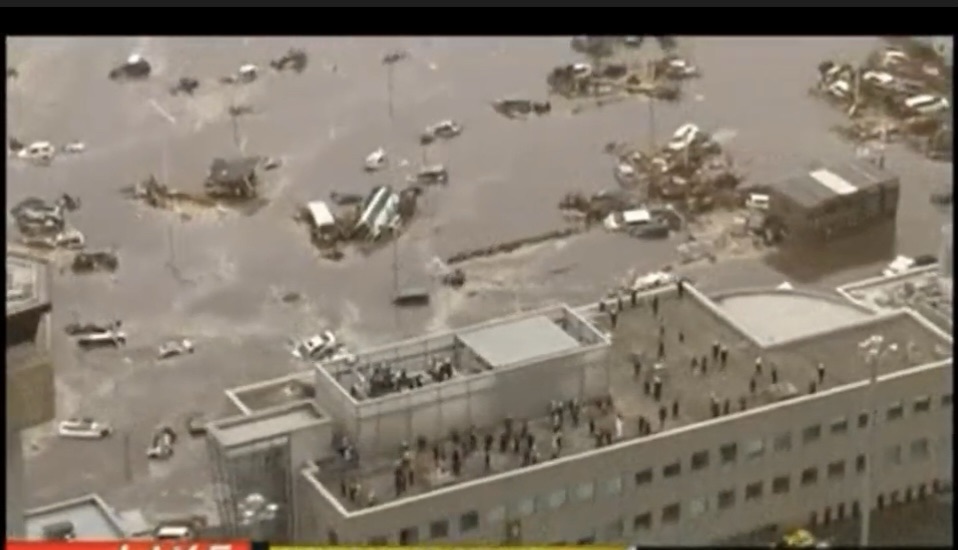
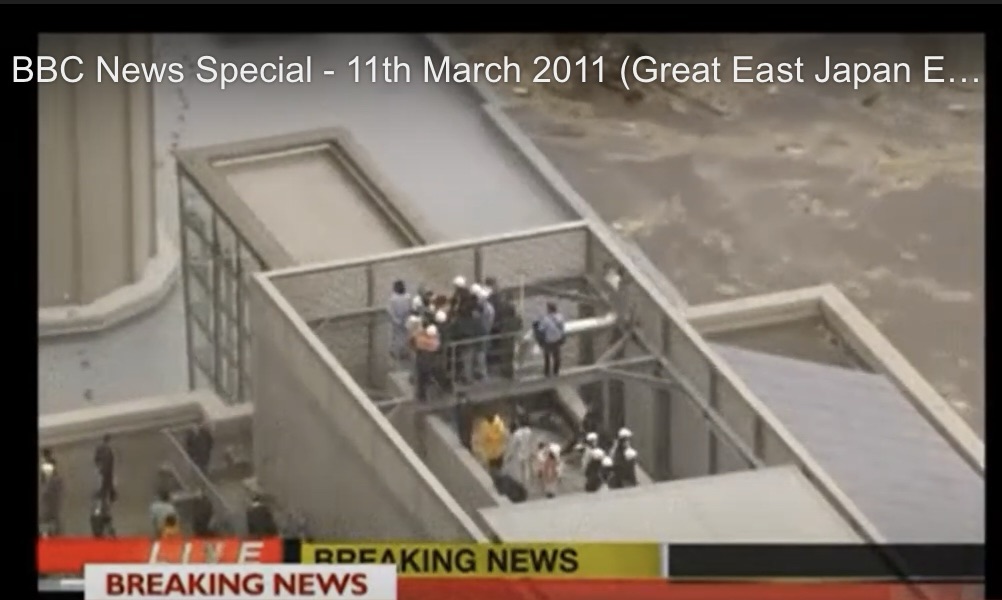
If you are inside a building, head toward the upper floors or rooftop terrace.

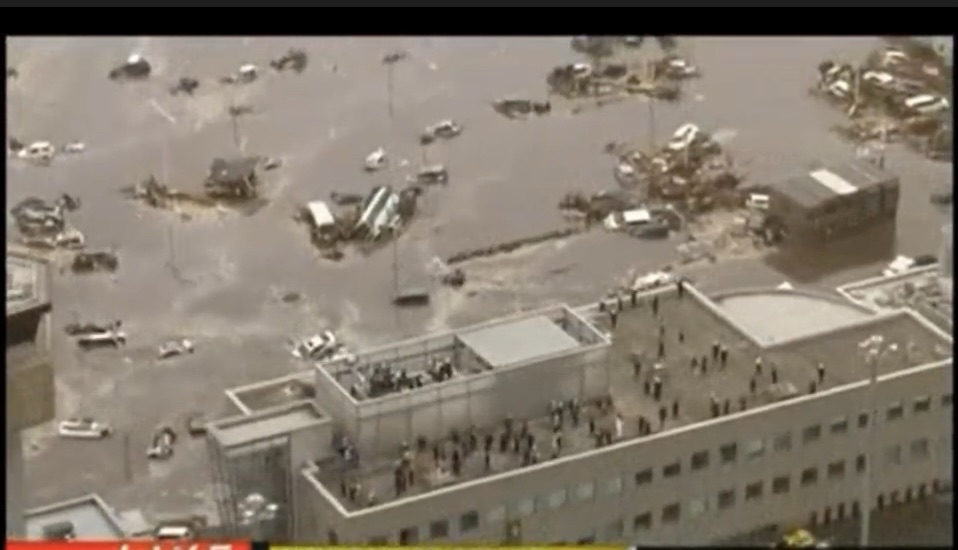
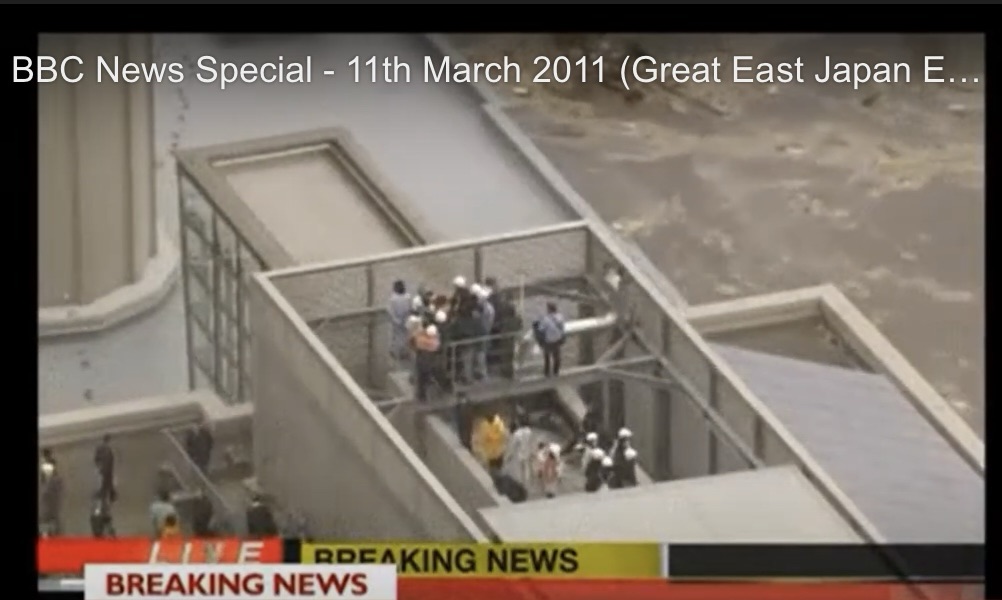
During the Great East Japan Earthquake, one famous example demonstrated this perfectly. A group of people quickly reached the roof of their building and waited there for rescue. When the tsunami waves arrived, the lower floors were completely destroyed, but the people on the rooftop survived.

Their survival became a powerful example of practices that are not only taught—but deeply embedded in public awareness.

7. Learn Basic Emergency Phrases in the Local Language

When travelling abroad, it can be extremely useful to learn a few emergency expressions in the local language.

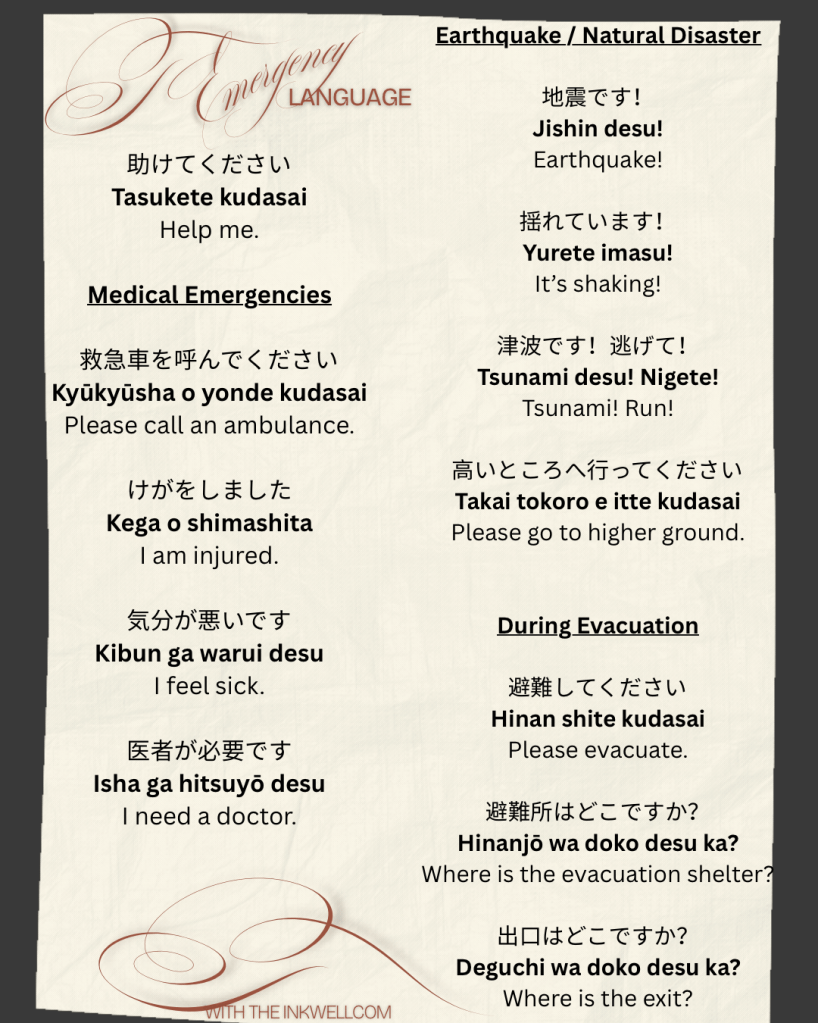
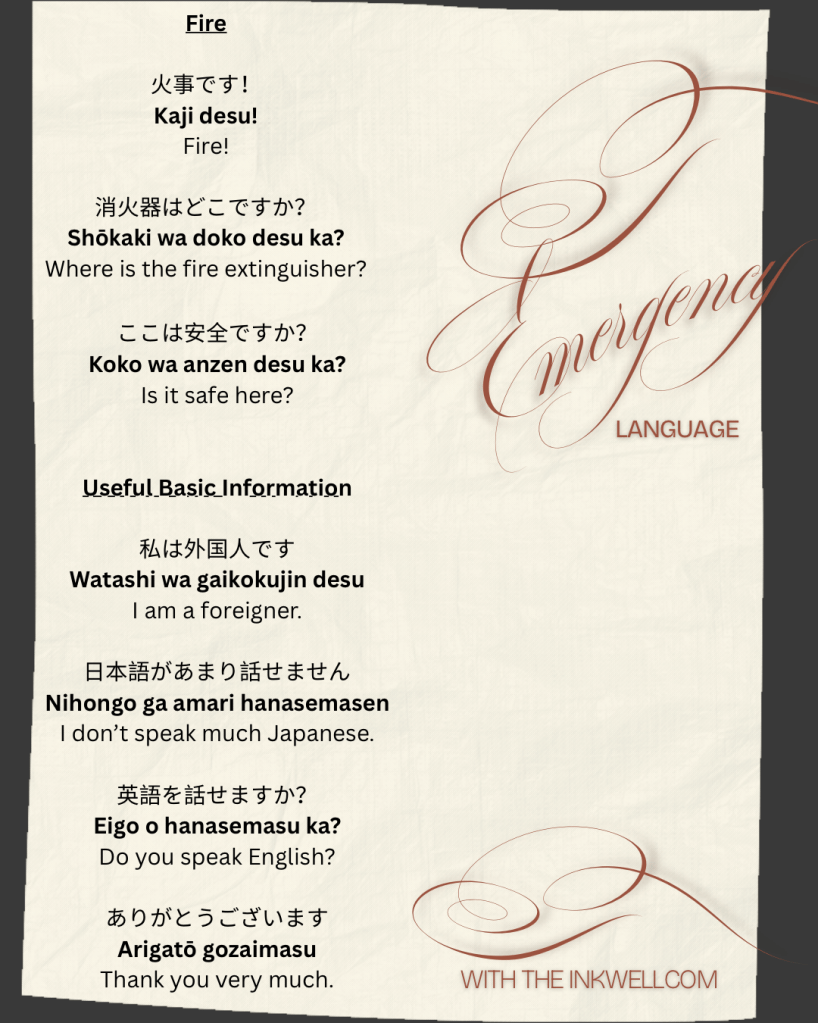
Emergency Sentences in Japanese

When travelling abroad, learning a few emergency expressions in the local language can make a real difference. Here are some basic phrases in Japanese that may help in critical situations.

(Useful expressions to know during disasters or emergencies)

These few sentences can make an enormous difference if you ever need assistance.

Final Reflection: Preparedness in an Age of Climate Change 『Why Prevention Matters』

Preparedness is not about living in fear.

Natural disasters cannot always be prevented.

However, their impact can be significantly reduced through preparation, education, and investments in the right sectors….avoiding waste.

Effective systems require:

strong public education

community drills and training

accessible information

investment in science and technology

infrastructure designed for resilience

Japan demonstrates that preparedness is not only a technical issue.

It is also a cultural value shared by society.

It is about respecting the forces of nature while protecting human life.

The kindness I witnessed in Japan one year after the disaster—people sharing tea, children offering festival fans, strangers smiling on trains—revealed something profound.

Even after tragedy, resilience can flourish when a society combines knowledge, organisation, and solidarity with kindness.

Disaster preparedness ultimately teaches us one essential truth:

survival is not only about infrastructure—it is also about community.

It is about recognising reality and respecting the forces of nature while protecting human life.

The lessons that societies like Japan have developed over decades are becoming increasingly relevant for many other countries today.

Climate change is already intensifying extreme weather events around the world: stronger storms, heavier rainfall, more frequent flooding, heat waves, and environmental instability. Many places that previously considered disasters as far or rare events are now forced to confront them and even quite regularly.

For this reason, emergency preparedness should no longer be seen as a concern limited to and for certain regions. It is becoming one of the real societal challenges of this decade.

Education, prevention, and investment in scientific research and resilient infrastructure will be essential if societies want to minimise the human and economic cost of future disasters.

The memory of events like the Great East Japan Earthquake reminds us that recovery is possible—but it also shows how crucial preparation is before disaster strikes.

In the end, resilience is built through knowledge, organisation, and solidarity.

And perhaps most importantly, through the simple awareness that protecting life begins long before the emergency itself.

Conclusion: The importance of recognising danger

Prevention is not only a matter of technology or emergency response systems. It is also, and perhaps above all, a matter of culture and awareness.

Countries that invest in disaster education, scientific research, and infrastructure demonstrate that risks can be reduced when people understand the importance of preparation. Training citizens, informing communities, and building resilient systems are all essential steps in minimising the impact of natural hazards.

However, another factor plays a crucial role: the ability to recognise danger when it appears.

In Italy, one of the most serious problems is often the lack of collective awareness regarding the early signs of a whatever risk.

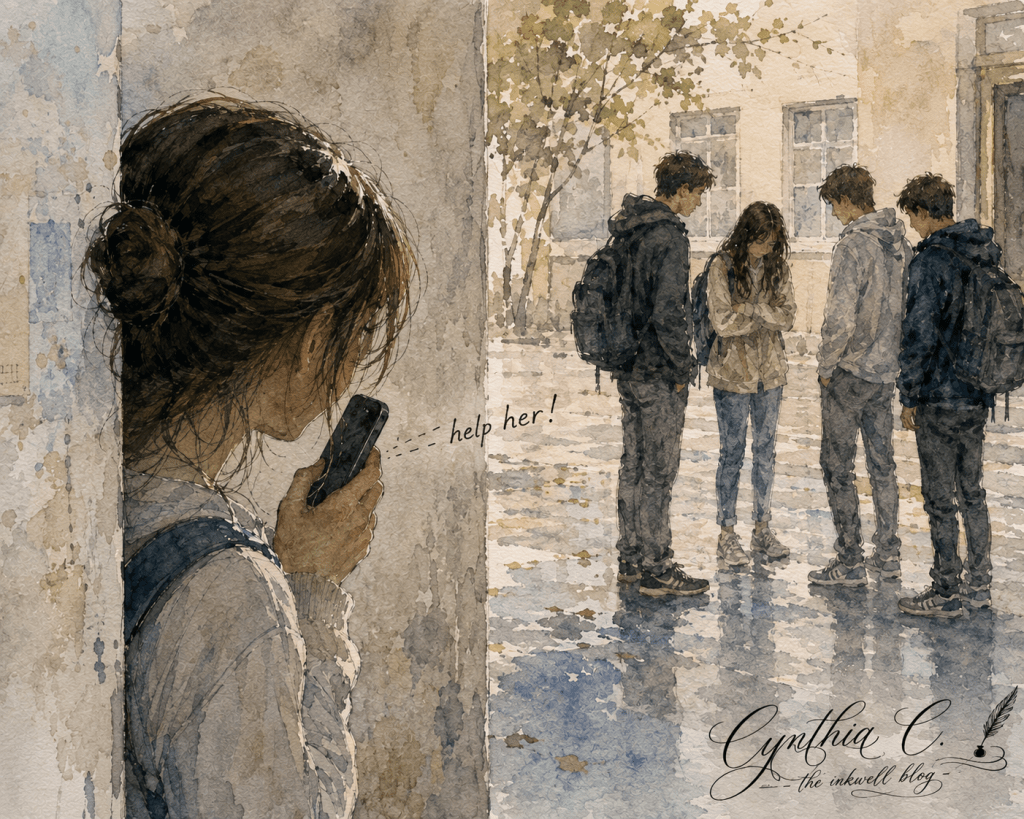
Whether we speak about natural disasters or about gender-based violence, a similar pattern can often be observed: warning signs are underestimated, the possibility of escalation is overlooked, and the danger is normalised until it becomes impossible to ignore.

This failure to recognise and respond to risk in its early stages -when it is more possible to have effective outcomes- frequently becomes one of the major underlying causes of tragedy.

Learning to identify danger, to speak openly about it, and to respond collectively and responsibly is therefore not only a matter of emergency management.

It is a cultural challenge that societies must face if they wish to protect lives in the future.

In an era where climate change is increasing the frequency and intensity of extreme events, improving prevention, education, and risk awareness must become one of the real emergencies of this decade.

___

🇫🇷 Quand la catastrophe frappe : leçons de préparation venues du Japon

Chaque année, le 11 mars, de nombreuses personnes s’arrêtent pour se souvenir de la tragédie du Grand tremblement de terre de l’Est du Japon. Cette catastrophe a profondément marqué tout le pays et reste l’un des rappels les plus importants de la puissance de la nature — et de l’importance vitale de la préparation.

Cette date invite également à réfléchir sur la manière dont différents pays préparent leurs citoyens aux situations d’urgence.

Certaines nations vivent avec des risques naturels élevés, mais disposent d’une formation limitée, d’infrastructures faibles ou d’une sensibilisation du public insuffisante. D’autres ont construit une culture de la préparation qui commence dès l’enfance et se poursuit tout au long de la vie quotidienne.

L’Italie, par exemple. Le pays est exposé aux tremblements de terre, aux inondations, aux glissements de terrain et aux activités volcaniques. Et pourtant, en pratique, l’éducation à la sécurité civile pour les citoyens ordinaires est extrêmement limitée.

Dans les écoles, les exercices d’évacuation ne sont souvent que symboliques. Je me souviens de n’avoir jamais reçu de véritable formation en tant qu’élève. Ce n’est que durant ma dernière année de lycée que la sonnerie a retenti et que toute la classe a été regroupée et sortie dans la cour, sans même qu’un registre ne soit vérifié. Certains élèves en ont profité pour fumer une cigarette, et aucun enseignant n’a donné de formation ou d’explication appropriée. Puis, retour en classe, tous entassés, les élèves plus âgés poussant les plus jeunes dans les escaliers, et ainsi de suite…

À l’université, je n’ai jamais vu un seul exercice de formation, alors que j’y étais de 7h à 18h.

Aujourd’hui, certaines écoles continuent ces exercices “tous dehors en même temps” une fois par an — parfois même pas cela. Les enfants sont simplement invités à sortir dans la cour. Parfois, ils sont alignés et encadrés, mais il n’y a pratiquement aucune explication sur les risques, aucune instruction réelle sur la réaction à adopter en cas de catastrophe, aucun apprentissage permettant de développer des réflexes pratiques en situation d’urgence.

Le résultat est que beaucoup grandissent sans jamais apprendre ce qu’il faut faire en cas de véritable urgence.

Le contraste avec le Japon est frappant.

Le Japon est un pays où la vie continue malgré les risques naturels : tremblements de terre, tsunamis, typhons et fortes pluies. Mais au lieu d’ignorer ces dangers, la société japonaise a progressivement développé des systèmes où la préparation fait partie intégrante de la vie quotidienne.

L’éducation à la sécurité commence dès l’école primaire. Les exercices sont fréquents et structurés. Les entreprises pratiquent des procédures d’évacuation. Les institutions publiques diffusent des instructions claires à la population.

Les médias, tels que NHK, la chaîne publique nationale, jouent également un rôle important en enseignant aux citoyens des connaissances pratiques de survie, depuis le comportement à adopter lors d’une évacuation jusqu’aux détails essentiels — comme le type de chaussures à privilégier lors d’une inondation.

Au cours de mes près de quarante années passées entre l’Italie et le Japon — études, travail, voyages et vie quotidienne — j’ai pu observer ces différences de première main.

La préparation au Japon ne se limite pas à l’infrastructure ou aux technologies avancées.

Elle est profondément ancrée dans les institutions, les habitudes et la conscience quotidienne.

Souvenir personnel d’Italie : le tremblement de terre de L’Aquila en 2009

La préparation consiste autant à savoir quoi faire qu’à vivre en direct la soudaineté et la puissance de la nature.

Je me souviens parfaitement de la nuit du tremblement de terre à L’Aquila.

Je venais de rentrer d’une sortie avec des collègues du travail à Rome. Je faisais partie de l’équipe d’animation d’une ONG environnementale. Après le dîner et les discussions, deux collègues m’avaient gentiment raccompagnée, moi et une autre collègue, chez moi. Après une douche, j’étais assise sur mon lit, envoyant des messages aux autres pour m’assurer qu’ils étaient bien rentrés.

Soudain, mon chat a sauté du lit et a commencé à courir partout de manière frénétique. Quelques minutes plus tard, un énorme boom profond a retenti derrière le mur, et notre vieille armoire haute et lourde a commencé à se déplacer et à tourbillonner. J’étais la seule réveillée. J’ai appelé ma sœur et mes parents pour les prévenir : un tremblement de terre avait lieu. Ils ont senti le sol trembler juste au moment où les secousses se sont calmées, nous laissant stupéfaits.

Ce n’est que le lendemain matin que l’ampleur de la catastrophe est devenue claire : la ville de L’Aquila avait été dévastée.

Cette expérience m’a fait prendre conscience de la fragilité de la vie dans les pays où les citoyens ne sont pas formés et préparés. Contrairement au Japon, où exercices d’évacuation, plans et systèmes d’alerte précoce font partie de la vie quotidienne, en Italie, les catastrophes frappent souvent sans avertissement pratique.

Autres risques naturels en Italie : une réalité continue

La géographie et le climat de l’Italie exposent le pays à de nombreux types de catastrophes naturelles. Les tremblements de terre ne sont qu’une partie du problème. Inondations, glissements de terrain et risques volcaniques représentent des menaces constantes dans plusieurs régions.

Exemples récents

Inondations en Émilie-Romagne (2023) : après plusieurs jours de pluie intense, 23 rivières ont débordé, inondant plus de quarante villes et déclenchant des centaines de glissements de terrain. Au moins 17 personnes ont perdu la vie et plus de 50 000 résidents ont été déplacés.

Nouvelle inondation (2024) : les rivières, comme le Lamone, ont de nouveau débordé, affectant des zones récemment réparées après les inondations précédentes.

Glissement de terrain à Ischia (2022) : la pluie a provoqué un glissement de terrain qui a détruit des maisons et tué douze personnes.

Glissement de terrain à Niscemi (2026) : plus de 1 000 habitants ont été évacués après l’effondrement d’une portion de terrain instable.

Ces événements montrent que des millions de personnes vivent dans des zones exposées à l’instabilité géologique, avec des glissements de terrain devenant plus fréquents à cause des pluies extrêmes et des pressions environnementales.

Florence et la Toscane

Les inondations ont également marqué l’histoire du centre de l’Italie, particulièrement à Florence, où l’Arno a régulièrement débordé.

Inondation de Florence (1966) : l’Arno a rompu ses digues après plusieurs jours de pluie. Des mètres d’eau et de boue ont envahi le centre historique. Des milliers de maisons, églises et bibliothèques ont été endommagées, et un nombre incalculable d’œuvres et manuscrits précieux ont été détruits ou gravement affectés.

Les “Anges de la Boue” : des volontaires du monde entier sont venus aider à sauver les livres et œuvres touchés, symbole de solidarité culturelle et de reconstruction.

La Toscane reste vulnérable aujourd’hui : pluies intenses provoquent régulièrement inondations et glissements dans les vallées et zones montagneuses. Les événements extrêmes se multiplient, mettant à l’épreuve infrastructures et communautés.

Risques volcaniques

Au-delà des tremblements de terre et inondations, l’Italie fait face à de grands risques volcaniques.

Naples : proche du Vésuve, responsable de la destruction de Pompéi en 79 ap. J.-C.

Campi Flegrei : vaste caldeira active, surveillée de près en raison de la population dense alentour.

Ces exemples montrent que les catastrophes naturelles en Italie ne sont ni isolées ni exceptionnelles, mais font partie d’une réalité historique et actuelle.

Premiers contacts avec la préparation japonaise

La première fois que j’ai expérimenté une procédure d’urgence japonaise structurée fut en dehors du Japon.

Je fréquentais régulièrement la bibliothèque de la Japan Foundation après une année intensive d’études de la langue japonaise.

Un jour, sans avertissement, un exercice d’évacuation a commencé.

Le personnel a guidé calmement chacun à travers la procédure. Tout le monde savait exactement quoi faire. Aucune panique, aucune confusion.

Ce qui m’a frappé encore plus, c’est de constater que les institutions japonaises maintiennent ces pratiques même à l’étranger. La préparation est traitée comme une culture institutionnelle, pas seulement comme une mesure ponctuelle.

Souvenir personnel du Japon après le séisme de 2011

Je me suis rendue au Japon pour mon premier séjour de recherche un an après le Grand tremblement de terre de l’Est du Japon.

Même à Tokyo, loin des zones les plus touchées, les effets étaient visibles : moins de lumière la nuit, rayons de supermarché vides, perturbations de la vie quotidienne.

Mais ce qui m’a le plus impressionnée, ce n’était pas la difficulté : c’était l’attitude des gens.

Un petit village, un festival (matsuri) : on m’offre un éventail traditionnel.

Sur un marché : un vendeur insiste pour que je prenne un échantillon de thé.

Dans un train, un vieil homme avec des enfants me sourit :

« Le matsuri était magnifique ! L’année prochaine, vous devez venir à notre matsuri ! »

Les enfants riaient et me montraient fièrement leurs éventails et vêtements de festival.

Malgré le traumatisme encore présent, les gens étaient déterminés à avancer avec énergie, générosité et amour de la vie.

Leçons pratiques de préparation aux catastrophes

La préparation commence avant la catastrophe:

Éducation à la sécurité dès l’enfance

Exercices réguliers, refuges connus, utilisation des kits de secours

Les kits d’urgence sont essentiels

Eau, nourriture, lampe, radio, premiers secours, documents importants

Principe : survivre de manière autonome 72 heures

Leçons inattendues : éviter les bottes lors d’inondations

Elles se remplissent d’eau et réduisent la mobilité

Préférer chaussures légères et à séchage rapide

La technologie soutient la survie

Certaines distributeurs automatiques débloquent en urgence eau, fournitures et produits d’hygiène gratuitement

Se sauver d’abord

Tenter de sauver quelqu’un sans formation peut être dangereux

L’objectif : atteindre un lieu sûr et se regrouper

Proximité de la mer pendant un tremblement de terre

Se diriger vers les niveaux supérieurs du bâtiment

Exemples concrets lors du Grand tremblement de 2011 : les personnes arrivés sur le toit ont survécu aux vagues des tsunamis

Apprendre des phrases d’urgence locales

Exemples japonais :

助けてください (Tasukete kudasai) – Aidez-moi !

火事です (Kaji desu) – Au feu !

地震です (Jishin desu) – Tremblement de terre !

Réflexion finale : la préparation à l’ère du changement climatique

La préparation ne consiste pas à vivre dans la peur.

Les catastrophes naturelles ne peuvent pas toujours être évitées, mais leur impact peut être réduit grâce à la préparation, l’éducation et les investissements adaptés.

Le Japon montre que la préparation est aussi une valeur culturelle, fondée sur le respect de la nature et la protection de la vie humaine.

La gentillesse observée après le séisme — partager du thé, offrir des éventails — révèle que la résilience se construit par la connaissance, l’organisation et la solidarité.

Conclusion : l’importance de reconnaître le danger

La prévention n’est pas seulement une question de technologie ou de systèmes d’urgence. C’est avant tout une question de culture et de conscience.

Dans beaucoup de pays, et particulièrement en Italie, un des problèmes majeurs est le manque de reconnaissance précoce du danger.

Qu’il s’agisse de catastrophes naturelles ou de violences basées sur le genre, les signes d’alerte sont souvent sous-estimés, la possibilité d’escalade négligée, et le danger normalisé jusqu’à ce qu’il devienne impossible à ignorer.

Ce défaut de perception est une cause majeure de tragédies évitables.

À l’ère du changement climatique, où les événements extrêmes se multiplient et s’intensifient, l’éducation, la prévention et la conscience du risque doivent devenir l’une des véritables urgences de cette décennie.

🇬🇧 Old Cafés, New Cafés: Not a Battle, But an Adjustment / 🇫🇷 Anciens cafés, nouveaux cafés : non pas une bataille, mais un ajustement

🇫🇷 Continuez votre lecture en français ⬇️

🇬🇧 Read in English here ⬇️

🇬🇧 Old Cafés, New Cafés: Not a Battle, But an Adjustment

When we speak about cafés, there’s often a familiar narrative: the old, authentic cafés are disappearing, pushed aside by global chains. The implication is always the same — that something precious has been lost, that modern life has destroyed tradition.

But is it really that simple?

If you look closely, the story of cafés has always been one of adaptation. In every era, cafés mirrored the needs of society:

The 19th-century Parisian café where writers scribbled and debated. The Italian espresso bar built for a five-minute pause before work. Today’s Starbucks or Korean study café, where Wi-Fi, outlets, and larger tables matter as much as the menu.

What looks like “loss” is often just adjustment: a shift to new rhythms of life, new rights, and new expectations. Students need affordable seats for hours; freelancers need a public space to work when rent makes a home office impossible; friends need a neutral place to meet that feels safe and accessible.

I can’t help but noticing (and here is someone who is also an archaeologist speaking) a troubling undertone in the obsession with “reviving the old.” Too often, behind nostalgic calls for authenticity lies something else: an attempt to deny or erase contemporary needs — especially those that workers and women fought for over centuries. Rights to dignity, to fairer treatment, to spaces that adapt to human realities rather than forcing people into outdated molds.

This reflection comes from personal experience. I once worked for narrow-minded store owners in the historic center of Rome, where nostalgia for the “old ways” too often masked exploitation and contempt for workers. More recently, I was reminded of this dynamic while watching a K-drama about female employees in coffee companies — women expected to endure abuse in silence, all in the name of tradition and loyalty.

And who would benefit from resisting the natural, smooth progress that society — with its coffee habits and much more — is making? I have the feeling it won’t be women, nor workers…

The café has always been less about coffee than about connection, possibility, and belonging. If today’s cafés respond to the rights and needs that society has fought to secure, then they aren’t a betrayal of tradition — they are its evolution.

🇫🇷 Anciens cafés, nouveaux cafés : non pas une bataille, mais un ajustement

Quand on parle de cafés, on entend souvent la même histoire : les anciens cafés authentiques disparaissent, remplacés par les grandes chaînes mondialisées. L’implication est toujours la même — quelque chose de précieux aurait été perdu, la vie moderne aurait détruit la tradition.

Mais est-ce vraiment si simple ?

En réalité, l’histoire des cafés est depuis toujours celle de l’adaptation. À chaque époque, ils ont reflété les besoins de la société :

Le café parisien du XIXe siècle, où l’on écrivait et débattait. Le bar à espresso italien, pensé pour une pause de cinq minutes avant le travail. Les Starbucks ou study cafés coréens d’aujourd’hui, où le Wi-Fi, les prises électriques et les grandes tables comptent autant que la carte.

Ce qui semble une “perte” est bien souvent un ajustement : une réponse aux nouveaux rythmes de vie, aux nouveaux droits, aux nouvelles attentes. Les étudiants ont besoin d’un espace abordable pour travailler des heures durant ; les indépendants d’un lieu public pour exercer leur activité quand le loyer rend impossible un bureau à domicile ; les amis d’un espace neutre, sûr et accessible pour se retrouver.

Je ne peux m’empêcher de remarquer (et ici parle aussi quelqu’un qui est archéologue) une tonalité inquiétante dans cette obsession de “faire revivre l’ancien.” Trop souvent, derrière ces appels nostalgiques à l’authenticité se cache autre chose : une tentative de nier ou d’effacer les besoins contemporains — en particulier ceux que les travailleurs et les femmes ont conquis au fil de siècles de luttes. Le droit à la dignité, à un traitement plus juste, à des espaces qui s’adaptent aux réalités humaines plutôt que de forcer les individus dans des moules dépassés.

Cette réflexion naît aussi d’une expérience personnelle. J’ai travaillé pour de petits commerçants étroits d’esprit dans le centre historique de Rome, où la nostalgie des “anciennes manières” masquait trop souvent exploitation et mépris des salariés. Plus récemment, une série coréenne m’a rappelé cette dynamique : des employées de cafés, femmes contraintes d’endurer abus et humiliations, au nom de la tradition et de la loyauté.

Et qui profiterait d’une résistance au progrès naturel, fluide, que la société — avec ses habitudes de café et bien plus — est en train d’accomplir ? J’ai le sentiment que ce ne seront ni les femmes, ni les travailleurs…

Le café a toujours été moins une affaire de boisson qu’une affaire de lien, de possibilité et d’appartenance. Si les cafés d’aujourd’hui répondent aux droits et aux besoins que la société a su conquérir, ils ne trahissent pas la tradition — ils en sont l’évolution.