đŸ–‹ïž The Inkwell by Cynthia C. â€” Now Live on Ko-fi

Support My Work & Read the Full Articles on Ko-fi

Hello dear readers,

Over the years, I’ve poured heart, time, and deep reflection into the articles and essays you’ve found here. From cultural insights, ethical analysis, travel stories, reflections
I’ve always aimed to offer not just content—but meaningful conversation.

🌿 Now, I’m taking the next step:

You can now support my work on Ko-fi!

By contributing, you’ll help me dedicate more time to writing, researching for side-projects that would otherwise be left locked in a drawer , and producing the thoughtful, in-depth posts you’ve told me you appreciate.

In return, supporters will get exclusive access to the full-length versions of my newest work, early releases, and more behind-the-scenes reflections.

There is much speculation and exploitation in the Research communities (and apparently in Rome particularly from political influences), and having saw my materials being used by others that have not even said a thank-you to me, I have now to put a stop to even conversations with university ex-colleagues and allow those who care about not only their results, but of the worker behind the data they need, to benefit from exclusive access.

🔗 Visit and support here:

👉 ko-fi.com/cynthiacalzolari

📝 What You’ll Find on Ko-fi

On my Ko-fi page, I’ll be publishing:

🧠 Full analyses of themes I only touch on here;

📜 Unpublished chapters or essays I’ve been working on quietly for years;

✍ Behind-the-scenes notes on research, inspiration, and thought process;

🎁 Bonus material for those who support monthly or one-time.

Every article will still have a preview here on WordPress, but if you want the full piece and to be part of my creative process, Ko-fi is where I’ll be posting it all.

🔍 What You’ll Find in 2025

Every month, I’ll be publishing exclusive material for readers, researchers, and those curious about cultural work across borders.

Here’s what’s coming:

🧳 Research & Opportunities Abroad

Where to find international research opportunities and how to prepare;

What to expect before starting an independent project (with no supervisors);

How to approach a short-term research stay in Japan;

Cultural breakdowns from firsthand experience in Italy, France, Japan, Germany, and the UK.

🌍 Mobility, Migration & Reflection

Brexit is not the end — real opportunities still exist in the UK;

Where young researchers, freelancers, and creatives are moving in 2025 ? ;

Are some countries becoming inhospitable to researchers? (And what does it mean if they are?)

☕ Why I Chose Ko-fi

As an independent researcher, I often work without institutional frameworks.

That means no set funding, no built-in support—only my experience, tools, and ongoing curiosity.

Ko-fi allows me to keep writing, illustrating, and sharing freely—even between formal projects.

If something I write resonates with you, teaches you something new, or inspires your journey,

you can now support my work directly:

👉 ko-fi.com/cynthiacalzolari

Whether it’s a one-time coffee or a monthly gesture—it truly makes a difference.

đŸ©· Why This Matters

Writing independently has always meant freedom—but never ease. Every share, comment, and bit of support counts. If you’ve ever found something meaningful in my writing, I invite you to join me on Ko-fi to help sustain and grow this space.

With appreciation,

Cynthia C.

✒ The Inkwell

———

#IndependentResearch #ResearchAbroad #LifeInJapan #CulturalWork #AcademicNomad #YoungResearchers #DigitalNomads2025 #FundingYourResearch #ItalyToJapan #KoFiCreators #PostBrexitOpportunities

Ink between the days

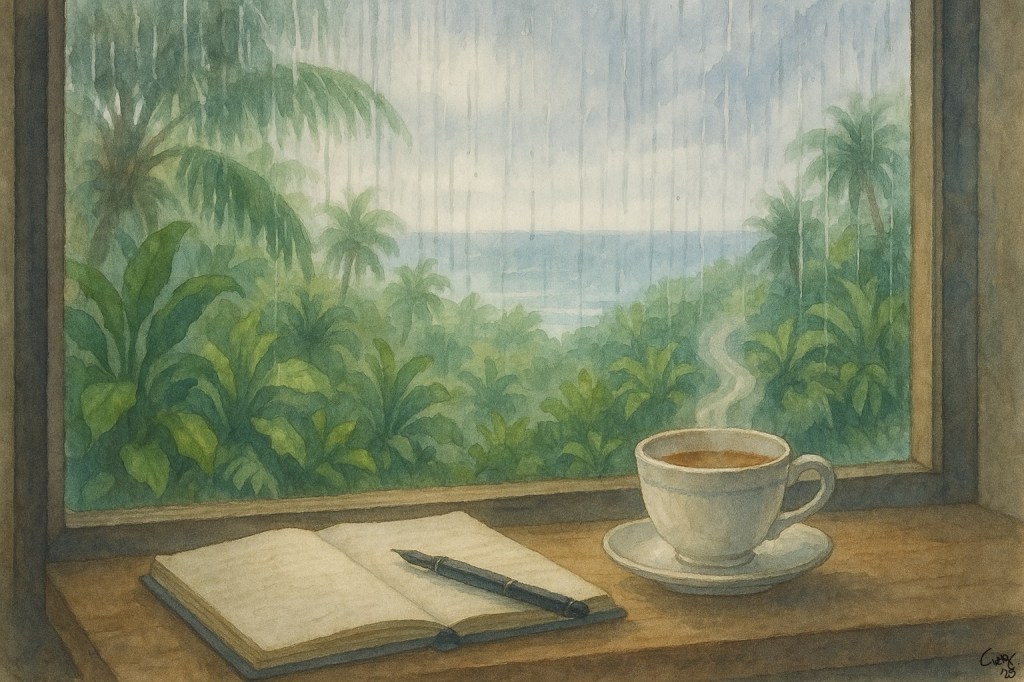
It’s a rainy evening here in the South Pacific.

The kind of rain that doesn’t storm its way through the landscape, but folds itself into the darkness —thickening it, perfuming it, softening everything it touches. The clouds have lingered since late afternoon, and now the wind moves lazily between the palms, slow and salt-sweet.

Strangely familiar to my memory this kind of rain settles on the garden with weight—steady, silvered, not dramatic but constant. It’s not just the temperature that has shifted, but something subtler. A quiet slowing. The light drapes itself low across the late afternoon, and by evening, a soft gloom has gathered outside.

Winter’s breath still hovered in the evenings and mornings, even while the afternoons radiate with summer’s leftover brilliance. The warmth would surge in, bold and insistent, only to be replaced again by that cooling, unsettled dusk. I step out early, wrapped in a scarf, and by noon i can discover a nicely sunny and warm enough day while swimming in the Pacific.

Disorienting and beautiful. I feel some of that season change.

And here we are, comfort-writing with my first Blog entry for my Inkwell – my space.

But, WHY this title?

Because I am probably one of the rare humans left to have learned to write using a true ink pen. Not a cartridge fountain pen. Not a disposable. But one that needed to be dipped—held thoughtfully, refilled, cared for. I still remember the particular scratch of the nib on the page, the way the ink would pool slightly if I paused too long.

I learned to be careful with my gestures, to be intentional.

Ink taught me that ideas take space and time..and carry values, intentions, commitment.

As an archaeologist, I can’t help but look at this simple fact with a certain awareness.

As a cultural anthropologist, I’ve continued to observe how our methods of expression change—and what they reveal about the kind of attention we give to our tools, and to each other.

I’ve always had a passion for inks and brushes—not only in the scripts I know best (Italian, English, French), but also Japanese, which opened a world of form and discipline that continues to inspire me.

My admiration extends across other cultures too—Arabic, Chinese, Korean—where calligraphy still holds reverence, where writing is both language and art, movement and meditation.

The Inkwell Blog will be a space apart from my journal. Less focused on professional reflections and more rooted in the quiet rituals and practices that form the undercurrent of my days.

This is where I’ll explore personal passions—calligraphy, tea, gardening—not only as hobbies but as cultural expressions, deeply intertwined with the places and cultures I’ve studied, lived, and learned from.

I want to explore and present the way these traditions still live and breathe—not only in ceremonies or textbooks, but in small, daily choices: the way I brew a pot of tea, the way I trim a garden branch, or the way at times I need to reach for my brush rather than a keyboard.

These are not distractions. They are forms of attention. Of care.

And tonight, with this week rain, I feel this.

So here begins The Inkwell Blog.

A small space. A steady practice. And outside, with the rain that still speaks.

My latest independent project in New Caledonia (FR)

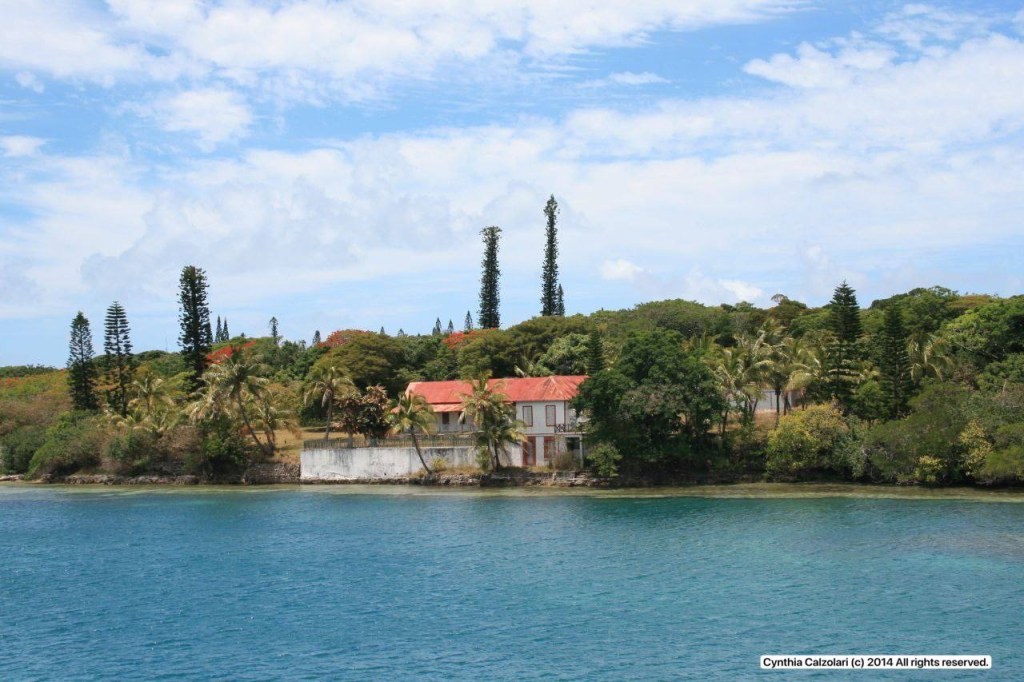
View of the Western Coast of Province Sud – New Caledonia (FR) 2014.

It all started with this photo I took while travelling South towards Ile des Pins, in 2014.

I was with a colleague from Finland, and we had decided to head south to reflect on some problems we had faced over the past weeks while travelling from NoumĂ©a to the North – she was preparing her PhD project, and I was working on my Master’s thesis in which I was already considering issues related to the environment.

While on a boat we were talking about challenges and difficulties met and would have been worth already a whole academic study, when all of a sudden, whilst looking over the sea horizon towards the coast, my sight got captured by what seemed an historical building, which at the beginning I had failed to identify: it seemed clinging on the remains of a submerged coral coast
and so I started to reflect on what I was seeing, and what I couldn’t but was unfolding as a scenario I would have found some years ago as confirmed and consolidated.

Even if that was only 10 year ago, coastal erosion wasn’t really an internationally shared concern at that time: increased attention for this is consequence of the Glasgow COP, when representatives of the Pacific Islands got a chance to explain to the rest of the world how their homes, their islands indeed are disappearing
now – and how this is a problem that connects us all.

From this moment, whilst the public opinion starts to understand this as being part of the consequences of climate change and ways global warming is impacting people lives, the increased interest will lean towards possible solutions to support cities and countries worldwide – one of the most famous examples being New York City for instance building structures in order to prevent sea levels rising eating away the coastline.

Italy had already got a chance to learn about this problem though, and that was in Venice when at the end of the 1900s it was starting one of the most ambitious projects ever seen on the territory, a serie of mobile gates known as M.o.S.e : it would have become active in 2020 protecting the lagoon and its architectural treasures from flooding, high tides and sea rise -which had dramatically increased over the last years affecting tourism and leaving empty stores in Piazza San Marco for many months.

Despite these examples, there has never been a continuum of reflections and programmes as the global situation would demand especially from rich countries: as too often happens, everyone was minding its own little garden not looking much farther .

After having finished a project supported by the Japan Foundation in 2020, I had got a chance to be back to New Caledonia in 2022, and finally in 2024 a project I had proposed to the European Union and Goethe Institut got approved and supported for a short research grant.

This has allowed me to study and analyse the way historical building of New Caledonia (a French Overseas territory) are affected by climate change and how locals are working in order to tackle risks posed by extreme weather conditions.

I had got the chance to talk to many in charge for cultural heritage on different levels, and understand how indeed, for both preservation and safeguard, there is no common programme at all – which is clearly quite risky and dangerous on the long term.

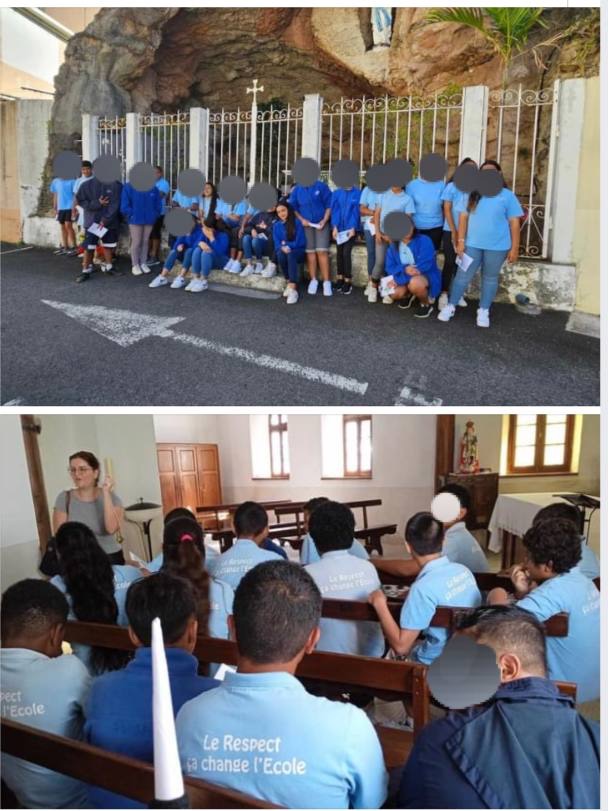
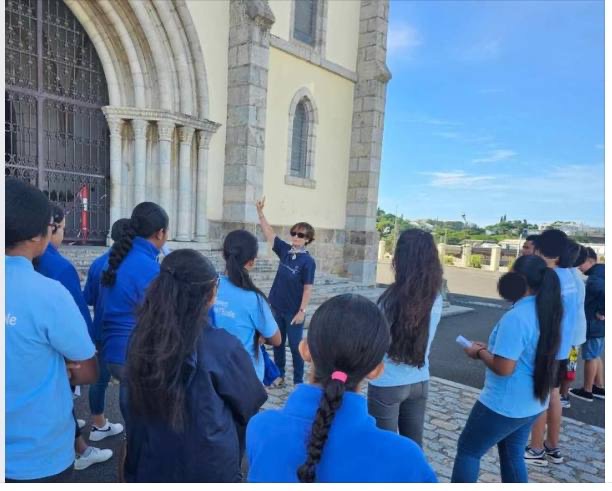
This time I’ve got in contact with a charity that has worked on several restoration projects, and was invited to be part of a workshop where I was able to introduce some students from the countryside communities to the reality of this – I have used photos taken during the restoration works to show them what extreme weather conditions damages look like, and discussed with them the importance of specialised interventions in order to preserve particularly degradable materials like wood and glass.

More from this work will be presented next month as I will take part in a conference at the St. Andrew’s University of Scotland, meanwhile I’m implementing some side projects that I hope I will be allowed to finalise through a PhD.

If you’re interested about this and want to follow the process feel free to keep an eye on this blog and my instagram page
and write me!

Tout commençait avec cette photo que j’avais pris en voyageant vers Île des Pins, dans le Sud, en 2014.

J’Ă©tais avec une collĂšgue finlandaise et nous avions dĂ©cidĂ© de partir vers le sud pour rĂ©flĂ©chir Ă  certains problĂšmes auxquels nous avions Ă©tĂ© confrontĂ©s pendant les derniĂšres semaines lors d’un voyage de NoumĂ©a vers le Nord – elle prĂ©parait son projet de doctorat et moi je travaillais sur ma thĂšse de Master’s (dans lequel je rĂ©flĂ©chissais dĂ©jĂ  aux questions liĂ©es Ă  l’environnement).

Alors que sur un bateau nous parlions des dĂ©fis et des difficultĂ©s rencontrĂ©s et qui auraient dĂ©jĂ  valu toute une Ă©tude acadĂ©mique, quand tout d’un coup, alors que je regardais l’horizon de la mer vers la cĂŽte, mon regard s’est arrĂȘtĂ© sur ce qui semblait ĂȘtre un bĂątiment historique, que je n’avais pas rĂ©ussi Ă  identifier au dĂ©but : il semblait accrochĂ© aux restes d’une cĂŽte corallienne submergĂ©e
 et j’ai donc commencĂ© Ă  rĂ©flĂ©chir Ă  ce que je voyais, et Ă  ce que je ne pouvais pas voir mais allait se dĂ©rouler comme un scĂ©nario que j’aurais trouvĂ© il y a quelques annĂ©es, trĂšs bien confirmĂ© et consolidĂ©.

Il y a seulement 10 ans que ça se passĂ©, mais l’Ă©rosion cĂŽtiĂšre n’Ă©tait pas vraiment une prĂ©occupation internationale Ă  ce moment-lĂ : une attention accrue Ă  ce sujet est une consĂ©quence de la COP de Glasgow, oĂč les reprĂ©sentants des Ăźles du Pacifique ont eu l’occasion d’expliquer au reste de la communautĂ© internationale comment leurs maisons, leurs Ăźles, disparaissent
 dans ce moment – et comment c’est un problĂšme qui nous relie tous.

À partir de ça, alors que l’opinion publique commence Ă  comprendre les consĂ©quences du changement climatique et comment le rĂ©chauffement climatique affecte dĂ©jĂ  la vie des gens, l’intĂ©rĂȘt croissant se portera vers des solutions possibles pour soutenir les villes et les pays du monde entier – l’un des plus cĂ©lĂšbres des exemples Ă©tant la ville de New York, qui a construit des structures afin d’empĂȘcher que la montĂ©e du niveau de la mer puisse ronger le littoral.

L’Italie avait dĂ©jĂ  eu l’occasion de se renseigner sur ce problĂšme, et c’Ă©tait Ă  Venise lorsqu’Ă  la fin des annĂ©es 1900 elle commençait l’un des projets les plus ambitieux jamais vus sur le territoire, une sĂ©rie de portes mobiles connues sous le nom de M.o.S.e : il serait devenu actif en 2020 pour protĂ©ger la lagune et ses trĂ©sors architecturaux des inondations, des marĂ©es hautes et de la montĂ©e de la mer – qui ont considĂ©rablement augmentĂ© ces derniĂšres annĂ©es, affectant le tourisme et laissant les magasins vides sur la place Saint-Marc pendant de nombreux mois.

MalgrĂ© ces exemples, il n’y a jamais eu un continuum de rĂ©flexions et de programmes comme la situation mondiale l’exigerait, notamment de la part des pays riches : comme cela arrive trop souvent, chacun s’occupait de son petit jardin sans aller voir beaucoup plus loin.

AprĂšs avoir terminĂ© un projet soutenu par la Japan Foundation en 2020, j’ai eu la chance de retourner en Nouvelle-CalĂ©donie en 2022, et finalement en 2024 un projet que j’avais proposĂ© Ă  l’Union europĂ©enne et au Goethe Institut a Ă©tĂ© approuvĂ© et soutenu pour une short-research grant .

Cela m’a permis d’Ă©tudier et d’analyser la maniĂšre dont les bĂątiments historiques de Nouvelle-CalĂ©donie (territoire français d’outre-mer) sont affectĂ©s par le changement climatique et comment les habitants travaillent pour faire face aux risques posĂ©s par les conditions mĂ©tĂ©orologiques extrĂȘmes.

J’ai eu l’occasion de discuter avec de nombreux responsables du patrimoine culturel Ă  diffĂ©rents niveaux et de comprendre qu’en effet, tant pour la prĂ©servation que pour la sauvegarde, il n’existe aucun programme commun – ce qui est clairement assez risquĂ© et dangereux Ă  long terme.

Cette fois, j’ai pris contact avec une association caritative qui a travaillĂ© sur plusieurs projets de restauration et j’ai Ă©tĂ© invitĂ© Ă  participer Ă  un atelier oĂč j’ai pu faire dĂ©couvrir la rĂ©alitĂ© Ă  quelques Ă©tudiants des communautĂ©s rurales – j’ai utilisĂ© des photos prises lors des travaux de restauration pour leur montrer Ă  quoi ressemblent les dommages causĂ©s par les conditions climatiques extrĂȘmes, et ont discutĂ© avec eux de l’importance d’interventions spĂ©cialisĂ©es afin de prĂ©server les matĂ©riaux particuliĂšrement dĂ©gradables comme le bois et le verre.

Plus dĂ©tails sur ce travail seront prĂ©sentĂ©es le mois prochain alors que je participerai Ă  une confĂ©rence Ă  l’UniversitĂ© St. Andrew’s d’Écosse, tandis que je mets en Ɠuvre des projets parallĂšles que j’espĂšre pouvoir finaliser grĂące Ă  un doctorat.

Si cela vous intĂ©resse et souhaitez suivre le processus, n’hĂ©sitez pas Ă  garder un Ɠil sur ce blog et ma page instagram
 et Ă  m’Ă©crire !

New projects (Feb2024)

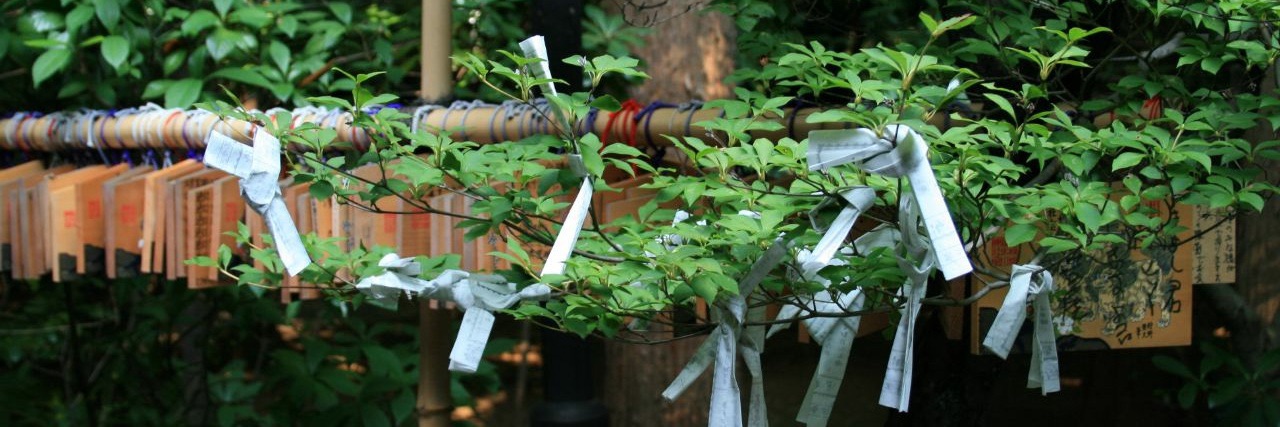
Omikuji from a Shinto shrine in Japan I visited in 2012 for my first thesis in Religious Studies.

When I started this blog, as a little something more to add to my digital portfolio (which is something I’ve been asked for more and more when applying to the last international call for projects and was much needed) where I could have got possibly a chance to help and provide some hints to new researchers.

If I look at my career as a researcher, there have been many difficulties I have got to face – many occasions turned out to be more like what in Japan is known as a Omikuji rather than something where competence and experience were actually valued
but yet, I out myself together, and moved on.

Over the last 10 years I have worked on so many projects, both for international calls and PhD that I have lost count
not all of these got the support I wished for, but all of these have been definitely helpful – they have shaped my temper, helped me understand what was worth keeping and what better leaving behind, and ultimately made me relise that even when you don’t get the funds you need for progressing with your work, you can keep that aside, let it grow


I have got good experiences and bad – and and supervisors I have been so blessed to have got for my training at museums, and when writing that still I feel happy when thinking of our work together – for others, I would really think of them as some of those daikyo you just need to tie at a tree
and let kami deal with – hopefully not having to worry for them anymore in the future.

It’s true that time helps understanding and dealing with difficult times – and as I often say, what doesn’t become a PhD will become an article
or a book.

Even if I haven’t got a PhD yet, I feel very happy to have got the courage to stand for my values, to fight for what it’s important for me and keep my integrity through consistant work – it’s not easy, but it’s really up to each of us to make the difference and say no when it’s necessary.

With the new materials and reflections I’ve collected in this time, I see a book unfolding and many more articles and conferences where to discuss and exchange in respectful ways
with no sexism and discriminations as those I have suffered even as a student.

This is something I’m proud of and would make me feel I’m doing what I hoped for when I started with my studies.

I hope you can say the same.

If there will be more, or some opportunities that could provide me with continuity for work and the research I have already started – I can’t say. I hope, but we will see!

Quand j’ai commencĂ© ce blog, comme un petit quelque chose en plus Ă  ajouter Ă  mon portfolio numĂ©rique (ce qu’on m’a de plus en plus demandĂ© lors de ma candidature au dernier appel Ă  projets international et qui Ă©tait indispensable) j’ai pensĂ© j’aurais pu Ă©ventuellement trouver une chance d’aider et de fournir quelques conseils aux nouveaux chercheurs.

Si je regarde ma carriĂšre de chercheuse, j’ai dĂ» faire face Ă  de nombreuses difficultĂ©s – de nombreuses occasions se sont avĂ©rĂ©es ressembler davantage Ă  ce qu’on appelle au Japon un Omikuji plutĂŽt qu’Ă  quelque chose oĂč la compĂ©tence et l’expĂ©rience Ă©taient rĂ©ellement valorisĂ©es
 mais pourtant , je me suis sorti ensemble et j’ai continuĂ©.

Au cours des 10 derniĂšres annĂ©es, j’ai travaillĂ© sur tellement de projets, tant pour des appels internationaux que pour des doctorats, que j’en ai perdu le compte
 tous n’ont pas reçu le soutien que je souhaitais, mais tous ont Ă©tĂ© vraiment utiles – ils ont façonnĂ© mon caractĂšre, aidĂ©e Ă  comprendre ce qui valait la peine d’ĂȘtre gardĂ© et ce qu’il valait mieux de laisser derriĂšre moi, et m’a finalement fait rĂ©aliser que mĂȘme lorsque vous n’obtenez pas les fonds dont vous avez besoin pour avancer dans votre travail, vous pouvez garder cela de cĂŽtĂ©, le laisser grandir


J’ai eu de bonnes et de mauvaises expĂ©riences – et des superviseurs que j’ai eu la chance d’avoir pour ma formation dans les musĂ©es, et en Ă©crivant, je me sens toujours heureux en pensant Ă  notre travail ensemble – mais pour d’autres
je les considĂ©rerais vraiment comme certains de ces daikyo qu’il vous suffit d’attacher Ă  un arbre
 et de laisser les kami s’en occuper – avec un peu de chance, vous n’aurez plus Ă  vous inquiĂ©ter pour eux Ă  l’avenir.

Il est vrai que le temps aide Ă  comprendre et Ă  gĂ©rer les moments difficiles – et comme je le dis souvent, ce qui ne devient pas un doctorat deviendra un article
 ou un livre.

MĂȘme si je n’ai pas encore un doctorat, je me sens trĂšs heureux d’avoir eu le courage de dĂ©fendre mes valeurs, de me battre pour ce qui est important pour moi et de garder mon intĂ©gritĂ© grĂące Ă  un travail consistant – ce n’est pas facile, mais c’est vraiment une rĂ©ussite
.Ă  chacun de faire la diffĂ©rence et de dire non quand c’est nĂ©cessaire.

Avec les nouveaux matĂ©riaux et rĂ©flexions que j’ai rassemblĂ©s au cours de cette pĂ©riode, je vois se dĂ©rouler un livre et bien d’autres articles et confĂ©rences oĂč discuter et Ă©changer de maniĂšre respectueuse
sans du sexisme et discriminations comme ces que j’ai souffert comme Ă©tudiante.

C’est quelque chose dont je suis fier et qui me donnerait le sentiment de faire ce que j’espĂ©rais lorsque j’ai commencĂ© mes Ă©tudes.

J’espĂšre tu peux dire le mĂȘme .

S’il y aura plus, ou des opportunitĂ©s qui pourraient m’assurer une continuitĂ© dans le travail et les recherches que j’ai dĂ©jĂ  commencĂ©es, je ne peux pas le dire. J’espĂšre, bien sĂ»r
.mais, on verra !